
SpaceX Stock Outlook: Aerospace Growth Prospects for 2026
SpaceX's valuation and market position hinge on Starship deployment milestones and competition in the commercial space sector. Investors weigh near-term profitability against long-term lunar and Mars ambitions.

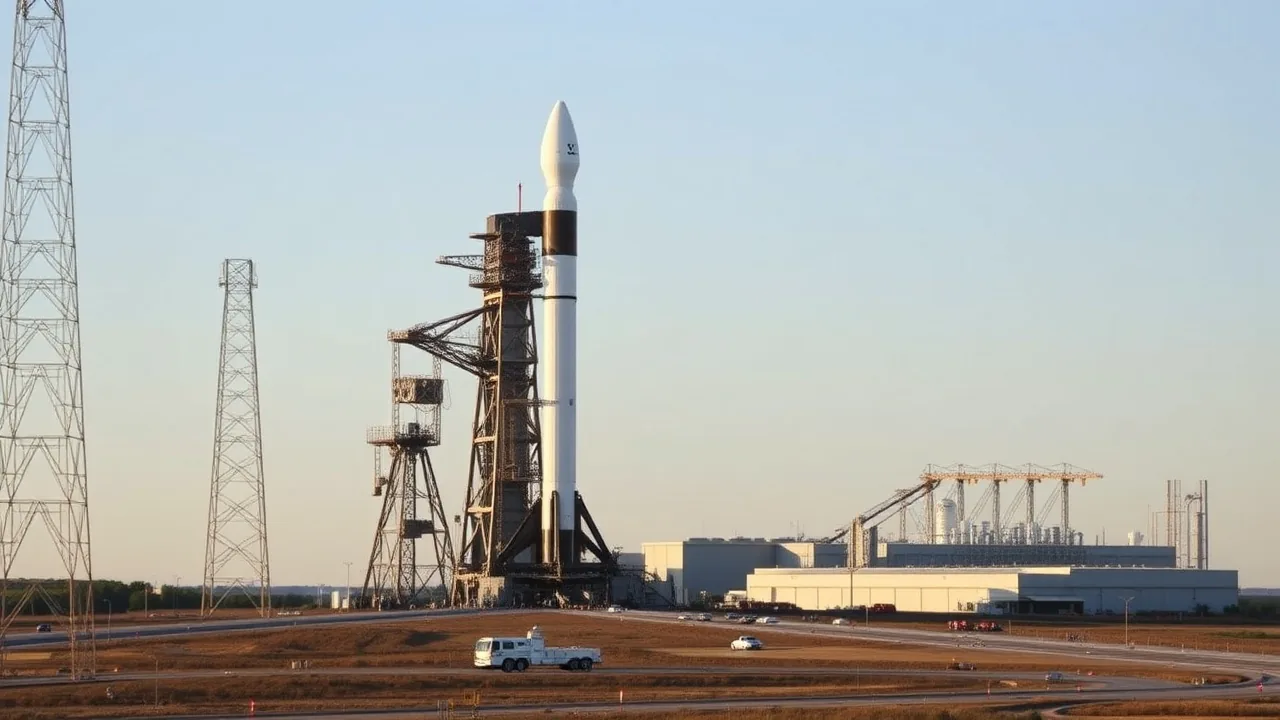
SpaceX closed a funding round in mid-2026 that valued the company at approximately $210 billion, cementing its status as the world's most valuable private aerospace firm. The Hawthorne, California-based rocket manufacturer has intensified deployment of its Starship vehicle while managing investor expectations around profitability timelines.
The company's financial trajectory reflects broader shifts in how capital markets assess space ventures. Unlike traditional aerospace contractors that trade publicly, SpaceX remains private, but secondary market transactions and regulatory filings provide windows into investor sentiment and operational performance.
"SpaceX's business model has fundamentally changed the calculus for space investment," said Morgan Stanley aerospace analyst Adam Jonas during a July 2026 briefing. "The combination of reusable launch systems and government contracts creates multiple revenue streams that earlier venture-backed space companies never had."
Starship Deployment and Revenue Growth
Starship testing accelerated through 2026, with the company conducting integrated flight tests roughly every six to eight weeks. Each test provided engineering data that fed into refinements for commercial payload missions scheduled for the second half of 2026 and into 2027.
The space industry expects Starship's cargo capacity—roughly 100 metric tons to low Earth orbit on a fully reusable flight—to unlock new mission profiles. Satellite operators, government agencies, and lunar lander developers have publicly signed letters of intent for launches.
SpaceX's Falcon 9 rocket continues to dominate the commercial launch market, maintaining a manifest of over 100 missions. Revenue from Falcon 9 launches and Dragon spacecraft services to the International Space Station provides near-term cash flow that funds Starship development.
- Falcon 9 manifest extends into 2028 with government and commercial customers
- Dragon crew and cargo missions secure recurring NASA revenue through mid-decade
- Starlink satellite constellation operations contribute to consolidated revenue
- Government contracts from the U.S. Space Force and National Reconnaissance Office add stability
Starlink, SpaceX's satellite internet subsidiary, reached profitability in early 2026 and has grown its user base to approximately 5 million subscribers globally. Analysts view Starlink as a potential path to an independent public offering, though no timeline has been announced.
Investment Thesis and Competitive Landscape
Aerospace growth projections for the 2026-2035 period depend heavily on launch cadence and cost reductions. SpaceX's competitors include established contractors like United Launch Alliance, emerging providers like Relativity Space and Axiom Space, and international players like Arianespace.
ULA's Vulcan Centaur rocket began operational flights in early 2024 and has accumulated a strong manifest, but faces cost constraints in direct competition with SpaceX's pricing. Blue Origin's New Glenn vehicle remains in final development, with first flights targeted for late 2026 or early 2027.
For equity investors seeking exposure to SpaceX stock performance, options remain limited. Secondary shares trade on platforms including SharesPost and Forge, typically at significant premiums to the last primary funding round. Liquidity is constrained compared to public aerospace firms.
"The question for SpaceX investors is not whether the company will succeed technically, but how quickly it can convert engineering achievements into profit," noted John Logsdon, space policy analyst at George Washington University. "Starship's profitability depends on launch cadence reaching 50 or more flights annually."
Government Contracts and National Security
SpaceX holds multiple defense and intelligence contracts that underpin financial stability. The U.S. Space Force awarded the company a $2.3 billion contract in 2024 for national security launches, extending through 2026 with options through 2031.
The National Reconnaissance Office also relies on SpaceX for classified satellite launches. These government programs provide predictable revenue and reduce dependence on commercial market volatility.
National security interests in maintaining U.S. launch capacity create a structural floor beneath SpaceX's business value. Policymakers across both parties view SpaceX's capabilities as critical infrastructure for military and intelligence operations.
SpaceX's investment in manufacturing efficiency and supply chain localization appeals to Pentagon requirements for controlled production environments. The company has expanded its Boca Chica, Texas facility and maintains manufacturing presence in California.
Investor interest in investment analysis for aerospace firms increasingly factors in defense contracts as a hedge against commercial market downturns. SpaceX's bifurcated revenue model reduces exposure to any single customer segment.
Valuation and Future Milestones
The mid-2026 funding round reflected a $210 billion valuation, flat relative to the previous year's fundraising. This plateau suggests investors are pricing in slower near-term growth but confidence in long-term potential.
Key milestones that could shift valuation into 2027 include:
- Starship's first full payload commercial mission to low Earth orbit
- Demonstration of rapid reusability with turnaround times under 24 hours
- Starlink profitability expansion and international market penetration
- Progress toward lunar lander missions in support of NASA's Artemis program
Elon Musk, SpaceX's founder and CEO, has publicly stated that the company aims for positive free cash flow by the end of 2026. Achievement of that target would support arguments for a higher valuation in subsequent funding rounds.
Risks include regulatory delays in frequency assignments for Starlink expansion, technical setbacks in Starship testing, and intensifying competition from better-capitalized incumbent contractors. Supply chain disruptions also remain a concern for launch schedule reliability.
For investors, SpaceX represents exposure to space industry growth without the liquidity and transparency of publicly traded peers. The company's private structure offers founder control over long-term strategy but limits exit pathways and information availability compared to public markets.