
August 2026 Solar Eclipse and Perseid Meteor Shower: How to Watch
North America, the UK, and Europe will witness a solar eclipse on August 12, 2026. That same night, the Perseid meteor shower will peak, offering a rare celestial double feature.

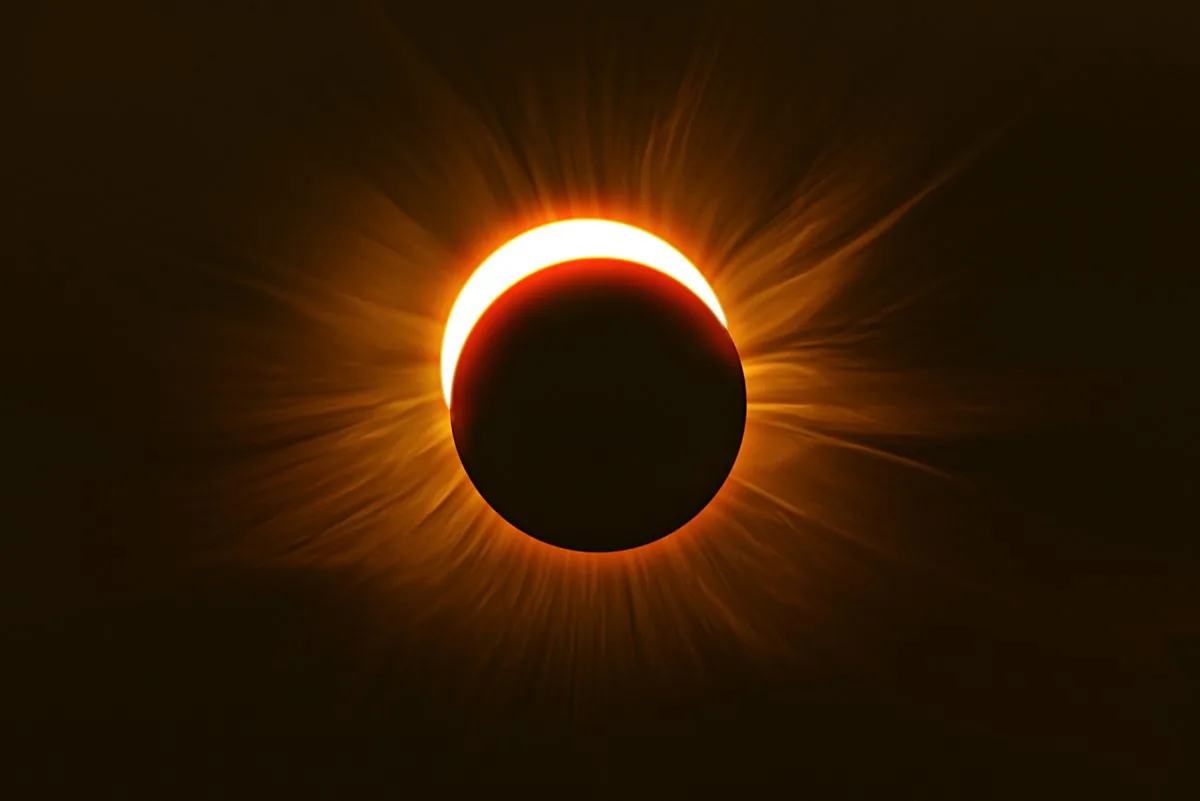
Stargazers in North America, the UK, and Europe are in for a rare celestial treat on August 12, 2026, as a spectacular solar eclipse unfolds, followed by one of the year's most anticipated meteor showers. This cosmic double whammy offers a unique opportunity for both daytime and nighttime skywatching, with the two events conveniently coinciding.
The day's main event is a solar eclipse, which occurs when the Moon passes between Earth and the Sun, casting a shadow. On August 12, 2026, a total solar eclipse will trace a path across parts of Greenland, Iceland, and Spain. For those situated within this narrow 'path of totality,' the Sun will be completely obscured for a few minutes, creating an eerie twilight. Regions outside this path, including the rest of Europe, parts of North Africa, and areas of North America, will experience a partial solar eclipse, where the Moon will appear to take a significant bite out of the Sun.
Spain is expected to be a prime viewing location for the total eclipse, with the path of totality extending across its northern regions and the island of Mallorca. In the UK, cities like Glasgow, Belfast, Manchester, Liverpool, Birmingham, Cardiff, and London are predicted to see over 90% of the Sun obscured. The Republic of Ireland will also offer excellent views, with Dublin experiencing about 94% coverage and Cork up to 96%.
For those in eastern Canada and the northeastern United States, a partial solar eclipse will be visible. It's crucial to remember that directly observing the Sun during an eclipse is dangerous. Certified solar eclipse glasses must be worn at all times, except for the brief moments of totality during a total eclipse. These specialized glasses filter out harmful solar rays, but it's essential to ensure they are properly certified and free of any damage.
Perseid Meteor Shower Peaks Under Dark Skies
As the Sun sets and the eclipse excitement subsides, the night sky will put on its own dazzling display with the Perseid meteor shower. This annual event, visible from mid-July to late August, occurs as Earth passes through the debris trail left by Comet Swift-Tuttle. Tiny particles of cosmic dust entering Earth's atmosphere create the brilliant streaks of light known as shooting stars.
The Perseids are renowned for their prolific nature and often produce bright fireballs, leaving glowing trails across the sky. This year's shower is particularly fortunate because its peak coincides with the new Moon phase. A new Moon means the Moon is not visible in the night sky, acting as natural darkness that allows fainter meteors to be seen more clearly. Unlike meteor showers that occur during a brighter lunar phase, the absence of moonlight will significantly enhance viewing conditions.
This celestial alignment is a rare occurrence that promises an exceptional viewing experience. The fact that the solar eclipse occurs during a new Moon, which is ideal for meteor shower observation, amplifies the significance of the August 12, 2026, event. Typically, meteor shower visibility is hampered by moonlight. However, the new Moon on this date means the night sky will be exceptionally dark, providing the perfect canvas for the Perseid's celestial performance.
To best enjoy the meteor shower, observers should find a location with minimal light pollution. Away from city lights, in rural areas or even local parks, the full spectacle of the Perseids can be appreciated. Unlike the daytime eclipse, which requires protective eyewear, viewing the meteor shower is best done with the naked eye. Binoculars or telescopes can narrow the field of view, making it harder to catch the meteors that can appear anywhere in the sky. Allowing your eyes to adjust to the darkness for at least 20 minutes will also significantly improve the viewing experience.
The combination of a solar eclipse and a peak meteor shower on the same day makes August 12, 2026, a must-see event for astronomy enthusiasts and casual observers alike. With proper preparation for the eclipse and finding a dark spot for the meteor shower, skywatchers are set for a memorable night of cosmic wonders.