
SpaceX IPO: What Investors Need to Know in 2026
Speculation about a SpaceX public offering has intensified in 2026, with analysts projecting a valuation that could reshape aerospace investment. Here's what potential shareholders should understand about timing, regulatory hurdles, and market impact.

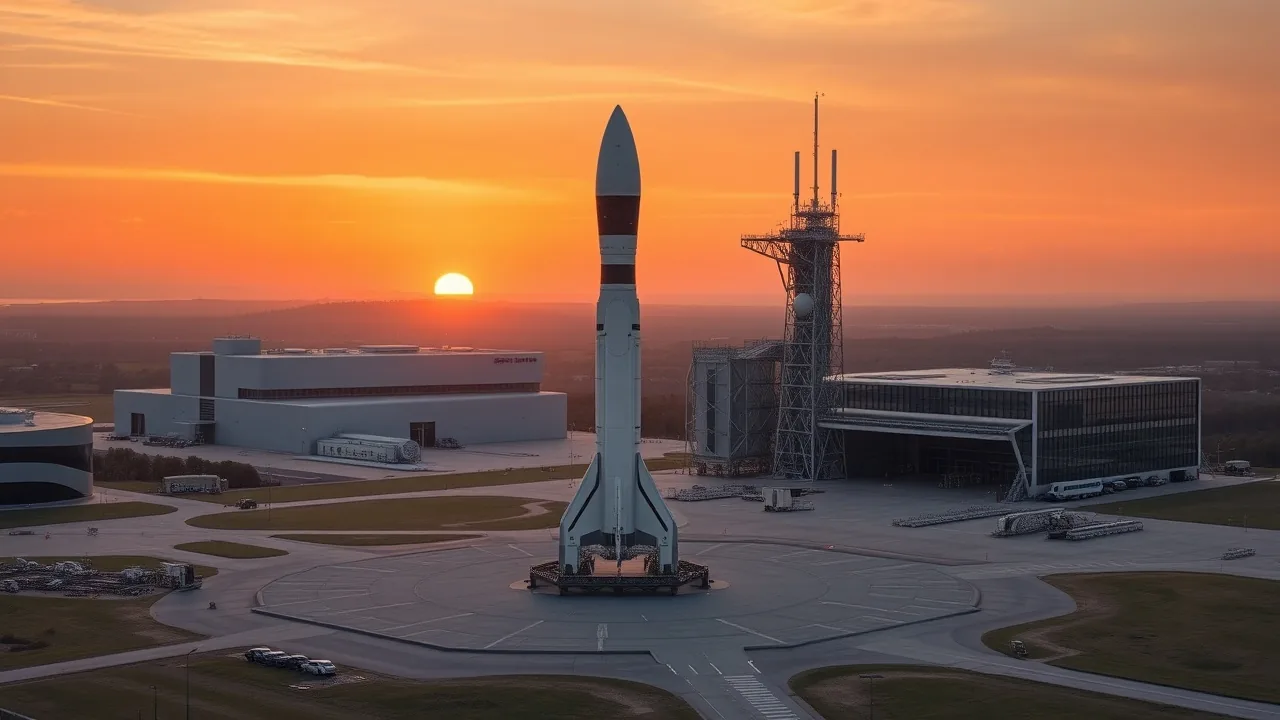
Elon Musk confirmed in early May 2026 that SpaceX is actively evaluating a public market debut, signaling a potential watershed moment for the aerospace sector. The announcement came during a quarterly earnings call with investors and has since triggered widespread debate about valuation, regulatory approval, and the broader implications for space exploration funding.
SpaceX, founded in 2002, has remained privately held despite becoming the world's most valuable aerospace company. The firm operates Starlink, a global satellite internet constellation with over 7 million subscribers, alongside its core rocket manufacturing and launch services division. A public listing would be among the largest tech IPOs in the past decade.
Industry analysts estimate SpaceX's valuation could range from $150 billion to $250 billion at IPO, depending on market conditions and the company's revenue growth trajectory. Morgan Stanley released a May 2026 report citing strong demand for commercial launch services and Starlink's expanding market share as key drivers of investor interest.
Market Expectations and Timing
Multiple sources indicate the IPO could launch in late 2026 or early 2027, pending regulatory clearance from the Securities and Exchange Commission. SpaceX has already begun preliminary SEC filings, though the company has not disclosed a formal prospectus or underwriter lineup.
The timing reflects broader momentum in the aerospace sector. Blue Origin launched its first crewed New Shepard flights in 2026, Axiom Space completed its first commercial module to the International Space Station, and NASA awarded three lunar lander contracts worth $5.2 billion combined. Competition for investment dollars is intensifying.
"A SpaceX IPO would validate the commercial space sector and unlock capital for dozens of smaller players," said Dr. Carla Santos, director of aerospace research at Aerospace Industries Association, in a May 2026 interview. "Investors have been waiting for a flagship public company to anchor their portfolio."
Retail investors have expressed strong appetite. Online brokerage surveys show over 60% of respondents aged 25 to 45 intend to purchase SpaceX shares if the IPO is priced below $250 per share, according to E-Trade's April 2026 investor sentiment poll.
Regulatory and Strategic Hurdles
The path to IPO is not without obstacles. The Federal Communications Commission has raised concerns about Starlink's orbital debris mitigation protocols, requiring SpaceX to submit enhanced collision-avoidance documentation by June 30, 2026. Delays in FCC approval could postpone the IPO timeline.
Defense Department oversight presents another complication. SpaceX holds classified military contracts valued at $3.2 billion annually, including launches for the U.S. Space Force and National Reconnaissance Office. National security reviews could extend the SEC approval process.
Aerospace investments in the public market have traditionally faced heightened scrutiny. The government typically mandates special disclosure requirements for defense contractors and imposes limitations on foreign ownership—restrictions that will apply to SpaceX equity holders.
Musk's leadership style also carries risk. His public statements have occasionally triggered SEC inquiries in the past. Underwriters negotiating the IPO agreement will likely negotiate stricter communication protocols and board oversight to mitigate governance concerns.
Implications for Private Spaceflight and Valuations
A successful SpaceX IPO would reshape the competitive landscape for private spaceflight companies. Relativity Space, Rocket Lab, and other venture-backed launch providers would face pressure to accelerate their own public market timelines or merge with larger firms.
The event would also establish a public market price benchmark for stock market comparables. Investors in pre-IPO space companies—including Sierra Space, Space Perspective, and Intuitive Machines—would gain clarity on valuation multiples and exit strategies. Venture capital funding for aerospace startups could expand or contract depending on SpaceX's opening stock performance.
Starlink's financial performance will be central to investor decisions. The division reported $8.3 billion in revenue in 2025 and expects 18% year-over-year growth in 2026. If Starlink reaches profitability before the IPO, it could justify a premium valuation.
Rocket launch cadence matters equally. SpaceX completed 98 orbital launches in 2025, maintaining its position as the world's busiest launch provider. Wall Street analysts expect the company to exceed 120 launches annually by 2028, driven by military contracts, commercial satellite deployments, and Starship's full operational capability.
Long-term contracts signed with the U.S. military and commercial satellite operators provide revenue visibility. SpaceX's booked backlog for launch services stood at $62 billion as of May 2026, reducing execution risk for potential investors.
The IPO announcement reflects Elon Musk's confidence that SpaceX has matured into a stable, profitable enterprise. Previous statements suggested he preferred to keep the company private indefinitely, but changing market conditions and the need to fund Starship development have shifted calculus.
For aerospace investors, a SpaceX IPO represents a rare opportunity to gain direct equity exposure to the fastest-growing segment of the space economy. Success or failure could define the commercial space sector's growth trajectory for the next decade.