
Cybersecurity Threats in 2026: New Hacking Tactics Emerge
In 2026, organizations face AI-powered attacks, ransomware targeting critical infrastructure, and sophisticated supply chain breaches. Security teams must adapt defenses to counter rapidly evolving threat actors.

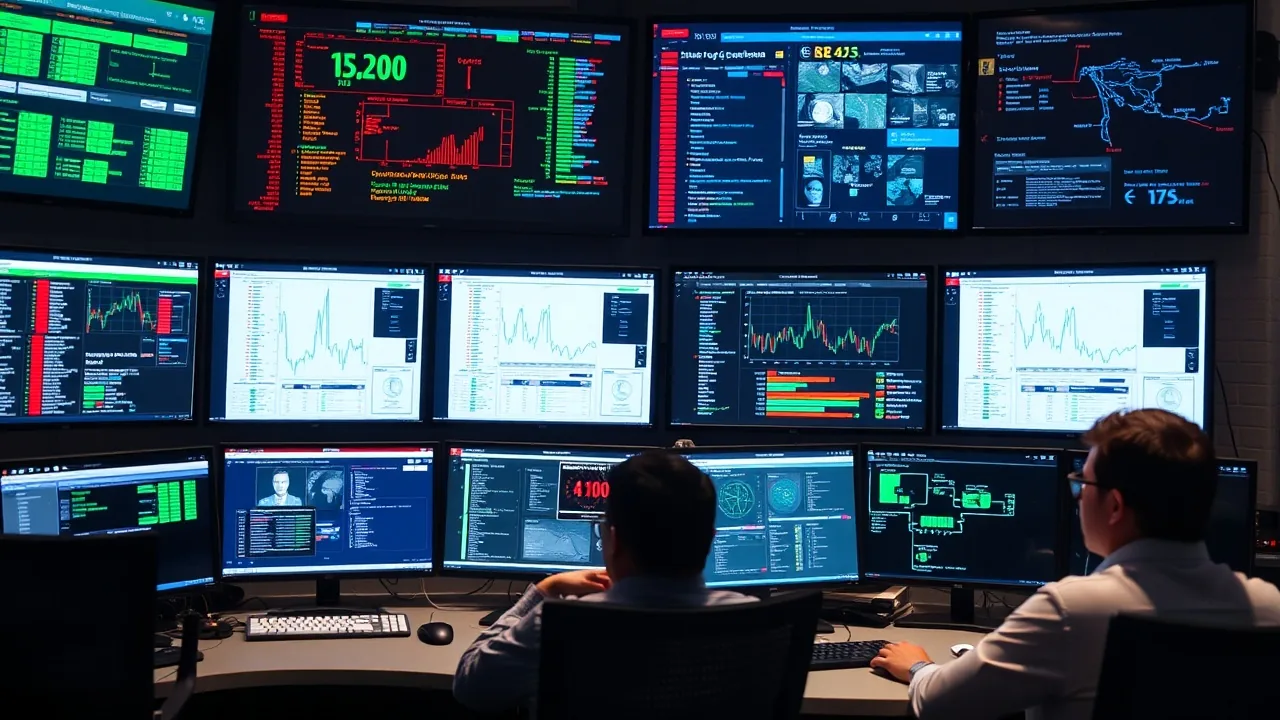
A major financial services firm in New York detected unauthorized access to its internal network on May 8, 2026, revealing a new strain of malware that exploited zero-day vulnerabilities in widely-used collaboration software. The incident, which affected 50,000 customer records, underscores a troubling trend: cyber threats in 2026 are becoming more sophisticated, faster to deploy, and harder to detect using traditional defense mechanisms.
The landscape of digital attacks has shifted dramatically over the past 18 months. Threat actors now routinely combine artificial intelligence with social engineering to bypass multi-factor authentication. According to Sarah Chen, Senior Vice President of Threat Intelligence at CyberDefense Analytics, "What we're seeing in the first half of 2026 is a fundamental change in attacker methodology. They're no longer just targeting vulnerabilities in code; they're targeting the human decision-making process at scale."
Organizations across sectors report a 340% increase in supply chain attacks compared to 2024. Adversaries now focus on compromising trusted vendors rather than attempting direct assaults on large enterprises, a tactic that has proven far more cost-effective and difficult to defend against.
AI-Driven Attacks and Adaptive Malware
Machine learning models are now being weaponized by criminal groups to automate reconnaissance and exploit discovery. These systems can scan entire networks, identify patch management gaps, and suggest optimal entry points within minutes. The sophistication rivals what government-sponsored actors deployed just three years ago.
Ransomware campaigns in 2026 have shifted from spray-and-pray mass encryption to highly targeted attacks against critical infrastructure. Electric utilities, water treatment facilities, and healthcare networks have reported coordinated intrusions where attackers spent weeks inside networks before detonating payloads. The average ransom demand now exceeds $4.2 million, with some demands reaching $50 million for attacks on major hospital systems.
A new class of self-modifying malware emerged in March 2026 that rewrites its own code in memory to evade signature-based detection. Network security teams report that traditional endpoint detection solutions failed to identify the threat until secondary indicators of compromise were manually discovered.
- Polymorphic ransomware variants that change encryption keys hourly
- AI-assisted phishing campaigns with 45% success rates versus 12% for conventional email attacks
- Fileless malware that operates entirely in system memory, leaving no disk artifacts
- Adversary-in-the-middle attacks exploiting vulnerabilities in remote work infrastructure
Data Protection and Defensive Evolution
In response to these threats, enterprises are fundamentally rethinking their approach to data protection. The assumption-of-breach model, once considered cutting-edge, is now table stakes. Most Fortune 500 companies have shifted to zero-trust architecture, where no user or device is trusted by default, regardless of network location.
Encryption standards are being upgraded across the board. Organizations are migrating to post-quantum cryptography ahead of the anticipated timeline, recognizing that adversaries may already be conducting "harvest now, decrypt later" attacks on archived communications. The National Institute of Standards and Technology finalized recommendations for quantum-resistant algorithms in late 2025, and adoption is accelerating through 2026.
Incident response times remain critical. Companies that detect breaches within one hour report median losses of $1.8 million, while those taking 30 days to detect face losses averaging $11.3 million. This has driven investment in security orchestration, automation, and response (SOAR) platforms that can correlate events across hundreds of logging sources in real time.
Chief Information Security Officers are also prioritizing digital privacy as an operational imperative rather than a compliance checkbox. Regulations like the EU's Digital Operational Resilience Act, which took effect in January 2025, now impose specific technical requirements and penalties for failures, raising the stakes for poor security posture.
Workforce Readiness and Emerging Skill Gaps
The cybersecurity labor market remains tight. There are approximately 750,000 unfilled positions in the United States alone, and the median salary for a senior infosec architect has reached $185,000 annually. This shortage has forced organizations to invest heavily in automation and to retain staff through competitive compensation.
Security awareness training has also evolved. Rather than annual checkbox training, leading organizations now conduct monthly simulated attacks, with real consequences for falling victim to phishing. Some firms have implemented gamification and role-based scenarios to increase engagement and improve retention of security principles.
Third-party risk management has become a boardroom topic. In 2026, vendors are routinely required to maintain SOC 2 Type II certifications, provide penetration test results, and undergo regular security audits before contract renewal. The cost of vendor management has nearly tripled since 2023, but breaches attributed to vendor compromise have declined by 22% year-over-year.
As threats continue to evolve, organizations that combine advanced technology, continuous staff training, and proactive threat hunting are managing risk more effectively than those relying on defensive tools alone. The 2026 threat landscape demands a holistic, integrated approach to hacking prevention and detection that spans people, process, and technology.