
Largest Dinosaur in Southeast Asia Unearthed in Thailand
Paleontologists have identified Nagatitan chaiyaphumensis, a new species of sauropod dinosaur in Thailand, measuring approximately 90 feet long and weighing 30 tons. This discovery marks the largest dinosaur found to date in Southeast Asia.

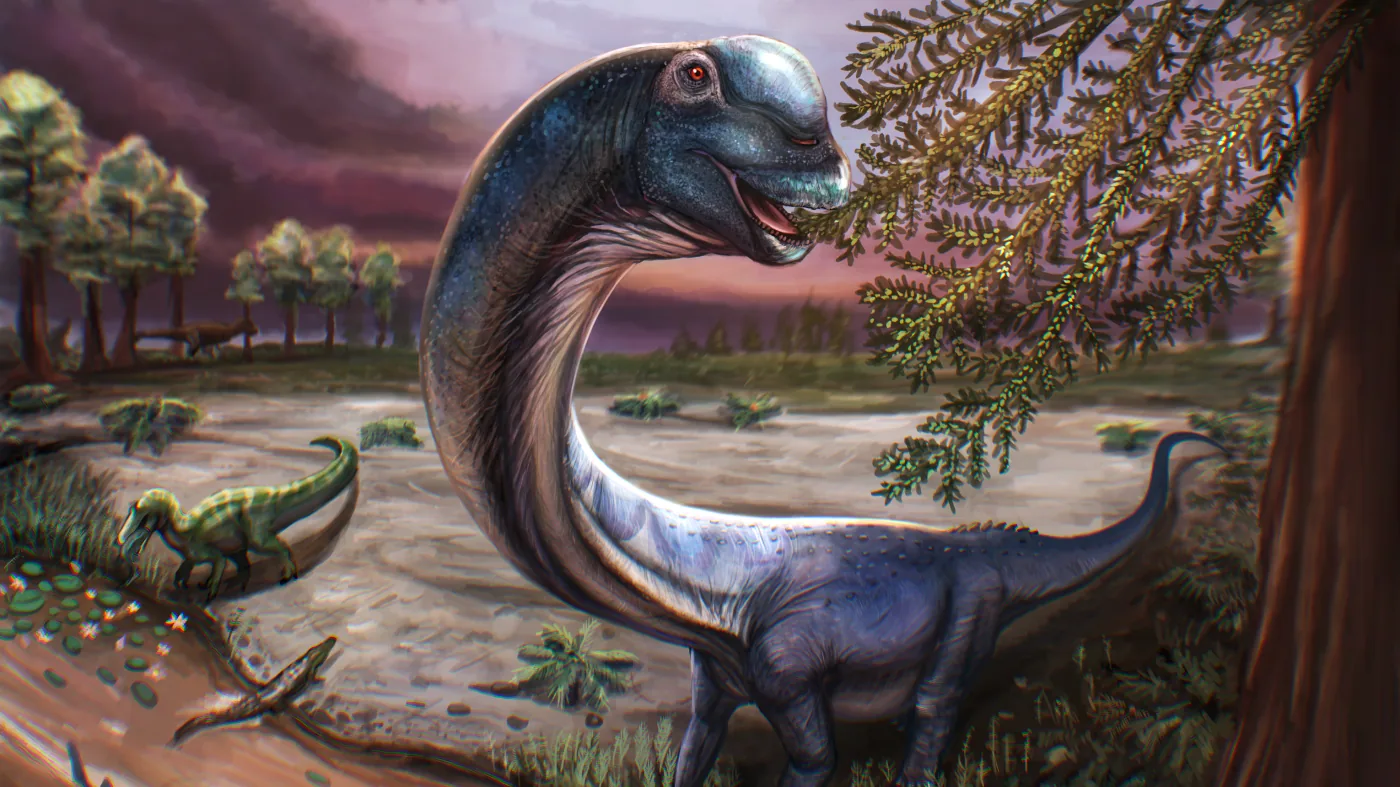
Paleontologists have identified a colossal new species of dinosaur in Thailand, a discovery that represents the largest dinosaur ever unearthed in Southeast Asia. The herbivorous sauropod, named Nagatitan chaiyaphumensis, is estimated to have stretched about 90 feet long and tipped the scales at an immense 30 tons—comparable to the weight of more than four large African savanna elephants, and more than three times that of a Tyrannosaurus rex.
The groundbreaking findings were published on Thursday in the journal Scientific Reports. Thitiwoot Sethapanichsakul, a Ph.D. student at University College London and lead author of the research, expressed excitement over the dinosaur's sheer size. "One of the many features that we're kind of excited about is the size of this dinosaur," Sethapanichsakul stated.
The Nagatitan chaiyaphumensis roamed the Earth during the late Early Cretaceous period, approximately 100 to 120 million years ago. Its size places it among the upper-middle tier of the largest dinosaurs ever discovered. This finding provides crucial insights into the evolutionary path of sauropods, which were on the verge of even greater gigantism later in the Cretaceous period, with some individuals reaching up to 70 tons. "It gives us an understanding of the potential kind of evolutionary trends that are beginning to occur" around this time, Sethapanichsakul explained.
A Window into the Cretaceous Period
The discovery of this enormous creature highlights the rich paleontological history of the region. The fossils were initially found by a local resident in the Chaiyaphum province of Thailand in 2016. Excavation began between 2016 and 2019 but was halted due to funding issues. The research team, led by Sethapanichsakul, secured new funding, allowing excavation to resume in 2024.
Researchers have not recovered the complete skeleton of Nagatitan chaiyaphumensis. Instead, size estimates are based on recovered fossils including parts of the spine, ribs, pelvis, and leg bones. Notably, one recovered front leg bone measured nearly 6 feet in length. Mathew Wedel, a professor of anatomy at Western University of Health Sciences who specializes in sauropods and was not involved in the study, commented on the findings. "This is a big critter. Pretty nice material," Wedel said, assessing the quantity and quality of the bones as "not bad" for a dinosaur of this magnitude. He added, "We've got several regions of skeleton represented. We've got several complete bones that aren't distorted very much — enough to give us a lot of information."
This remarkable find marks the 14th named dinosaur species discovered in Thailand. Researchers are dubbing the Nagatitan chaiyaphumensis the "last titan" of the country, suggesting that further discoveries of large dinosaurs in Southeast Asia are unlikely. "This rock formation that we found this dinosaur in is the last formation where you're going to find dinosaurs in Thailand," Sethapanichsakul concluded. The geological age of the rock formations and an understanding of landscape changes over millions of years support this conclusion.
Wedel expressed enthusiasm for continued fossil exploration in Thailand. "Every country gives us a new window into a little bit different part of the past and helps us refine our ideas of what we think was going on," he remarked, underscoring the global significance of regional paleontological research.