
SpaceX IPO 2026: What Space Stock Investors Need to Know
SpaceX's anticipated 2026 IPO could reshape the aerospace investment landscape. Analysts weigh the company's Starship ambitions, profitability timeline, and valuation against broader market conditions.

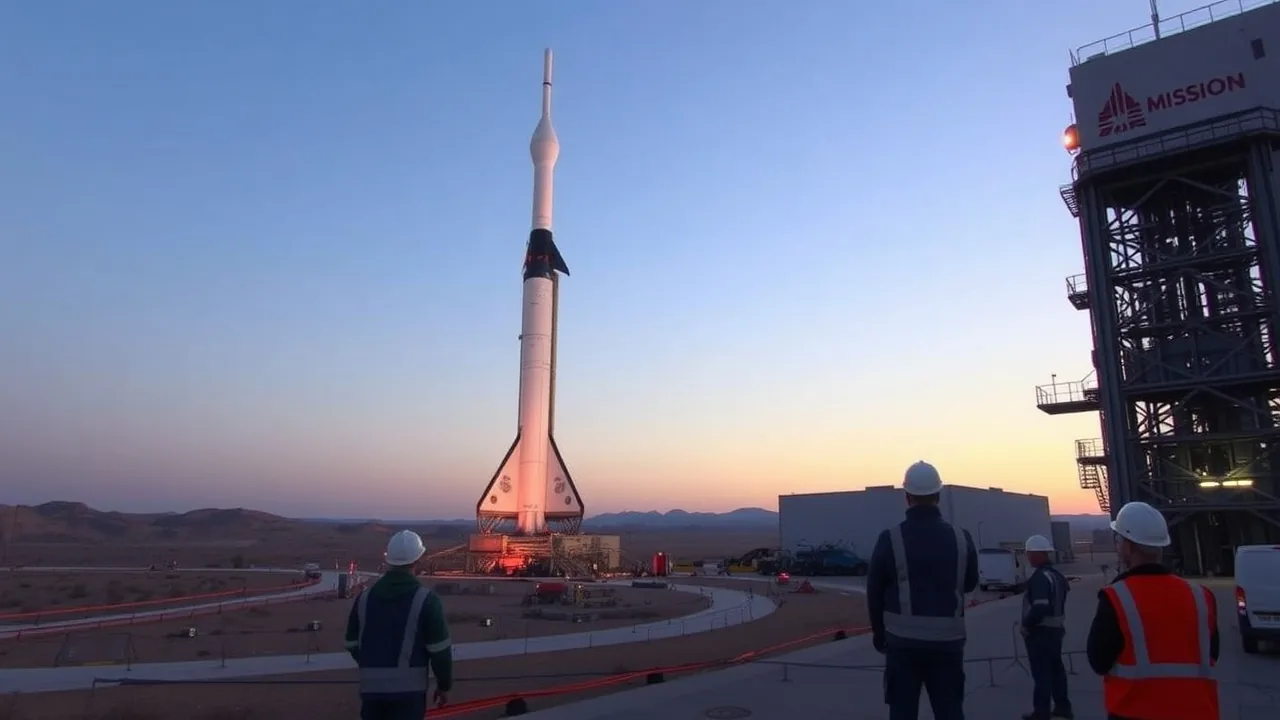
Elon Musk confirmed in late May 2026 that SpaceX remains on track for a public offering within the next 18 to 24 months, reigniting investor appetite for exposure to the commercial spaceflight sector. The announcement comes as the company completes its fifth successful Starship integrated flight test and secures over $6 billion in fresh government contracts for national security missions.
SpaceX's path to the public markets reflects a broader shift in how capital flows through the aerospace industry. Unlike traditional defense contractors, the company blends government revenue with commercial satellite launches and Starlink internet services, creating a diversified revenue model that appeals to growth-focused investors.
The Case for a 2026 Valuation
Morgan Stanley aerospace analyst Jennifer Chen stated in April 2026 that "SpaceX's private valuation could reach $200 billion at IPO, making it one of the largest aerospace debuts on record." That assessment assumes continued Starship success and accelerating Starlink subscriber growth to 8 million users globally by year-end.
The company's revenue mix strengthens its investment thesis considerably. In 2025, SpaceX generated roughly $5.4 billion in annual revenue across three primary segments:
- Starlink satellite internet: $1.8 billion from approximately 6 million active subscribers
- Government and NASA contracts: $2.1 billion, including lunar lander work and national defense payloads
- Commercial launch services: $1.5 billion from Falcon 9 and upcoming Falcon Heavy missions
Profitability remains the key unknown. SpaceX has not disclosed net income figures, but industry observers estimate the company broke even or posted modest gains in late 2025, ahead of many Wall Street expectations.
Regulatory Hurdles and Market Readiness
An IPO requires SEC approval and a regulatory filing that will expose SpaceX's financials to public scrutiny for the first time. The company faces questions about reusability rates on Falcon 9 boosters, Starlink competition from Amazon's Project Kuiper, and geopolitical risk tied to launches from US soil and overseas partnerships.
The NASA connection remains a strategic advantage. SpaceX holds a $2.9 billion contract to develop the Human Landing System for Artemis missions, and astronauts regularly fly to the International Space Station aboard Dragon spacecraft. That recurring government revenue reduces investor risk compared to pure commercial play models.
Blue Origin and other competitors have raised capital but have not yet pursued public markets. A successful SpaceX IPO could trigger a wave of aerospace IPOs, validating the space stock category for retail and institutional portfolios.
"Investors will scrutinize Starship's path to profitability most closely," said aerospace venture capitalist Marcus Rodriguez on May 14, 2026. "The booster has burned billions in development costs. Proof that it can fly 50 times per year at breakeven or better will drive the stock on day one."
The Broader Aerospace Landscape
SpaceX's IPO timing coincides with record interest in investing in aerospace startups. Global venture funding in space technology reached $9.2 billion in 2025, double the 2023 total. Relativity Space, Axiom Space, and Rocket Lab have all raised institutional rounds, but none at SpaceX's scale.
Public markets have shown selective appetite for pure-play space companies. Rocket Lab trades with a market cap near $3 billion, while Virgin Galactic and Axiom have seen volatile price action. SpaceX's diverse revenue and path to profitability position it differently than earlier space IPOs that lacked consistent cash generation.
The future of space travel depends partly on whether private private spaceflight operators can sustain growth without government subsidies. An IPO would force that conversation into mainstream investment analysis, likely accelerating demand for launch capacity and in-space logistics services across multiple operators.
Valuation expectations hinge on three milestones: Starship becoming the primary launch vehicle within 24 months of IPO, Starlink reaching profitability by late 2027, and securing additional government contracts worth $10 billion or more. If SpaceX achieves two of three, institutional investors will likely bid aggressively on opening day.
The aerospace sector has not seen a major IPO of this magnitude since Boeing's early years. Success could reshape how Wall Street values long-cycle, capital-intensive engineering businesses and open new pools of capital for the commercial space industry.