
SpaceX Launches Starfall Capsule and 31 Payloads on Bandwagon-5 Mission
SpaceX is set to launch its Starfall reentry capsule alongside 31 customer payloads on the Bandwagon-5 rideshare mission. The launch aims to test reentry technology and deploy various satellites.

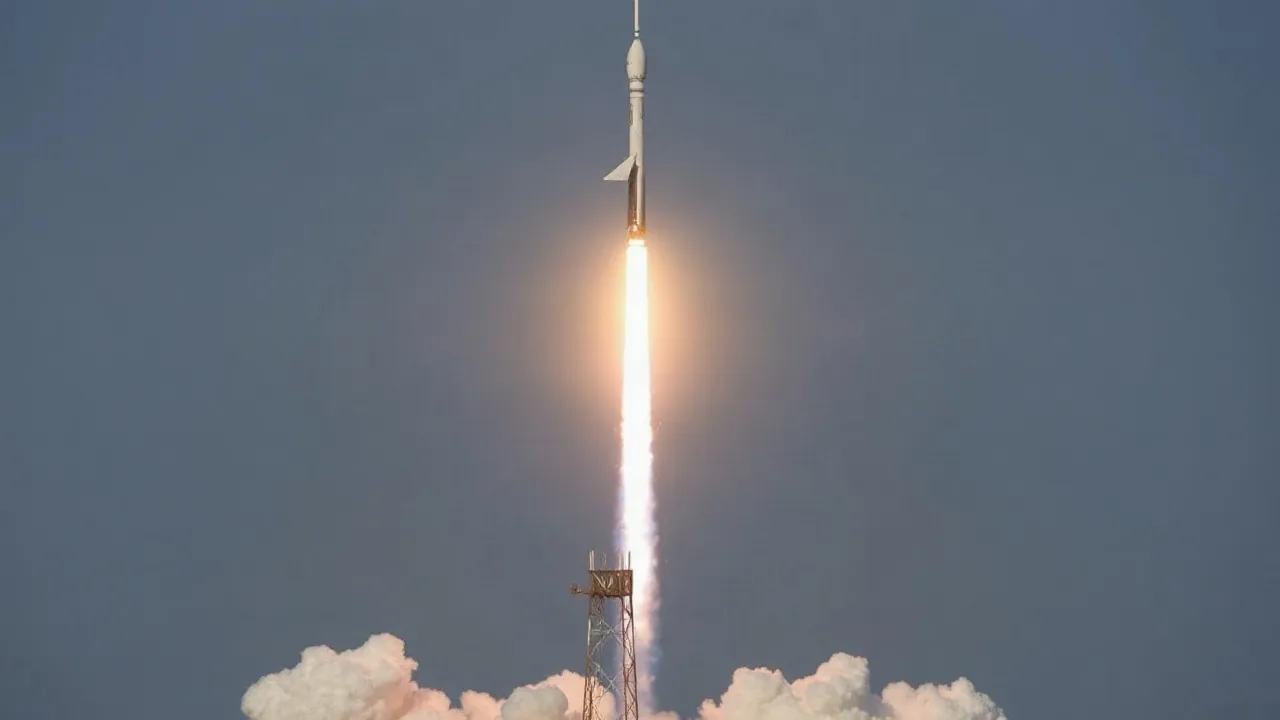
SpaceX is preparing for a significant launch event this week, with the Falcon 9 rocket slated to carry the Starfall reentry capsule and 31 additional customer payloads into orbit. The mission, dubbed Bandwagon-5, is scheduled to lift off from Cape Canaveral Space Force Station in Florida. This launch is particularly notable for its dual objectives: testing advanced reentry technology with the Starfall capsule and deploying a diverse array of small satellites for commercial and research purposes.
The Starfall capsule represents a new development in SpaceX's efforts to refine and enhance its spacecraft's ability to withstand and survive atmospheric reentry. While details surrounding the specific technologies being tested remain proprietary, it is understood to be a critical step in the company's long-term strategy for reusable spacecraft and safer returns for both cargo and potential future human missions. The successful deployment and subsequent recovery of the Starfall capsule will provide valuable data for future design iterations.
Payload Diversity and Scientific Aims
Beyond the Starfall capsule, the Bandwagon-5 mission is carrying a substantial manifest of 31 customer payloads, highlighting the growing demand for rideshare opportunities in low Earth orbit. These payloads range from small communication satellites and Earth observation technology to experimental scientific instruments. One of the more visually intriguing payloads mentioned in preliminary reports is a project involving studies on space jellyfish, continuing earlier research efforts. This diverse collection of satellites underscores the expanding ecosystem of space-based services and research.
The efficiency and cost-effectiveness of SpaceX's rideshare missions, such as Bandwagon-5, have democratized access to space for smaller organizations and researchers who might otherwise find it prohibitively expensive to launch their own dedicated missions. These smaller launches are crucial for rapid prototyping, testing new technologies, and gathering specialized data that contributes to a broader understanding of Earth's climate, global communications, and various scientific phenomena.
SpaceX has become a dominant force in the commercial space launch sector, with its Falcon 9 rocket achieving a remarkable flight heritage and reliability. The company's ability to execute frequent launches and offer competitive pricing for rideshare missions has made it a preferred partner for a wide range of clients. The success of missions like Bandwagon-5 not only supports the commercial space industry but also contributes to advancements in fields ranging from environmental monitoring to telecommunications infrastructure.
The company's ongoing innovation, exemplified by the Starfall capsule, signals a commitment to pushing the boundaries of spaceflight. As the industry evolves, SpaceX continues to play a pivotal role in shaping its future, making space more accessible and enabling new frontiers of exploration and application.