
Japan's MMX Mission: Phobos Sample Return Launch from Tanegashima
Japan's landmark Martian moon sample-return mission, MMX, is set to launch from Tanegashima Space Center. The spacecraft will land on Phobos and collect samples.

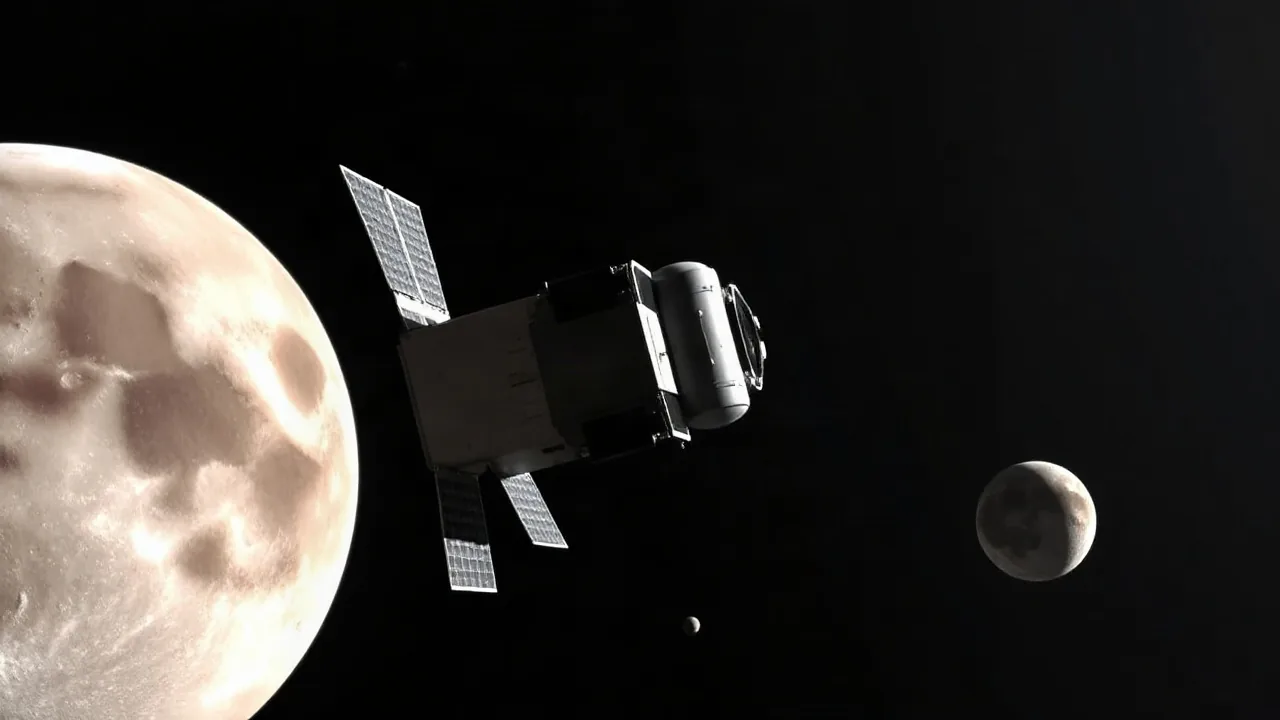
Japan's ambitious Martian moon exploration program, the Martian Moons eXploration (MMX) mission, is scheduled to lift off from the Tanegashima Space Center on October 19, 2026. This groundbreaking mission, operated by the Japan Aerospace Exploration Agency (JAXA), aims to land on Phobos, one of Mars's two irregular moons, collect a sample, and return it to Earth. If successful, it will mark the first time samples from a moon other than Earth's are brought back for scientific study.
The MMX spacecraft, aboard an H-IIA rocket, will embark on a journey that will take several months to reach the vicinity of Mars. Once there, it will orbit the Red Planet before maneuvering to Phobos. The mission's primary objective is to land on the moon's surface, a challenging feat given Phobos's low gravity and uneven terrain. A robotic arm will then collect surface material, which is believed to hold clues about the early solar system.
A Glimpse into Solar System Origins
Phobos and its sibling moon, Deimos, have long intrigued scientists. Their origins remain a subject of debate, with theories suggesting they could be captured asteroids or remnants from the early formation of Mars. By analyzing the samples returned by MMX, researchers hope to gain unprecedented insights into the conditions under which Mars and its moons formed, potentially shedding light on the broader processes of planetary evolution in our solar system. The samples could also reveal details about the composition of material from the outer regions of the asteroid belt.
"This mission represents a significant leap forward in our understanding of planetary science," stated Dr. Hitoshi Kuninaka, MMX project manager at JAXA. "Bringing back samples from Phobos will allow us to conduct detailed laboratory analyses that are impossible with remote sensing alone. We are eager to unlock the secrets these small worlds hold."
The MMX mission is not only focused on Phobos. The spacecraft will also conduct observations of Deimos and monitor the Martian atmosphere. This comprehensive approach aims to provide a richer understanding of the Martian system as a whole. The mission's duration, from launch to sample return, is expected to be approximately 7 years. The return capsule is slated to land in Australia.
The launch is a culmination of years of planning and technological development. Japan has previously achieved success with its Hayabusa and Hayabusa2 asteroid sample-return missions, showcasing its expertise in this complex field of space exploration. The MMX mission builds upon this legacy, pushing the boundaries of what is possible in space science and international collaboration.