
Kilauea Volcano Erupts in Hawaii After Two-Month Hiatus
Hawaii's Kilauea volcano has resumed erupting after a rare two-month pause. The latest eruption marks the 55th since 2024, with lava fountains visible at Halemaumau crater.

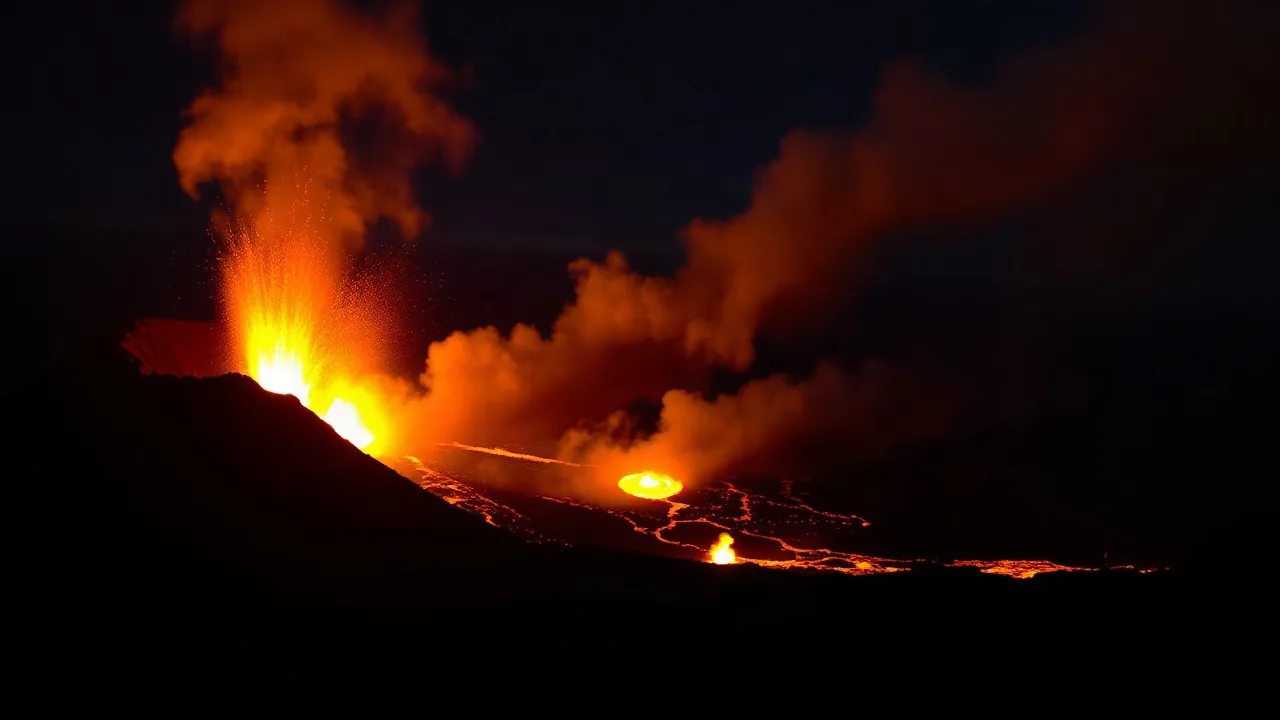
Hawaii's Kilauea volcano, one of the world's most active, has begun erupting again after a notable two-month period of quiet. The fiery spectacle returned to Halemaumau crater at the volcano's summit, drawing attention from scientists and onlookers alike. This latest event marks the 55th eruption of Kilauea since the start of 2024, underscoring its persistent geological activity.
The eruption commenced on Friday, October 11, 2026, with lava fountains and flows observed within the summit caldera. The U.S. Geological Survey's Hawaiian Volcano Observatory (HVO) reported that the eruption is currently confined to the Halemaumau crater, a location that has frequently been the site of Kilauea's most recent activity. This pause was unusual, given the volcano's typical pattern of more frequent, shorter-duration eruptions over the past several years.
Geological Context and Scientific Monitoring
Kilauea's recent activity follows a period of heightened seismic unrest and ground deformation that suggested an impending eruption. Scientists at the HVO have been closely monitoring subtle changes in the volcano's behavior, including increased gas emissions and ground swelling, which are precursors to volcanic activity. The recent two-month pause was significant; the longest lull in eruptions for Kilauea since it began its current phase of frequent activity in 2024.
Geologists are still analyzing the exact source of the magma for this new eruption. Preliminary data from the USGS suggests the eruption may be fed by a deep reservoir of magma that was activated following the cessation of activity from a fissure vent that opened earlier in the year. Understanding the dynamics of these deep magma systems is crucial for forecasting future eruptive events and assessing potential hazards. The U.S. Geological Survey remains on the forefront of this research.
The Kilauea volcano, situated on the Big Island of Hawaii, is part of the Hawaii Volcanoes National Park. Its frequent eruptions provide invaluable opportunities for scientific study, offering insights into the fundamental processes of volcanism and the formation of the Hawaiian Islands. While the current eruption is contained within the crater, authorities are monitoring air quality, particularly for volcanic gases like sulfur dioxide, which can pose health risks to nearby communities, including Hilo and Volcano Village.
This 55th eruption since 2024 is a testament to the ongoing geological forces shaping the Pacific Ring of Fire. The return of lava fountaining, described by witnesses as a dramatic display of nature's power, serves as a reminder of the dynamic planet we inhabit. Park officials have advised visitors to stay informed about safety guidelines and to observe the eruption from designated viewing areas to ensure their well-being.