
Record-Breaking Tyrannosaurus Rex Fossil Sells for $50 Million
A remarkably complete 67-million-year-old Tyrannosaurus rex fossil, nicknamed "Gus," has shattered previous records, selling for $50.1 million at a Sotheby's auction in New York. The sale marks the highest price ever paid for a dinosaur.

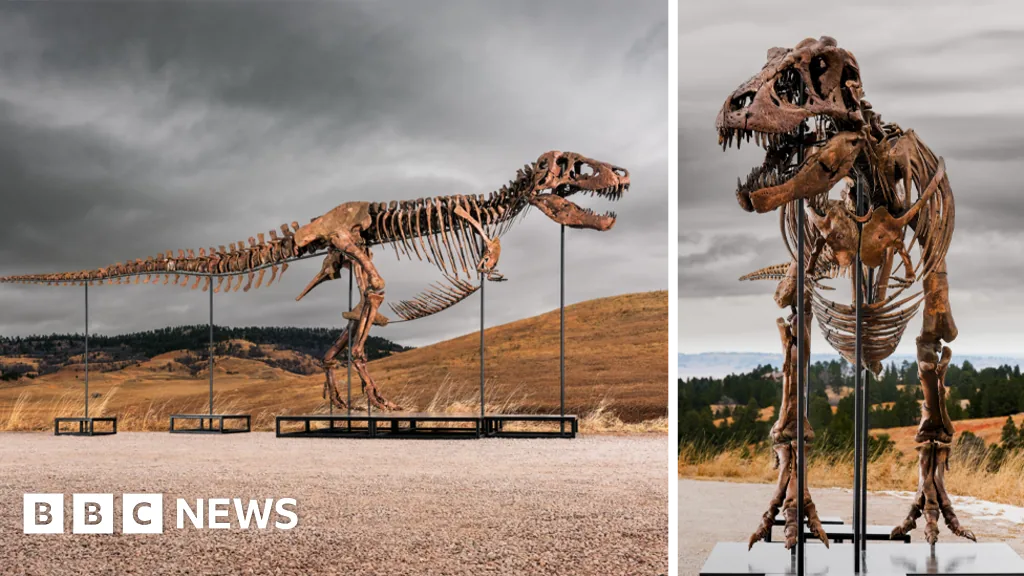
A nearly complete 67-million-year-old Tyrannosaurus rex fossil, affectionately nicknamed "Gus," has commanded a record-breaking price of $50.1 million at a Sotheby's auction in New York City on Tuesday. The sale marks the highest sum ever paid for a dinosaur skeleton, surpassing the previous record and making "Gus" the most expensive prehistoric creature ever to be sold at auction.
The imposing Tyrannosaurus rex specimen stands over 12 feet tall and is one of the most complete T. rex skeletons ever unearthed, with more than 60% of its bones recovered. Discovered in 2021 on a remote ranch in South Dakota, the fossil required extensive work to excavate and prepare for sale. Sotheby's confirmed that the winning bidder remained anonymous following the groundbreaking sale.
Cassandra Hatton, Sotheby's worldwide head of science and natural history, described the achievement as the culmination of years of effort. "This result has been years in the making," Hatton stated. "Gus is not only an exceptional find, but a specimen that's been excavated, documented, prepared, and cared for with real excellence." She emphasized that the final price reflects the immense time and resources invested in bringing the specimen to light.
Fossil Collecting Enters a New Era
The sale of "Gus" significantly exceeded the previous record, which was held by a Stegosaurus that sold for an undisclosed sum in 2024. The $50.1 million figure is the first time a dinosaur fossil sale has crossed the $50 million threshold. Some paleontologists and scientists have voiced concerns that this trend might usher in a new era of fossil collecting driven by ultra-wealthy individuals, potentially limiting access for scientific research and public display.
The excavation of "Gus" spanned three summers between 2021 and 2023, taking advantage of warmer months when the ground thawed. Following the fieldwork, an additional three years were spent in the laboratory meticulously piecing the skeleton together. During this preparation, researchers discovered intriguing details, including bite marks on the skull and evidence of previously broken ribs that had healed during the dinosaur's lifetime. These injuries suggest "Gus" may have engaged in scavenging or confronted other dinosaurs during its existence.
While the identity of the buyer remains confidential, past high-profile fossil sales offer a precedent. For instance, the Stegosaurus that previously held the record, known as Apex, was loaned to the American Museum of Natural History for four years by its billionaire owner, Kenneth Griffin. The acquisition of such significant specimens by private collectors raises questions about their long-term accessibility for scientific study and public education, a debate that is likely to intensify as the market for these ancient marvels continues to grow.