
Gus T. Rex Fossil Nears Record Auction Price
The 'Gus' Tyrannosaurus rex skeleton, one of the most complete ever found, is set for auction at Sotheby's with an expected price of $20M-$30M. Experts worry it may be lost to private collectors.

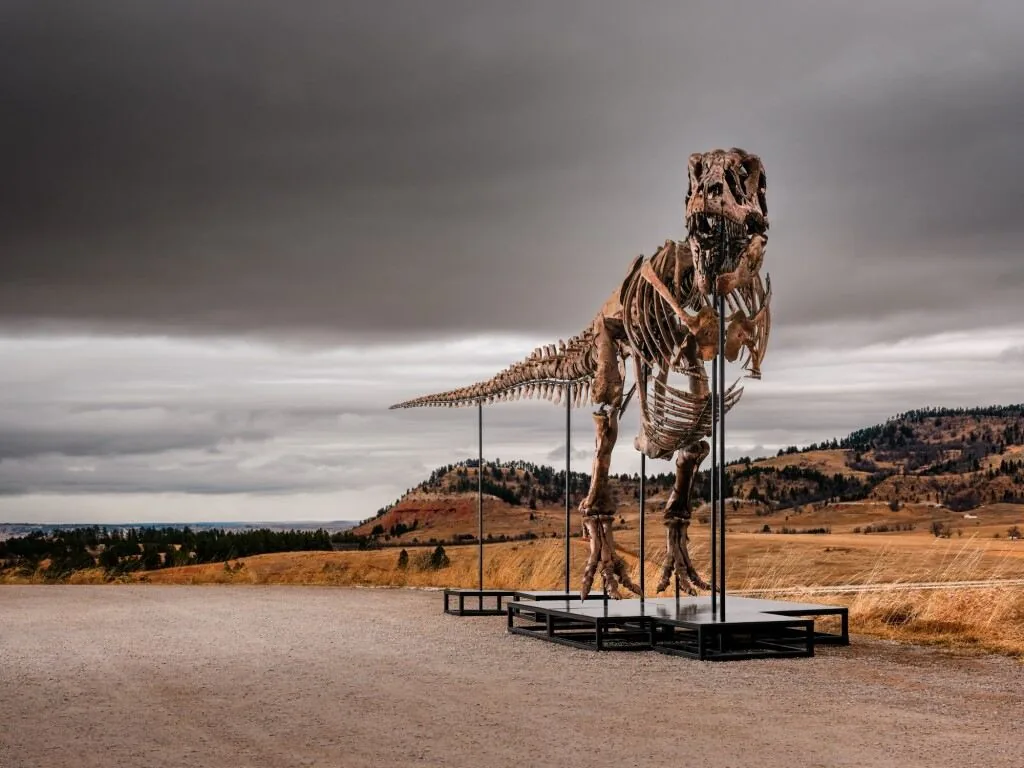
A remarkably complete Tyrannosaurus rex fossil, nicknamed "Gus," is poised to make history at a Sotheby's auction in New York on Tuesday, potentially fetching tens of millions of dollars. The 38-foot-long skeleton, estimated to sell for between $20 million and $30 million, could surpass previous records for fossil sales, according to reports. This extraordinary specimen offers a rare glimpse into the life of the apex predator that roamed North America approximately 67 million years ago.
Discovered on private land in South Dakota starting in 2021, the fossil is named for ranch owner Gary "Gus" Licking, who had long suspected a significant discovery lay beneath his expansive 6,500-acre property before his passing. Gus is not only one of the most complete T. rex skeletons known, comprising 61% of its bones and 75% to 80% by mass, but also one of the largest. Its scientific value is further enhanced by evidence of healed bone fractures and a prominent bite mark on the skull, indicating a dramatic past encounter.
The soaring prices for dinosaur fossils have raised concerns within the scientific community. Paleontologists fear that increasingly high auction values may push these invaluable specimens out of reach for museums and research institutions, potentially limiting public access and further scientific study. The fate of Gus, like other high-profile fossil finds, hangs in the balance between private acquisition and institutional preservation.
Scientific Significance and Market Trends
The sale of such a significant T. rex fossil highlights a growing trend in the high-stakes market for unique paleontological finds. Last year, a Stegosaurus skeleton known as "Apex" set a new record by selling for $44.6 million, far exceeding its initial estimate. Before that, a T. rex named "Stan" commanded nearly $32 million, a price significantly higher than its $6 million to $8 million valuation.
These escalating figures demonstrate a substantial increase in demand and valuation for dinosaur fossils, driven by both private collectors and institutions. However, the financial barrier is becoming prohibitive for many museums. "We are seeing a concerning trend where these incredibly important scientific assets are being acquired by private individuals, which can mean they disappear from public view and scientific study," commented one paleontologist anonymously, reflecting a common sentiment among researchers.
The potential scientific insights offered by Gus are immense. Detailed analysis of its bone structure could reveal more about T. rex growth patterns, diet, and behavior. The bite mark on its skull, for instance, offers tangible evidence of interspecies conflict or territorial disputes. Unlocking these secrets requires dedicated study, which is more feasible when fossils are housed in accessible research environments rather than private collections. The auction house has stated that the fossil will be available for viewing by appointment ahead of the sale, allowing for initial assessments by interested parties.
The outcome of the auction for Gus will be closely watched by scientists and enthusiasts alike. It represents not only a potential record-breaking sale but also a critical moment in the ongoing debate about how irreplaceable natural history artifacts should be preserved and made accessible for future generations. The scientific community hopes that Gus will find a home where its story can continue to be told and studied, rather than becoming a private trophy.