
New Jurassic Bird Fossil Shows Birds Evolved Tails in Steps
A newly discovered Jurassic bird fossil from China, named Zhengheornis buyu, provides crucial evidence that bird tails shortened gradually before fusing into the pygostyle used for flight today.

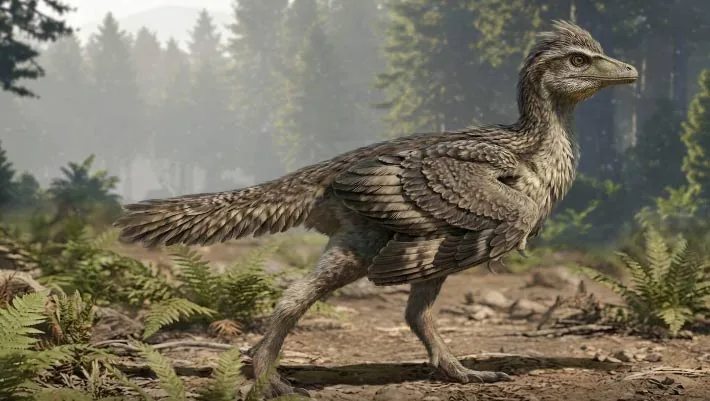
Paleontologists in China have unearthed a new species of Jurassic bird, Zhengheornis buyu, whose unusually short tail offers significant insights into the evolutionary transition from long, dinosaur-like tails to the compact pygostyle found in modern birds. This discovery, detailed in a recent publication, addresses a long-standing puzzle in paleontology regarding how early birds developed the specialized tail structure essential for flight.
Modern birds possess a short tail formed by a fused bone structure called the pygostyle, which supports their tail feathers and is critical for aerial maneuverability. In contrast, their dinosaur ancestors had elongated tails with numerous vertebrae. The intermediate stages of this evolutionary shift have been poorly documented due to a scarcity of fossil evidence. Zhengheornis buyu appears to fill this gap, showcasing an abbreviated tail that is not yet fully fused.
“Because long-tailed and short-tailed birds appeared nearly simultaneously in the early fossil record without clear intermediates, evolutionary biologists have long argued that a transitional species having an abbreviated but entirely unfused bony tail was biologically improbable and unlikely to have ever existed,” explained Dr. Zhonghe Zhou, a paleontologist at the Institute of Vertebrate Paleontology and Paleoanthropology at the Chinese Academy of Sciences. The recent findings directly challenge this perspective.
The holotype specimen of Zhengheornis buyu was discovered in 2024 within the Nanyuan Formation near Yangyuan village in Zhenghe County, Fujian Province, China. Radiometric dating places the fossil at approximately 148 to 150 million years ago, near the close of the Jurassic period, a time when early avian diversity was expanding. This find marks the fourth bird species identified from the Zhenghe Fauna, joining previously known taxa like Fujianvenator and Baminornis.
Researchers estimate Zhengheornis buyu had a body mass between 74 and 163 grams, making it smaller than some previously identified early birds, including smaller specimens of Archaeopteryx. The tail of Zhengheornis buyu features approximately 15 vertebrae, significantly fewer than the 23-24 found in Archaeopteryx or the over 30 in other primitive bird relatives. Crucially, these vertebrae remain separate, indicating a stage before the complete fusion into a pygostyle.
Anatomy Reveals Stepwise Evolution
The unique anatomy of Zhengheornis buyu, particularly its tail structure, indicates a gradual evolutionary process rather than a simultaneous development of tail reduction and pygostyle fusion. The two terminal tail bones are notably box-shaped, a feature also observed in the distantly related dinosaur Caudipteryx. This anatomical mosaic suggests that the reduction in the number of tail vertebrae preceded the fusion of these bones.
“This anatomical mosaic proves a stepwise evolutionary path: the vertebral reduction and shortening preceded pygostyle fusion in early bird evolution,” stated Dr. Min Wang, also from the Institute of Vertebrate Paleontology and Paleoanthropology at the Chinese Academy of Sciences. This finding helps clarify the sequence of anatomical changes that led to the modern bird tail.
Further analysis of the Zhengheornis buyu fossil indicates it was not specifically adapted for life in trees or on the ground, unlike some other Jurassic birds discovered in the region. This suggests that by the late Jurassic, early birds had already begun to diversify into various ecological niches.
“The disparate body size, skeletal architecture, and niche preferences among co-occurring Zhenghe birds, varying from the generalist Zhengheornis buyu to the cursorial Fujianvenator, provide indisputable evidence that avialans had already underwent a major adaptive radiation by the very end of the Jurassic period,” the paleontologists concluded. This landmark discovery helps reconcile long-standing debates about the timing and mechanisms of early bird diversification.