
Japan's Mars Moon Mission Aims for Martian Soil Samples
Japan's space agency launched a spacecraft targeting the moons of Mars. The mission, called Martian Moons eXploration (MMX), aims to collect soil samples from Phobos and Deimos.

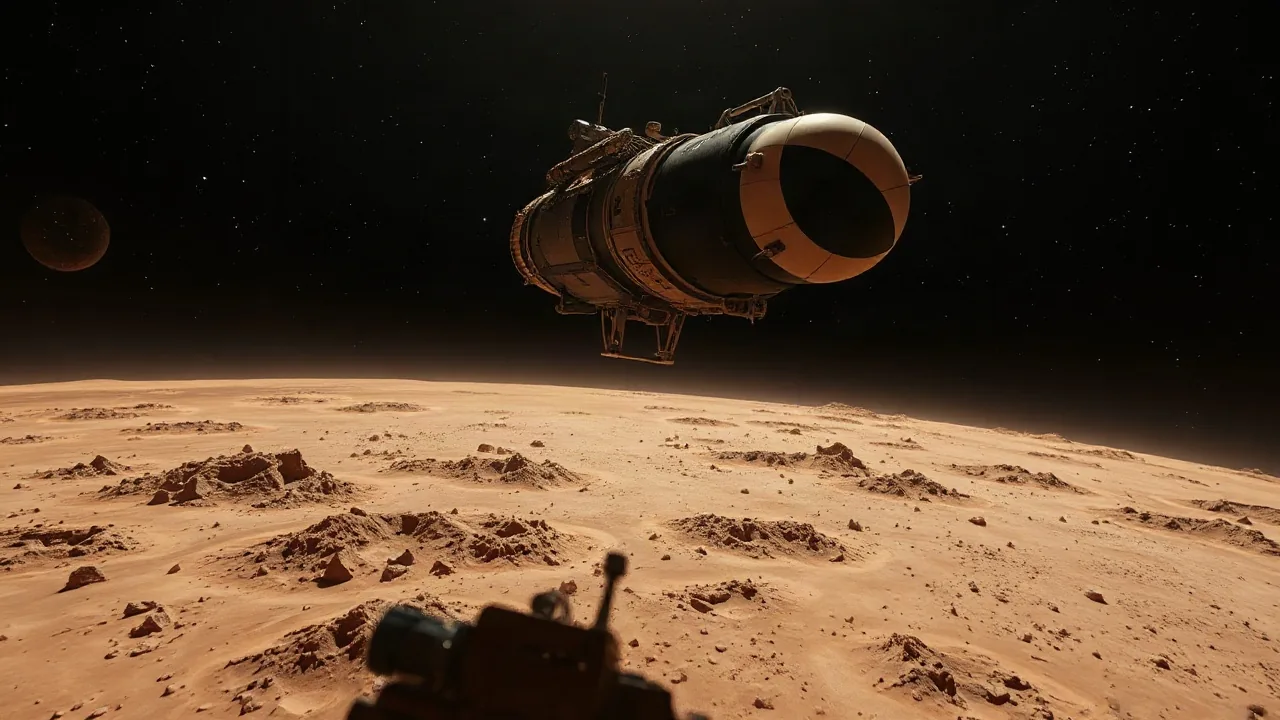
Japan's space agency successfully launched a pioneering mission on Monday, October 20, 2026, aiming to explore the mysterious moons of Mars and return soil samples to Earth. The Martian Moons eXploration (MMX) spacecraft, developed by the Japan Aerospace Exploration Agency (JAXA), lifted off from the Tanegashima Space Center atop an H-IIA rocket. This ambitious undertaking marks a significant step in humanity's quest to understand the Red Planet and its two small, irregularly shaped satellites, Phobos and Deimos.
The MMX mission is designed to orbit Mars and then descend to Phobos, one of the two Martian moons. Scientists plan to collect a soil sample from the moon's surface, a feat never before accomplished. After this delicate maneuver, the spacecraft will travel to Deimos for further observation before commencing its journey back to Earth, with sample return anticipated in 2031. The success of this mission could provide unprecedented insights into the formation of Mars and its moons, potentially shedding light on the early solar system.
Unraveling Martian Moon Mysteries
Phobos and Deimos, discovered in 1877, have long puzzled astronomers. Their origins remain a subject of debate, with theories suggesting they could be captured asteroids or remnants of a colossal impact on early Mars. The MMX mission aims to gather data that could help resolve this long-standing scientific enigma. By analyzing the composition of the soil samples, scientists hope to determine whether the moons are native to the Martian system or originated elsewhere in the solar system.
The mission also includes a secondary objective: deploying a small rover onto the surface of Phobos. Developed by NASA in collaboration with JAXA, this rover will conduct further surface analysis and transmit data back to the MMX orbiter. This international collaboration underscores the global effort to push the boundaries of space exploration and deepen our understanding of celestial bodies beyond Earth. The data gathered will be crucial for future crewed missions to Mars.
The journey to Mars will take approximately seven months, with the spacecraft expected to enter Martian orbit in 2027. Following its close-up study of Phobos and Deimos, the MMX spacecraft will begin its lengthy return trip in 2030, carrying its precious cargo of Martian moon soil. The samples are expected to land back on Earth in July 2031. This extensive timeline reflects the vast distances involved and the complex orbital mechanics required for such a mission.
This endeavor represents Japan's most ambitious space mission to date and signifies its growing role in international space exploration. Previous missions have focused on asteroid sample returns and lunar exploration, but the MMX mission to the Martian moons represents a significant escalation in JAXA's capabilities. The data and samples collected will be made available to researchers worldwide, fostering a new era of discovery about our planetary neighbor.