
Apple's New AI Siri Beta Available to Public via iOS 27
Apple has released the iOS 27 public beta, allowing millions of users to test its significantly upgraded AI-powered Siri. This marks the first broad access to the revamped assistant before its fall launch.

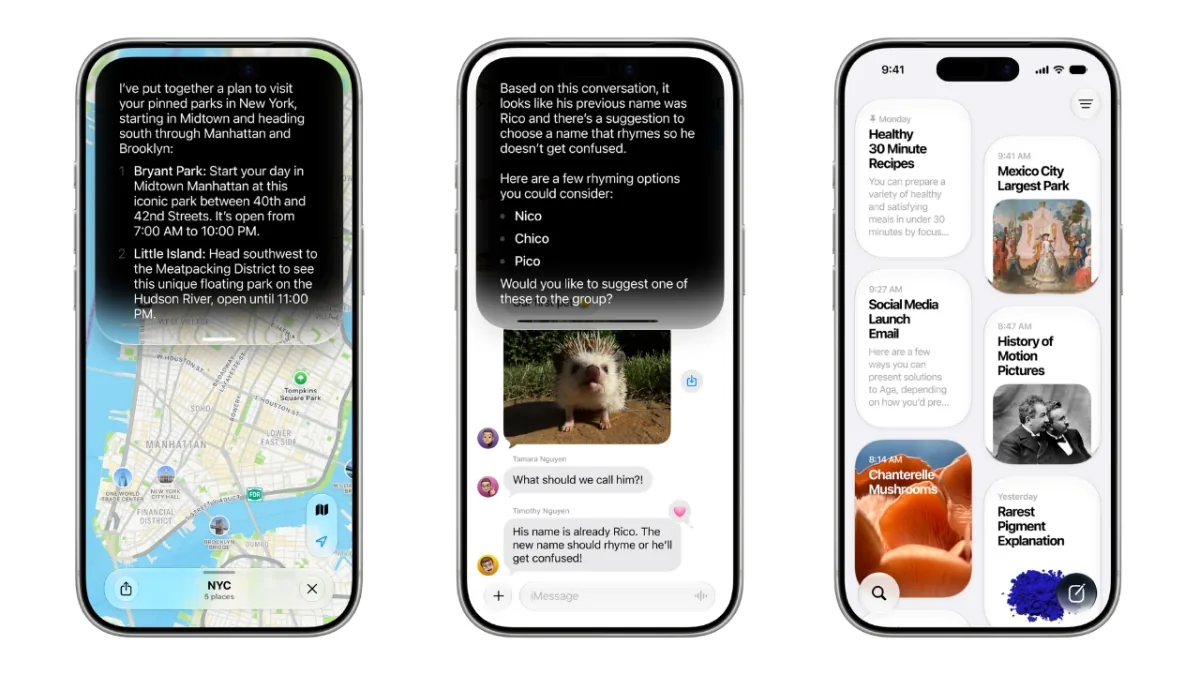
Apple is now allowing the general public to test its most significant overhaul of Siri, rolling out the iOS 27 public beta. This release offers everyday users a chance to experience the new AI assistant ahead of its official launch later this fall. The public beta represents the first time Apple has made its AI-enhanced Siri accessible to a wide audience, beyond just developers.
With an estimated 2.5 billion active devices globally, even a small percentage of users installing the public beta will constitute the largest-ever test for Apple’s redesigned AI assistant. This update positions Siri as a direct competitor to advanced models like ChatGPT, Gemini, and Claude.
Unveiled at the Worldwide Developers Conference in June, the enhanced Siri transforms the long-standing voice assistant into a more potent, AI-driven tool. It can now access on-device information, including emails, photos, and messages. Siri can also understand context from what is displayed on the screen and base its answers on broad knowledge, mirroring the capabilities of contemporary AI chatbots. Its integration across the operating system has also been deepened.
Users can activate the new Siri by saying "Hey Siri," pressing the side button, or by swiping down from the Dynamic Island. Furthermore, it's now integrated into Spotlight, iPhone's built-in search engine, amplifying its power to answer a vast array of questions.
A Standalone App and Deeper Integration
For the first time, Siri has its own dedicated stand-alone application. This may appeal to users already accustomed to interacting with chatbots like ChatGPT or Gemini. However, given Siri's deep integration across the iPhone's core functions, a separate app feels somewhat redundant.
Beyond the iPhone, the upgraded Siri is available across Apple's entire product ecosystem, including iPad, Mac, Apple Watch, CarPlay, AirPods, Apple TV, and the Vision Pro headset.
Under the hood, Siri AI is powered by Apple Intelligence, which includes the company's new Foundation Models. These models run locally on the device, utilizing Apple's Private Cloud Compute for processing. Apple developed these Foundation Models in collaboration with Google's Gemini model, though they are not simply a rebranded version of Gemini. Instead, Apple's models were specifically built for its proprietary Apple Silicon architecture, using unique data sets. This process involved distilling Google's Gemini to create smaller, highly efficient models embedded within iOS and other Apple software. Apple assures users that its Private Cloud Compute infrastructure ensures personal data remains private and is not accessible by Apple.
Early tests of the developer version of Siri AI demonstrated improved performance in handling on-device tasks. This includes locating specific photos within the Photo Library, summarizing group text conversations, adding calendar appointments from text messages, and identifying nutritional information from camera views. The assistant also showed enhanced ability to answer questions that previously would have required a web search, such as providing details on local events or current news topics.
During the developer beta phase, Siri occasionally encountered errors or became confused. For example, an inquiry about recent news regarding Iran resulted in a search of the user's contacts for a person with that name. Despite these early issues, the potential for Siri to become an integral part of daily digital life is clear, especially given its seamless, app-free accessibility.
The developer betas released earlier this year have generally been stable, making the current public beta a more recommendable option. However, users should exercise caution when installing beta software. Those who require absolute device stability and error-free operation may prefer to wait for the official public launch of iOS 27, anticipated in September.