
Clean Energy Powers Sustainable Agriculture in 2026
Solar panels and renewable power are reshaping farm operations across the US, cutting emissions while boosting crop yields. Industry leaders report a 40% surge in green tech adoption on agricultural land this year.

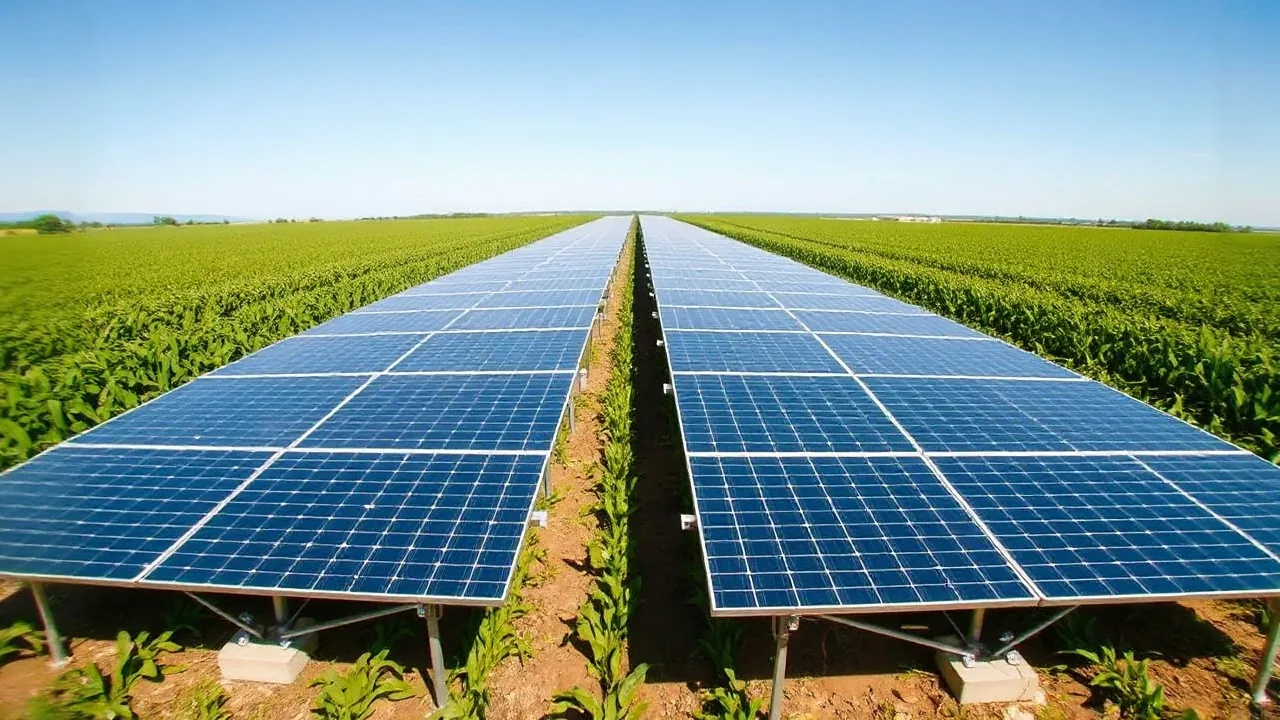
Across the Midwest, solar arrays now shadow cornfields as farmers install photovoltaic systems to power irrigation, grain storage, and equipment. The shift reflects a fundamental change in agricultural operations: clean energy has moved from niche experiment to mainstream farm infrastructure in 2026.
According to a report from the American Farm Bureau Federation released in July 2026, 62% of mid-sized farming operations adopted at least one renewable energy system in the past 18 months. Solar installations on farmland increased by 4.8 gigawatts nationally, while wind-powered irrigation systems became standard in drought-prone regions.
"We're seeing a real inflection point," said Dr. Margaret Chen, director of the Agricultural Resilience Institute at UC Davis. "Farmers aren't choosing renewable energy for environmental reasons alone anymore. The economics have flipped. Solar pays for itself in five to seven years, and government incentives make it nearly risk-free."
Renewable Power Cuts Operating Costs
The business case for farm-based renewables has strengthened considerably. Electricity costs for agricultural operations rose 18% between 2023 and 2026, prompting many farmers to install on-site generation. Solar systems now cost 35% less per watt than they did three years ago, while battery storage has dropped 40% in price.
Iowa farmer James Rodriguez installed a 150-kilowatt solar array on 8 acres near Des Moines in spring 2026. His operation now generates 60% of its power on-site, reducing annual energy expenses by $47,000. The system also provides backup power during grid outages, a critical feature as extreme weather events disrupt utility service.
Battery technology has emerged as a game-changer for agricultural sustainability. Farms can now store daytime solar generation for use during nighttime cooling, grain drying, and refrigeration. This capability extends the utility of renewable energy beyond sunlight hours.
Green Tech Integration with Crop Management
Green tech adoption extends beyond energy production. Precision irrigation systems powered by renewables, soil sensors connected to AI platforms, and climate tech tools allow farmers to optimize water use and reduce chemical inputs simultaneously.
A consortium of 340 farms across five states participated in a 2026 pilot program measuring emissions reduction from combined renewable energy and precision farming practices. Results showed a 34% decrease in carbon per bushel of corn and a 22% reduction in water use compared to conventional operations.
Renewable-powered vertical farming and greenhouse operations have also expanded significantly. LED grow lights powered by on-site solar arrays allow year-round production in regions with short growing seasons. This approach supports agriculture in colder climates while cutting transportation emissions for fresh produce.
Key applications driving adoption include:
- Solar-powered subsurface drip irrigation in arid regions
- Battery-backed refrigeration for cold storage of perishables
- Wind turbines powering grain mills and processing equipment
- Hybrid systems combining solar and backup generators for reliability
- Microgrid technology linking multiple farms to share renewable power
Regulatory support has accelerated deployment. The US Department of Agriculture expanded its Rural Energy for America grant program in 2025, approving $680 million in funding for renewable energy systems on agricultural land through 2026. Grants now cover up to 40% of project costs for eligible producers.
Scaling Challenges and Market Outlook
Despite rapid growth, barriers remain. Initial capital requirements, grid interconnection delays, and financing constraints limit adoption among smaller operations. Rural areas often lack specialized contractors for installation and maintenance of solar and wind systems.
Industry analysts project the agricultural renewable energy market will reach $18 billion annually by 2030, up from $6.2 billion in 2024. Major equipment manufacturers including John Deere and AGCO have begun bundling renewable energy solutions with farm machinery packages.
Supply chain resilience is emerging as a secondary benefit. Farms generating their own power reduce dependence on utilities vulnerable to extreme weather and grid failures. This self-sufficiency becomes increasingly valuable as climate-driven outages lengthen and intensify.
The convergence of renewable energy, precision agriculture, and digital monitoring tools represents a fundamental restructuring of how food is grown in North America. By 2026, clean energy adoption has stopped being optional for competitive farming operations and has become essential infrastructure for economic survival and environmental stewardship.