
Galaxy Z Fold8 vs. Z Fold8 Ultra: Which Samsung Fold Is Right For You?
Samsung's latest foldable phones, the Galaxy Z Fold8 and Z Fold8 Ultra, offer distinct advantages depending on user priorities. This comparison details their screen formats and usability for content consumption and productivity.

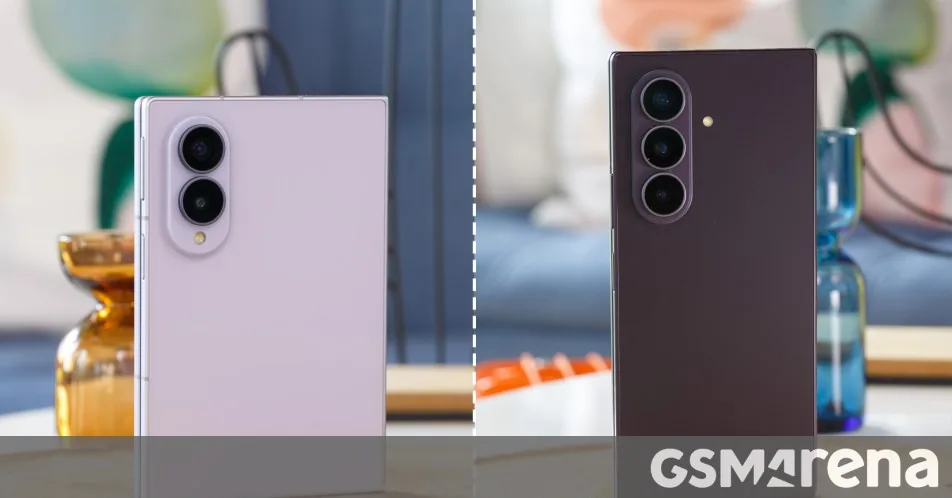
Samsung has unveiled its newest foldable devices, the Galaxy Z Fold8 and the larger Galaxy Z Fold8 Ultra, prompting consumers to consider which model best suits their needs. While the price difference is not substantial, the decision hinges on how each device's unique design and display dimensions serve different user experiences, from media consumption to productivity tasks.
The most apparent distinction lies in the physical dimensions. The Z Fold8 Ultra is noticeably larger, and although it boasts a thinner profile, it feels more substantial in hand. Many users may find the standard Z Fold8 to be more manageable and versatile for daily use. When examining the displays, both devices offer compelling options, but their proportions cater to different uses.
On the cover display, the Z Fold8 Ultra offers a slightly larger overall area of approximately 98.7 cm², compared to the Z Fold8's 88.2 cm². However, the Z Fold8's cover screen is proportionally wider, making it more advantageous for viewing standard 16:9 video content, which appears about 4.2% larger with minimal black bars. It also excels with 4:3 video and provides a more comfortable experience for reading books and comics due to its aspect ratio. The Z Fold8 Ultra's taller cover display is better suited for scrolling social media feeds and viewing 21:9 cinematic content, which appears about 65% larger.
Display Utility: Content vs. Productivity
The main internal displays also present a trade-off. The Z Fold8 Ultra's larger 204.4 cm² screen offers a significant advantage for productivity and multitasking. Its wider aspect ratio in portrait mode, approximately 18% wider than the standard Fold8, allows for more content to be displayed on websites, spreadsheets, and in dual-pane applications. This makes it an ideal choice for users who heavily rely on these functions.
Conversely, the Z Fold8's main display, with a total area of 177.8 cm², features a more traditional 4:3 aspect ratio that proves superior for consuming content like videos, books, and comics. Despite the Ultra's larger screen real estate, the Z Fold8's dimensions result in a more immersive video-watching experience with less wasted screen space, offering about 5% larger video windows and significantly better display coverage for various aspect ratios. For gaming, the Z Fold8 Ultra generally provides a more expansive experience in titles that adapt to its larger screen, particularly strategy and action games. However, the standard Z Fold8 is better for fixed-aspect Android games and retro emulation, offering a slightly larger image for 4:3 content.
Ultimately, the choice between the Samsung Galaxy Z Fold8 and the Samsung Galaxy Z Fold8 Ultra depends on individual priorities. The standard Fold8 is positioned as a specialist for content consumption, excelling with its display proportions for video, reading, and traditional gaming. The Z Fold8 Ultra, however, is the powerhouse for productivity and vertical content, offering a more expansive canvas for multitasking, web browsing, and applications designed for larger screens. Both devices leverage advanced display technology, but their unique form factors and screen dimensions cater to distinct user needs in the evolving foldable phones market.