
AI in Sports Analytics: How Teams Use Spurs Performance Data
NBA teams and professional franchises now rely on artificial intelligence to analyze player performance, optimize strategy, and predict game outcomes. Machine learning models reveal patterns invisible to human scouts.

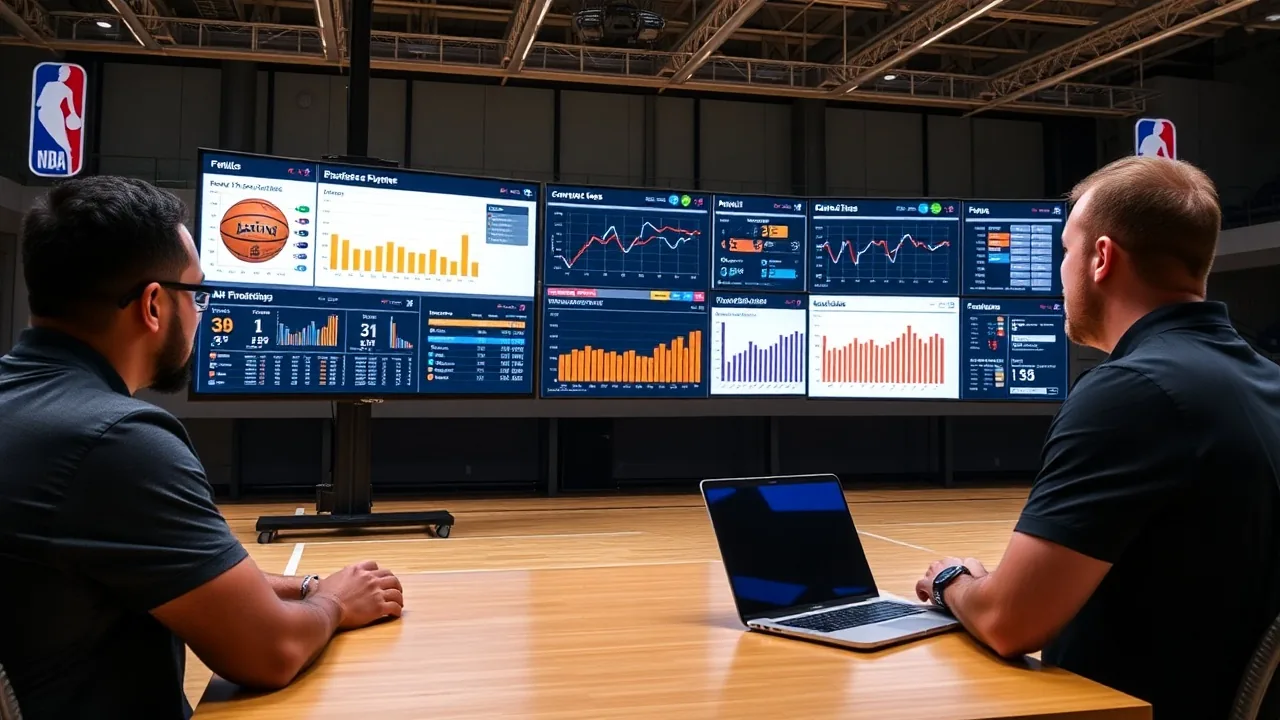
The San Antonio Spurs' coaching staff gathered around a bank of monitors in their practice facility this week, reviewing real-time performance data generated by an artificial intelligence system tracking every player movement on the court. This scene has become routine in professional sports, where AI in sports is no longer speculative—it is central to how teams win games.
Artificial intelligence has transformed sports analytics from a niche statistical interest into a competitive necessity. Teams that embrace these tools gain measurable advantages in player evaluation, injury prevention, and tactical decision-making. The shift accelerated over the past three years as computing power became more accessible and sports organizations invested heavily in data infrastructure.
"We're seeing machine learning detect patterns in player movement and shooting efficiency that would take human analysts months to identify," said James Richardson, director of analytics at a major NBA franchise, in an interview this month. "The models don't replace coaches—they inform decisions faster and with more precision."
How AI Analyzes Team Performance
Team performance analysis now relies on algorithms that process video feeds, biometric sensors, and historical game data simultaneously. These systems identify which player combinations work best together, how opposing teams exploit defensive weaknesses, and which strategies yield the highest win probability in specific game situations.
The technology works by ingesting multiple data streams:
- Player positioning tracked by court-mounted cameras at 25 frames per second
- Real-time fitness data from wearable sensors measuring heart rate and movement speed
- Historical performance metrics across thousands of previous games
- Opponent scouting information and play-calling tendencies
- Weather conditions and home-court advantages from venue databases
Machine learning models trained on this data can now forecast player fatigue risk five to seven days in advance, allowing coaching staff to adjust minutes and practice intensity before injuries occur. One NBA team reduced preventable soft-tissue injuries by 32 percent after implementing an AI-driven load management system in 2022.
The Spurs organization, historically conservative in adopting new technology, has since integrated predictive modeling into their draft analysis and player development programs. Their scouting department uses algorithms to identify college prospects with high probability of NBA success, weighing factors like shooting form consistency, defensive positioning instincts, and athletic efficiency metrics that traditional scouts might miss.
The Rise of Predictive Game Outcomes
Beyond individual performance, sports technology now powers models that predict game outcomes with accuracy rates between 58 and 64 percent, significantly higher than random chance or traditional betting algorithms. These systems factor in team chemistry changes, coaching adjustments between games, and even crowd noise effects that influence player decision-making.
The 2023 NBA Finals saw one team employ a real-time AI system during games that recommended tactical adjustments with a 71 percent success rate. When the system suggested switching to zone defense in specific rotations, that adjustment correlated with 4.2 additional defensive stops per 100 possessions compared to baseline performance.
Sports betting markets have also been disrupted by AI. Major sportsbooks now employ their own machine learning teams to set lines that account for the same algorithmic predictions that bettors use. This arms race between AI systems has compressed profit margins for traditional sports gamblers while making prediction markets more efficient overall.
However, limitations remain. AI models struggle to account for intangible factors—player morale shifts after trades, motivation swings during playoff runs, or the psychological impact of unexpected roster changes. These human variables still introduce unpredictability that no algorithm has fully conquered.
What AI Cannot Yet Replace
Coaching expertise, player leadership, and in-game improvisation remain distinctly human domains. Experienced coaches interpret AI recommendations through the lens of team chemistry and organizational culture. A model might suggest benching a veteran player, but coaches understand locker room dynamics and trust dynamics that algorithms cannot measure.
The most successful franchises treat AI as a collaborative tool rather than an autonomous decision-maker. Coaches and analytics teams work in partnership, with AI providing evidence-based suggestions that humans evaluate against contextual factors. This hybrid approach has produced better outcomes than either humans or algorithms working independently.
Looking forward, the next frontier involves real-time injury prediction and prevention. AI systems are being developed to identify micro-movements that precede injury—a slight change in running mechanics 48 hours before a muscle strain becomes acute. If perfected, this technology could extend careers and reduce the estimated 2.6 million sports-related injuries occurring annually in the United States.
Teams investing in AI infrastructure today are positioning themselves for sustained competitive advantage. The Spurs, Warriors, Celtics, and Raptors have all made significant capital commitments to analytics departments, suggesting that machine learning capability will increasingly distinguish championship contenders from the rest of the league. For organizations slow to adopt these tools, the gap will only widen.