
NASA Roman Telescope to Revolutionize Search for Hidden Neutron Stars
NASA's upcoming Nancy Grace Roman Space Telescope may discover dozens of invisible neutron stars using gravitational microlensing. New simulations show its precise measurements can reveal these dense stellar remnants.

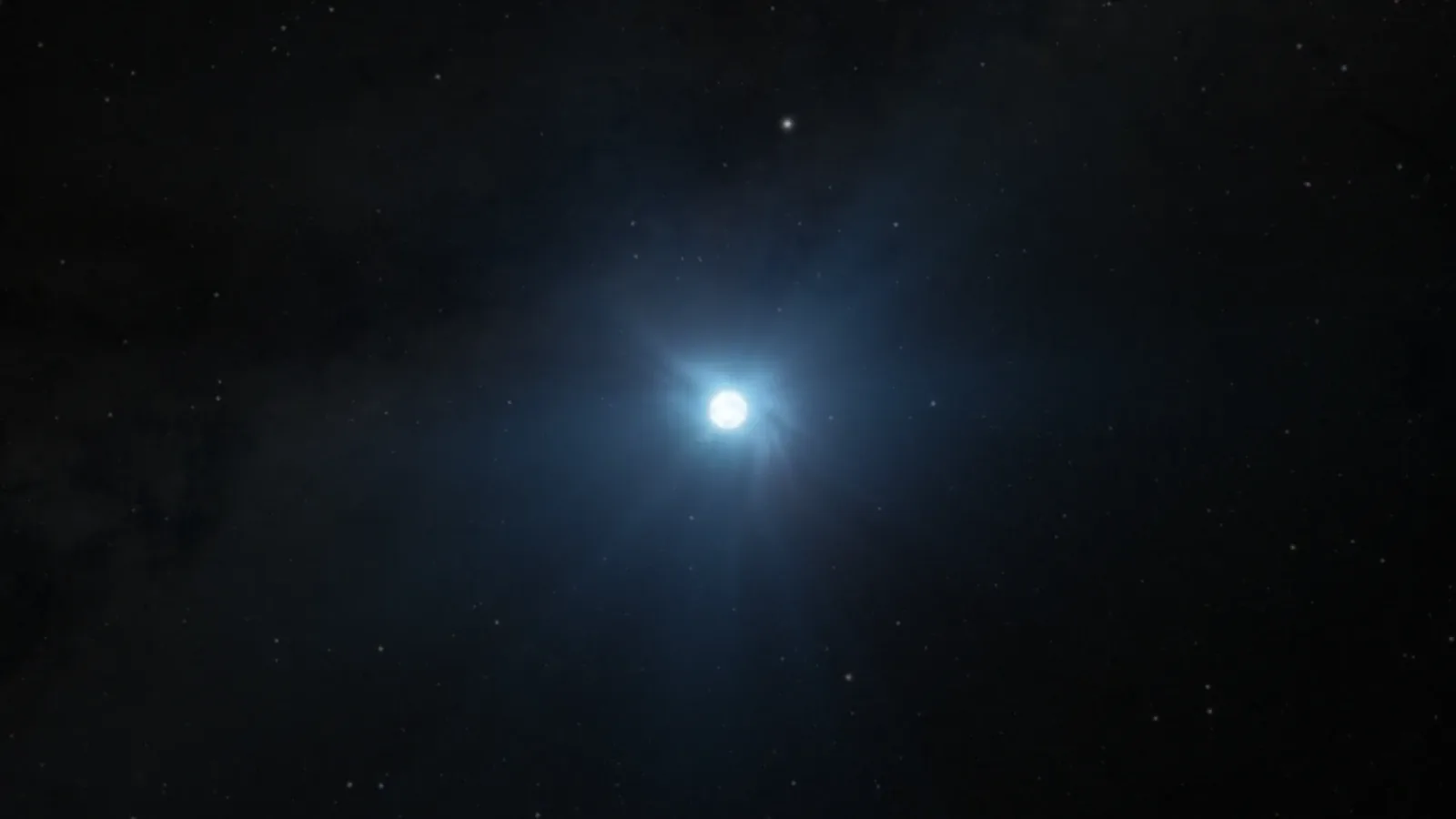
NASA's Nancy Grace Roman Space Telescope is poised to revolutionize the hunt for elusive neutron stars, the incredibly dense remnants of massive stars, according to a new study. While these objects are believed to be abundant in the Milky Way galaxy, their dim nature makes them exceedingly difficult to detect. However, detailed simulations suggest that Roman's unique observational capabilities could identify and characterize dozens of these isolated stellar cores by observing their gravitational influence on light, a phenomenon known as gravitational microlensing.
Neutron stars, packing more mass than our Sun into a sphere roughly the size of a city, offer a unique window into understanding stellar evolution, extreme physics, and the distribution of heavy elements in the universe. Yet, unless they emit detectable radio waves as pulsars or glow in X-rays, they largely elude even the most powerful telescopes. The Roman telescope offers a novel approach: its powerful gravity can bend and magnify the light from more distant background stars as it passes by, a process called microlensing. While the temporary brightening of the background star is observable by many instruments, Roman’s exceptional precision in measuring both the brightening and the subtle positional shift of the lensed star—a technique called astrometry—sets it apart.
Unveiling the Unseen with Astrometry
This astrometric capability is key to detecting neutron stars. Because neutron stars are relatively massive, they produce a more significant shift in a background star's apparent position than less massive objects. Roman's ability to measure this tiny deflection with high accuracy will not only allow astronomers to detect these hidden objects but also, in some cases, directly determine their mass. "Photometry tells us that something passed in front of the star, but it’s the amount the star’s position shifts that tells us how massive that object is," explained Dr. Peter McGill, a co-author of the study from Lawrence Livermore National Laboratory. "By measuring that tiny deflection on the sky, we can directly weigh something that is otherwise unseen." This direct mass measurement is crucial for distinguishing neutron stars from black holes and understanding the dynamics of these objects, including the powerful "kicks" they receive during supernova explosions that can send them hurtling through space at immense speeds.
The research team plans to leverage Roman's future Galactic Bulge Time Domain Survey, an ambitious project that will continuously monitor millions of stars. "We’re going to get to work as soon as the data start coming in," Dr. McGill stated. "Even in the first months after commissioning, we expect to start identifying promising events." Even a limited number of confirmed detections could significantly refine models of stellar explosions and the behavior of matter under extreme conditions. Currently, scientists estimate there could be tens of millions to hundreds of millions of neutron stars in our galaxy, yet only a few thousand have been identified, mostly as pulsars. The ability to measure the masses of isolated neutron stars, rather than just those in binary systems, will provide a much more representative picture of the neutron star population. "We’re seeing a small sample that’s not representative of the big picture," noted lead author Zofia Kaczmarek of Heidelberg University. "Even a single mass measurement would be very powerful."
This study also highlights an unexpected benefit of Roman's design. While the telescope's survey is primarily intended to find exoplanets using photometric microlensing, its sophisticated astrometric sensors are equally adept at uncovering other unseen populations. This application was not part of the original mission plan but demonstrates the versatility of Roman's instruments, potentially opening entirely new avenues of astrophysical research. If these simulations prove accurate, the Roman Space Telescope could provide the first statistically significant sample of isolated neutron stars, revealing a vast, previously hidden population and profoundly advancing our understanding of astrophysics and the cosmos.