
Blue Origin's Plan to Transform Space Tourism and Orbital Access
Blue Origin is expanding beyond suborbital joyrides with New Glenn rockets and orbital missions. The company aims to reshape commercial spaceflight and compete directly with established launch providers.

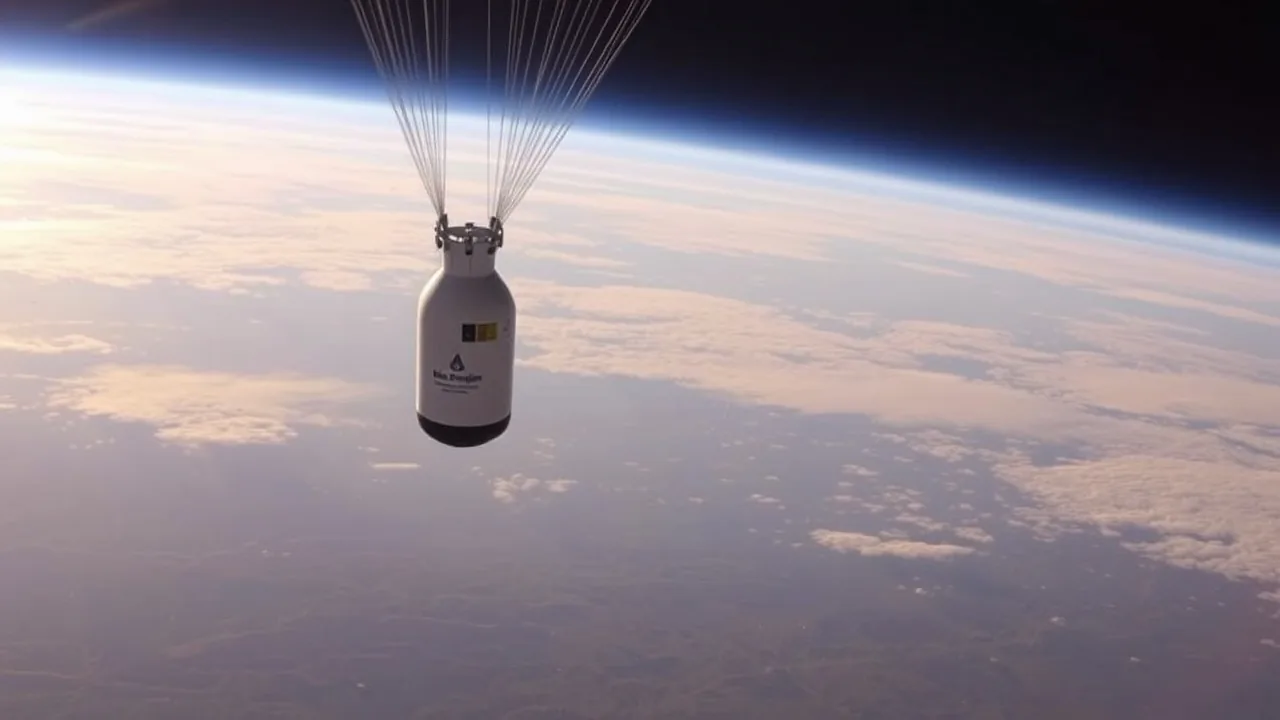
Jeff Bezos's Blue Origin conducted its sixth crewed New Shepard flight in April 2024, reinforcing its position as the only company regularly launching paying passengers on suborbital joyrides. However, the company's ambitions extend far beyond 11-minute hops to the edge of space. Blue Origin is developing heavy-lift launch capability, orbital tourism platforms, and lunar landers that signal a shift toward infrastructure and transportation roles rather than boutique experiences alone.
The cornerstone of this expansion is the New Glenn rocket, a super-heavy-lift vehicle scheduled for its inaugural flight in 2025. Standing 349 feet tall with a payload capacity of 45 metric tons to low-Earth orbit, New Glenn represents Blue Origin's direct answer to SpaceX's Falcon Heavy. The rocket features a reusable first stage and a newly designed second stage, reflecting the company's commitment to cost reduction through repeated launches.
"New Glenn is designed to be the most powerful operational rocket in the world when it comes to heavy-lift capability," said Jarrett Jones, a senior engineer at Blue Origin, during a technical briefing in March 2024. The vehicle will serve multiple markets: national security launches for the U.S. Space Force, commercial satellite deployments, and crewed space tourism missions to orbital altitudes where customers can spend extended periods in weightlessness.
From Suborbital Thrills to Orbital Stays
Blue Origin's New Shepard program has generated over $100 million in ticket sales since 2021, with prices hovering around $250,000 to $300,000 per seat. Yet the company is acutely aware that this market has ceiling constraints. The true growth opportunity, executives argue, lies in orbital tourism and longer-duration missions.
In 2023, Blue Origin announced its partnership with Arizona-based Space Adventures to develop an orbital tourism vehicle. The plan calls for a crewed capsule launched atop New Glenn that would carry up to six passengers to altitudes exceeding 500 kilometers, offering views of Earth's curvature and sustained microgravity. Space Adventures estimates ticket prices will range from $1 million to $5 million per passenger, targeting affluent travelers and corporate sponsors rather than the mass market.
Blue Origin has also entered the aerospace innovation race for orbital refueling infrastructure. The company is developing orbital fuel depots, a capability essential for deep-space missions and lunar transport. By establishing in-space refueling stations, Blue Origin aims to reduce launch costs for heavy payloads and enable long-duration crewed missions beyond low-Earth orbit.
The company's lunar strategy is equally ambitious. Blue Origin is competing for NASA contracts through its Blue Moon program, which includes a family of landers designed to deliver cargo and eventually crewed payloads to the lunar surface. The smallest variant can carry 3.6 metric tons of cargo, while larger versions under development aim for 38 metric tons. NASA selected Blue Origin's HLS (Human Landing System) variant in 2021, awarding the company approximately $3.4 billion in development funding.
Analysts view Blue Origin's diversification strategy as prudent risk management. The company faced setbacks with New Shepard engine production and schedule delays on New Glenn, illustrating the technical and manufacturing challenges of heavy-lift development.
"Blue Origin is positioning itself as an infrastructure provider, not just a tourism operator," said Morgan Stanley aerospace analyst Adam Jonas in a December 2023 report. "This approach reduces dependence on consumer demand and aligns the company with government and commercial satellite operator demand, which is more stable and predictable."
The competitive landscape is intensifying. SpaceX has already flown crewed orbital missions aboard Dragon capsules and maintains contracts worth tens of billions of dollars. Axiom Space and Orbital Reef are developing commercial space stations aimed at hosting researchers, manufacturers, and yes, tourists. Meanwhile, Virgin Galactic pivots from suborbital flight to point-to-point hypersonic aircraft, abandoning the spacecraft market for now.
Blue Origin's advantage lies in vertical integration and Bezos's financial backing. The company manufactures its own engines, avionics, structures, and software in-house across multiple facilities in Florida, Alabama, Texas, and Washington State. This approach contrasts with competitors who rely on supplier networks, enabling faster iteration and proprietary control.
For space exploration, Blue Origin sees multiple revenue streams converging. Government contracts for national security and NASA missions provide steady cash flow. Commercial satellite launches on New Glenn tap the growing demand for mega-constellation deployments. Orbital tourism and research platforms address the emerging market for high-altitude manufacturing and materials science. Lunar transportation supports the emerging lunar economy.
The path forward is not without risk. New Glenn's maiden flight carries immense technical and reputational pressure. Manufacturing ramp-up for orbital vehicles requires precision and capital. Competition from well-funded rivals with operational flying hardware is formidable. Yet Blue Origin has the resources and engineering talent to execute on its vision.
As of early 2024, Blue Origin employs approximately 8,000 people and has raised no external venture capital, remaining entirely funded by Bezos's annual Blue Origin allotment (roughly $1 billion per year). Whether this capital allocation suffices for simultaneous development of New Glenn, orbital vehicles, lunar landers, and refueling infrastructure will become clearer when New Glenn reaches orbit.