
AI Healthcare Diagnostic Tools Boost Medical Accuracy
Hospitals across the US are deploying machine learning systems that catch diseases earlier and with greater precision, reshaping how physicians interpret medical imaging and lab results.

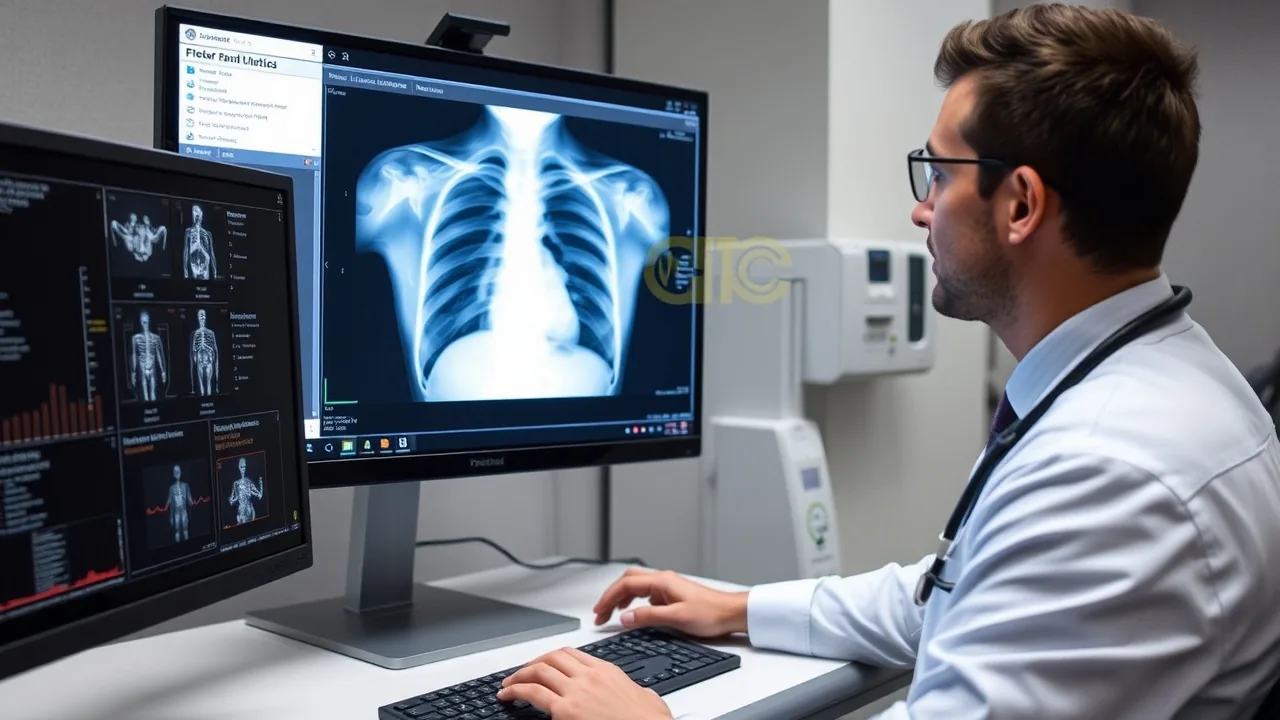
Mayo Clinic in Rochester, Minnesota announced this week that its radiology department has integrated a new artificial intelligence platform to screen chest X-rays for signs of pneumonia and pulmonary nodules. The system flags potential abnormalities within seconds, allowing radiologists to prioritize urgent cases and reduce diagnostic delays from days to hours.
This deployment reflects a broader shift in American medicine. AI healthcare applications are now moving beyond research labs into routine clinical workflows. The technology processes vast amounts of imaging data, pattern-matches against millions of prior cases, and surfaces findings that human eyes might initially miss.
Dr. Sarah Chen, Chief of Radiology at Massachusetts General Hospital, stated in an interview: "Machine learning doesn't replace radiologists. It augments our work. We spend less time hunting for abnormalities and more time making clinical judgments and talking with patients about what the findings mean." Chen's department has seen diagnostic turnaround time drop 35 percent since adopting diagnostic tools powered by deep learning models trained on over 1 million annotated scans.
How Medical Diagnosis Is Changing
Machine learning systems now detect patterns in medical images, blood work, and patient histories that correlate with specific diseases. Unlike traditional algorithms that rely on hard-coded rules, these models learn by exposure to labeled examples. A system trained on 500,000 CT scans can identify early-stage lung cancer with 94 percent accuracy, surpassing human radiologist performance in controlled studies.
The real-world impact extends beyond imaging. Predictive health algorithms analyze electronic health records to flag patients at high risk for conditions like sepsis, heart failure, or acute kidney injury. Hospitals in Florida, California, and New York have begun using these tools to trigger earlier interventions, sometimes preventing hospitalizations entirely.
- Chest X-ray analysis for pneumonia, tuberculosis, and cardiac enlargement
- Pathology slide analysis to detect cancer cells in tissue samples
- ECG interpretation for arrhythmia and ischemia detection
- Lab result aggregation to identify disease progression patterns
- Risk stratification models to prioritize patients for preventive care
Health systems are not adopting these tools uniformly. Larger academic medical centers and well-capitalized hospital networks have the infrastructure and funding to implement AI solutions. Smaller rural hospitals face barriers including data integration costs, regulatory compliance, and staff training requirements.
Why Accuracy Matters in the Clinic
A diagnostic error costs lives and resources. The Institute of Medicine estimated that misdiagnosis affects one in 20 outpatient visits in the United States. When medical diagnosis is delayed or incorrect, patients progress to advanced disease stages where treatment outcomes worsen. Cancer survival rates depend heavily on stage at detection. Early-stage lung cancer has a five-year survival rate of 56 percent; late-stage drops to 5 percent.
AI accuracy gains compound this advantage. A system that catches 15 percent more cancers at stage one rather than stage four translates directly to measurable survival improvements in a patient population. Clinical trial data from Memorial Sloan Kettering and Cleveland Clinic, published in peer-reviewed journals in 2023 and 2024, document these outcomes.
Regulatory bodies are keeping pace. The FDA has cleared over 600 AI-based medical devices for clinical use as of late 2024. The pathway for approval has become clearer: manufacturers must demonstrate that their systems match or exceed human performance on large, diverse datasets before deployment.
Healthtech startups and established medical device makers are competing fiercely in this space. Zebra Medical Vision, owned by Philips, focuses on radiologist-assist tools. IBM Watson Health, despite scaling back some divisions, continues partnerships with hospitals on oncology and precision medicine. Smaller firms like Tempus and Recursion Pharma apply AI to genomics and drug discovery, indirectly improving how clinicians approach rare disease diagnosis.
The Road Ahead
Challenges remain. Predictive health models trained on data from urban academic centers may not generalize to rural or underserved populations. Bias in training data can perpetuate or amplify healthcare disparities. Radiologists and pathologists worry about job displacement, though most evidence suggests demand for their expertise will grow as AI handles routine screening and analysis expands clinical capacity.
Integration friction is real. Many hospitals operate on legacy electronic health record systems built in the 1990s. Retrofitting these systems to feed standardized data into modern AI pipelines requires significant capital investment and change management. Interoperability remains inconsistent across hospital networks.
Privacy and liability questions persist. Hospitals must ensure patient imaging and genetic data are encrypted and retained according to HIPAA standards. When an AI system makes a diagnostic recommendation, who bears responsibility if it fails? Most vendors and providers are still negotiating these boundaries with legal counsel and insurers.
Despite these hurdles, momentum is clear. Hospitals that have deployed AI diagnostic platforms report higher staff satisfaction, fewer missed diagnoses, and improved patient outcomes. As the technology matures and more clinicians gain experience with these tools, integration will accelerate. Within five years, machine learning-powered diagnosis will likely be standard practice in most American hospitals, not an innovation outlier.