
Webb Telescope Reveals Interstellar Comet 3I/ATLAS Unlike Any Solar System Object
The James Webb Space Telescope has provided unprecedented insights into interstellar comet 3I/ATLAS. Observations reveal it is chemically distinct from comets formed within our own Solar System, suggesting unique origins.

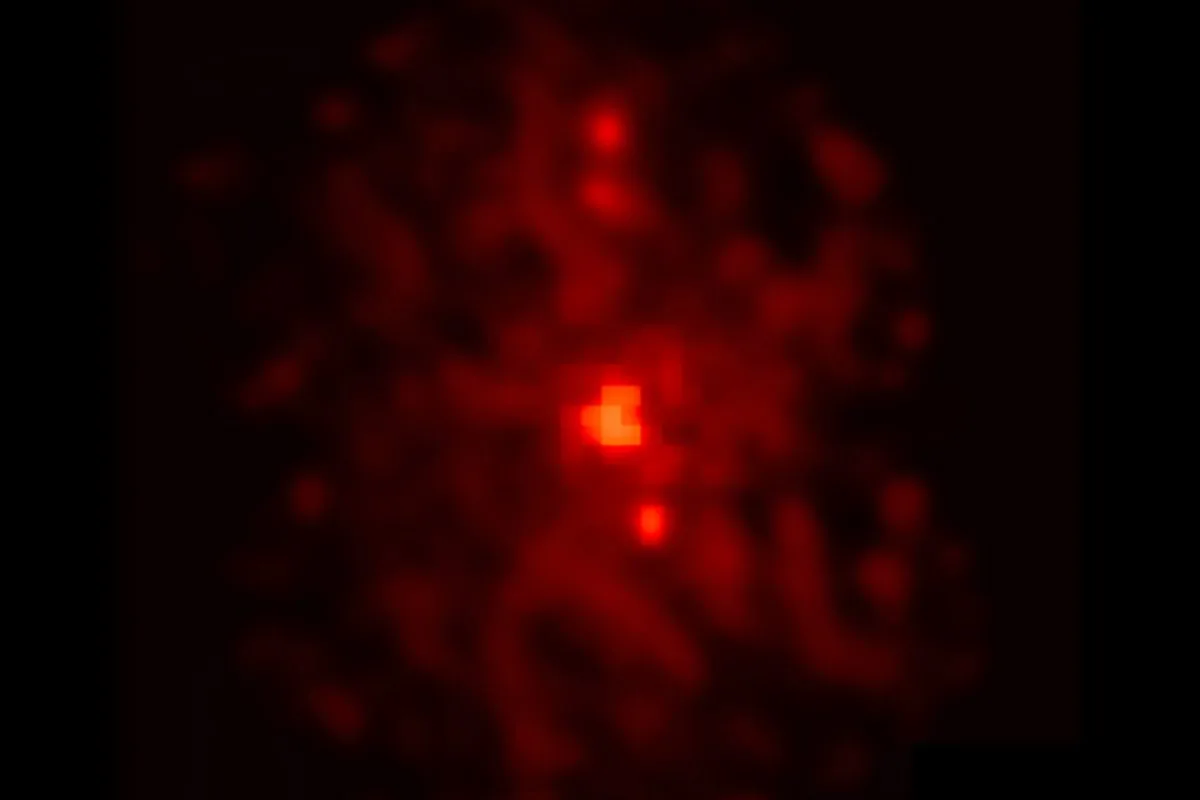
The James Webb Space Telescope (JWST) has captured remarkable data on the interstellar comet 3I/ATLAS, confirming that this visitor from another star system possesses characteristics unlike any known comet within our own Solar System. Observations conducted in late 2025, following the comet's closest approach to the Sun, revealed a unique chemical composition suggesting its formation in a vastly different galactic environment. This cosmic relic may be as old as 10 billion years, potentially predating our Solar System by billions of years.
Comet 3I/ATLAS is classified as an interstellar object, meaning it originated from beyond the Sun's gravitational influence. It is one of only three such bodies ever detected. First identified on July 1, 2025, the comet traversed our Solar System during the latter half of the year. Scientists utilized powerful telescopes, including the JWST, to study it during its brief passage, as it is now on a permanent trajectory out of our celestial neighborhood.
The JWST observed 3I/ATLAS in August 2025, and again in December 2025 after its solar encounter. These later observations, made using the telescope's Mid-Infrared Instrument (MIRI), marked the first time a mid-infrared chemical fingerprint of an interstellar object was obtained. Webb's infrared capabilities allow astronomers to detect cosmic components normally invisible to the human eye.
During the December observations, the comet was between 329 million km (205 million miles) and 379 million km (236 million miles) from the Sun. A significant discovery was the direct detection of methane gas, a first for any interstellar object. This methane was originally frozen within the comet's ice, sublimating into gas as the comet neared the Sun. Researchers suggest the delayed release of methane indicates it was deeply buried within the comet, requiring significant solar heat to reach the surface.
Chemical Composition Offers Clues to Extraterrestrial Origins
The study's authors emphasized that the chemical makeup of 3I/ATLAS provides compelling evidence for its non-Solar System origin. The relative abundance of methane compared to water was found to be surprisingly high. Furthermore, Webb detected that 3I/ATLAS is exceptionally rich in carbon dioxide, releasing significantly more of this gas relative to water than typical comets formed within our Solar System. This discovery offers crucial insights into the primordial conditions of the distant stellar nursery where the interstellar comet formed.
As comet 3I/ATLAS moved away from the Sun and cooled, a decline in gas production was observed, with water showing the most notable decrease. This phenomenon is attributed to the decreasing solar heat causing less surface ice to vaporize. The detailed analysis of its chemical signature, including the detection of methane and high levels of carbon dioxide, distinguishes it starkly from comets like those originating from the Kuiper Belt or Oort Cloud. Understanding these differences helps refine models of planetary system formation across the galaxy.
The observation of 3I/ATLAS by the James Webb Space Telescope is a testament to humanity's advancing astronomical capabilities. Studying such rare visitors provides a unique window into the diverse chemical environments present in other star systems. The findings contribute to a broader understanding of the building blocks of planets and potentially life elsewhere in the universe, reinforcing the idea that the conditions for planetary formation may vary significantly across the cosmos.