
Meteor Explosion: 300 Tons of TNT Force Rocks US Northeast
NASA confirmed a powerful meteor explosion caused a sonic boom felt across the northeastern U.S. The event released energy equivalent to 300 tons of TNT, shattering at an altitude of 40 miles.

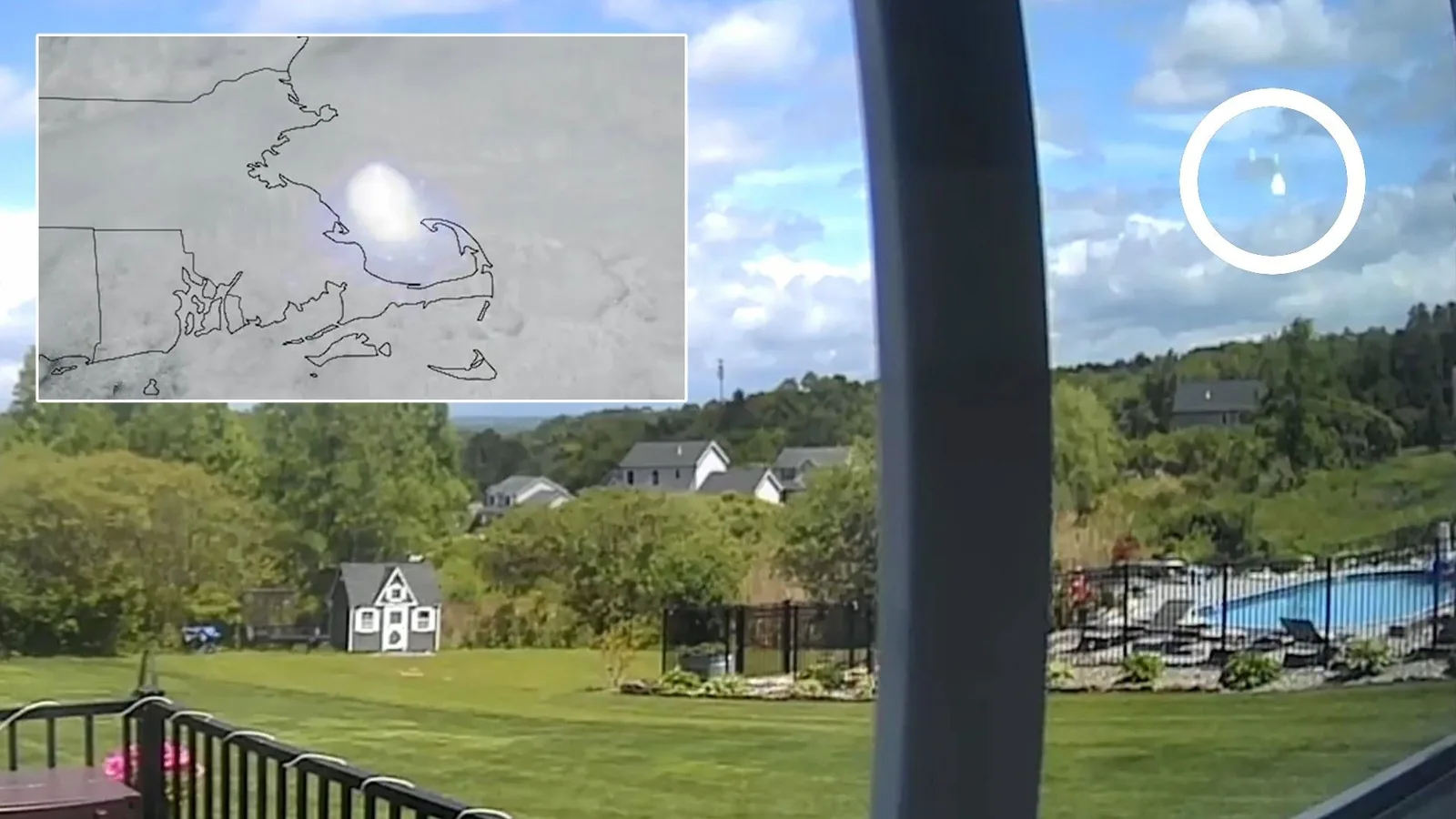
A powerful meteor explosion, releasing energy comparable to approximately 300 tons of TNT, caused a widespread sonic boom across the northeastern United States on Saturday, May 30, 2026. NASA scientists confirmed the event after analyzing satellite imagery and eyewitness accounts. The meteor fragmented at an altitude of about 40 miles above the region spanning northeast Massachusetts and southeast New Hampshire, generating a loud noise that was audible to residents over a wide area.
The determination was made through a combination of reports submitted to the American Meteor Society and crucial data from the GOES-19 satellite, operated by the National Oceanic and Atmospheric Administration (NOAA). Officials from NASA shared on the social platform X that the energy release at the moment of breakup was significant, accounting for the substantial sound experienced. Unlike some celestial events, this particular meteor was not associated with any known meteor showers, which typically occur when Earth passes through the dusty trails of comets or asteroids.
The GOES-19 geostationary lightning mapper successfully captured the bright flash of the meteor. Additionally, footage shared by R. Schott to the American Meteor Society clearly shows the fireball streaking through the daytime sky, accompanied by its audible boom. Video footage of the daytime event was also captured by NBC News, and the Massachusetts Emergency Management Agency reported receiving numerous accounts of an "audible boom" and even ground shaking in the eastern parts of the state.
Meteorite Location and Recovery Prospects
For those hoping to find fragments of the space rock, NASA's Astromaterials Research & Exploration Science division indicated that the meteorites likely fell into the central area of Cape Cod Bay. In scientific parlance, a meteorite fall into water is sometimes referred to as a "fishy squisher." Radar signatures observed by weather stations, including those in Boston, Massachusetts (KBOX), Boston Logan International Airport (TBOS), Long Island, New York (KOKX), and Albany, New York (KENX), helped pinpoint the meteor's trajectory. There were also potential signatures detected near Portland, Maine (KGYX).
NASA officials further elaborated that the water depth at the estimated impact site is approximately 34 meters, or about 100 feet. This depth, they noted, might still be within reach for determined meteorite hunters equipped with a 100-foot rope and a magnet, as most meteorites are strongly attracted to magnetic fields. The agency shared these details, highlighting the scientific interest in recovering such extraterrestrial materials for further study.
The event serves as a vivid reminder of the dynamic nature of our solar system and the constant influx of cosmic material reaching Earth. While most meteors burn up harmlessly in the atmosphere, the occasional fragmentation of larger objects can create spectacular events like the one witnessed over the Northeast. Studying these events provides valuable data about the composition and origin of near-Earth objects, contributing to our understanding of planetary formation and potential hazards.