
Strawberry Moon Arrives June 29: See Peak Illumination
The June full moon, known as the Strawberry Moon, reaches its peak illumination on Monday evening, June 29. While not pink, atmospheric conditions can give it a reddish or orange hue at moonrise.

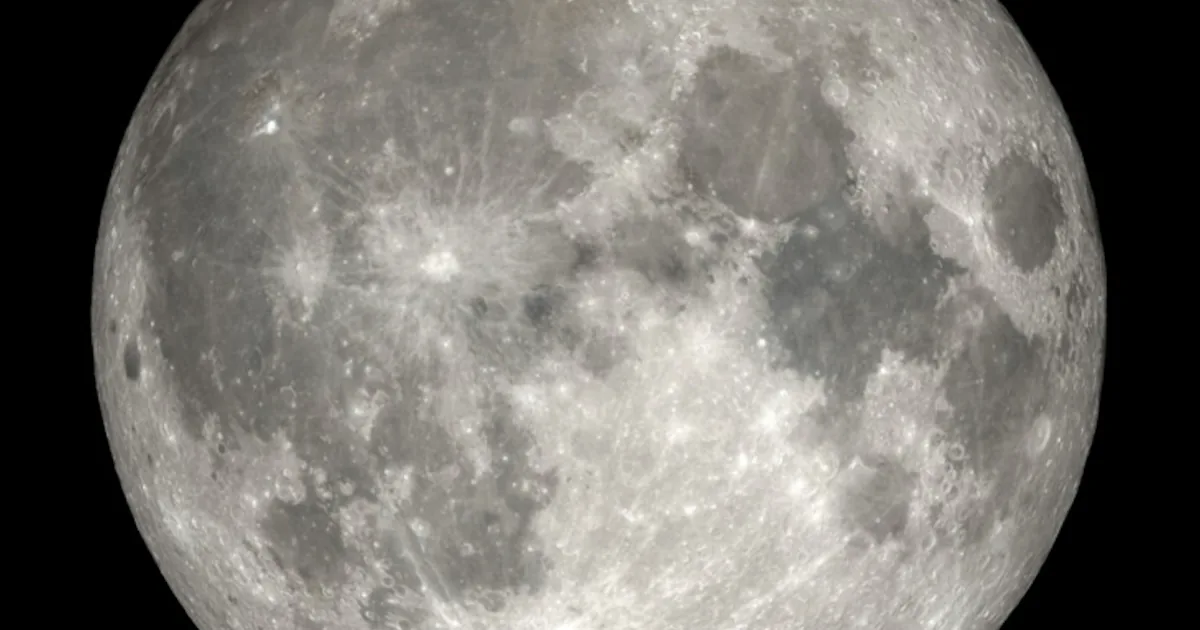
Stargazers can anticipate the arrival of June's full moon, popularly known as the Strawberry Moon, on Monday evening, June 29. While the lunar body reaches its exact full phase at 7:56 p.m. EDT, it will remain visually full throughout the night. Despite its festive name, the moon will not appear in shades of pink or red. However, observers catching the moon near the horizon at sunset may perceive a yellow, orange, or even a subtle pinkish tint. This effect occurs as moonlight travels through a denser layer of Earth's atmosphere, which scatters shorter blue wavelengths of light while allowing longer red and orange wavelengths to pass through, a phenomenon termed Rayleigh scattering.
The moniker "Strawberry Moon" originates from Indigenous traditions across North America, a practice popularized by publications like the Old Farmers Almanac. For centuries, many Indigenous peoples named each full moon to align with seasonal activities, flora, and fauna. These names were deeply tied to the natural rhythms of their specific homelands, with no single, universal lunar calendar existing. The name specifically hails from Algonquian-speaking communities in the northeastern United States and eastern Canada, regions where the Old Farmers Almanac was first published. For these groups, late June signaled the brief ripening period for wild strawberries, making the full moon a timely indicator for the annual harvest.
Lunar Naming Traditions Across North America
Over generations, European settlers adopted many of these seasonal lunar names, and "Strawberry Moon" eventually became widely recognized in American almanacs. It is important to note that other Indigenous nations assigned unique names to June's full moon, reflecting distinct regional occurrences. For instance, Dakota and Lakota peoples used names associated with ripening berries, similar to the Algonquian tradition. Further south, the Cherokee referred to it as the Green Corn Moon, acknowledging the growth stage of corn crops. The Western Abenaki observed it as the Hoer Moon, referencing agricultural labor, while the Haida named it the Berries Ripen Moon. The Cree community identified it as the Egg Laying Moon or Hatching Moon, marking the bird nesting season. These diverse names highlight a shared practice of celestial observation and seasonal tracking.
This year, observers might notice that the full moon appears lower in the sky compared to earlier months. This is because the Sun reaches its highest point in the sky around the June solstice. As the full moon is always opposite the Sun, it traces one of its lowest paths of the year across the nighttime sky during this period. The next full moon, known as the Buck Moon, is scheduled for July 29. This name derives from the time when male white-tailed deer begin to grow their new antlers, further illustrating how ancient cultures utilized lunar cycles to track seasonal changes and manage their environments.