
SpaceX Stock: Private Spaceflight Investment Opportunity in 2026
SpaceX remains unlisted but private investors are closely tracking the company's valuation as it advances rocket reusability and Starship development. Industry analysts debate whether 2026 will bring new funding rounds or public market movement.

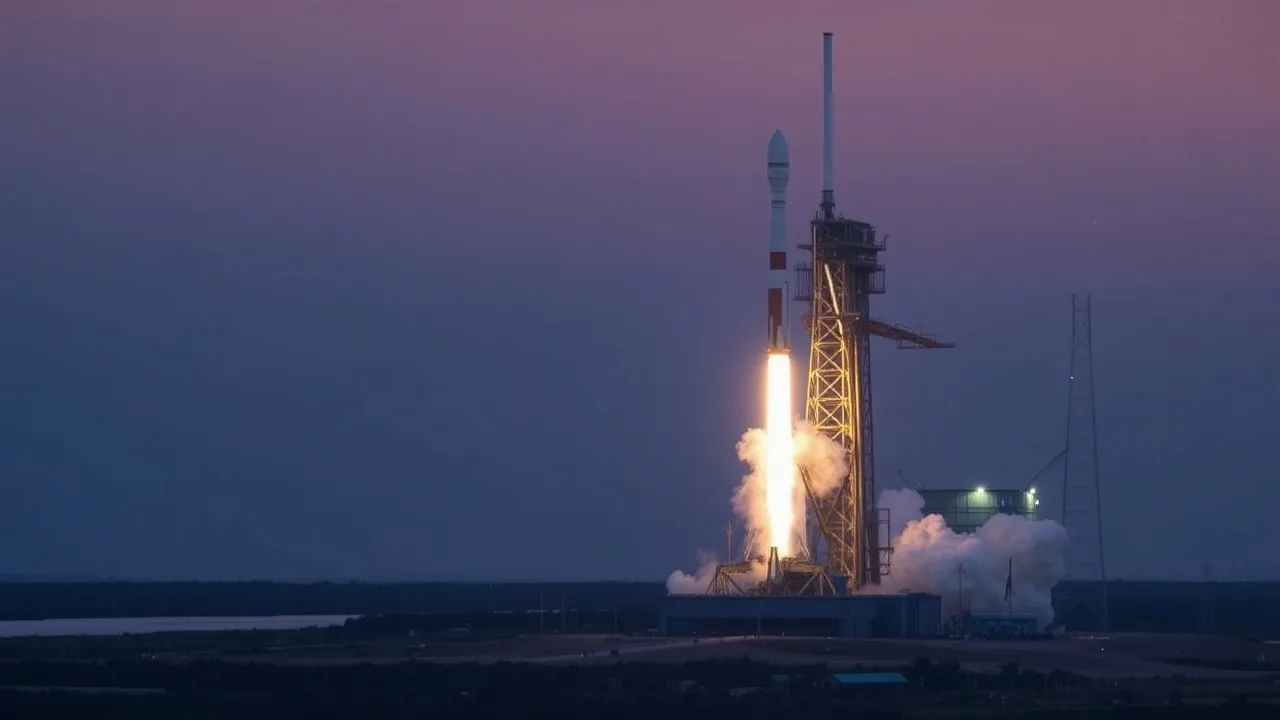
Elon Musk's SpaceX does not currently trade on public exchanges, yet investor interest in the company's stock potential has intensified sharply in 2026 as the firm accelerates its Starship orbital test flights and commercial satellite launch cadence. Private market valuations of SpaceX have climbed above $200 billion as of May 2026, making it one of the world's most valuable private companies and a focal point for venture capital and institutional investors betting on space commercialization.
The surge in speculative interest around SpaceX reflects broader enthusiasm for private spaceflight ventures. Unlike Blue Origin or Virgin Galactic, SpaceX generates substantial revenue through government contracts with NASA and the U.S. Space Force, as well as commercial launches for telecommunications operators and Earth observation firms. This revenue base distinguishes SpaceX from other space companies still dependent on development funding.
Morgan Stanley's aerospace analyst Jennifer Xie noted in March 2026 that "SpaceX's path to profitability appears clearer than most private space ventures, given its existing $2 billion annual revenue run rate and successful launch manifest extending into 2027." The company's Falcon 9 rockets have become the workhorse of American spaceflight, with more than 60 successful consecutive launches as of May 2026.
The Valuation and Funding Landscape
Private equity secondaries and venture funds have aggressively bid up SpaceX shares in secondary market transactions throughout 2025 and into 2026. The most recent private funding round, completed in October 2025, valued the company at $210 billion. Institutional investors, including sovereign wealth funds and pension plans, have become major participants in these deals, signaling confidence in the company's long-term cash generation.
SpaceX stock trades on private markets through specialized platforms, but retail investors cannot easily access shares. Fidelity, Vanguard, and other large institutional holders have increased their exposure, betting that either a public offering or acquisition will unlock shareholder value. Current secondary market prices suggest a $250 billion valuation target among some traders, though such prices remain speculative.
The company has not disclosed plans for an initial public offering, and Musk has historically expressed skepticism about public markets. However, sources familiar with SpaceX's strategy suggest that Elon Musk companies including Tesla and The Boring Company have served as templates for eventual monetization of shareholder equity.
Risks and Competitive Pressures
Despite strong fundamentals, SpaceX faces mounting competition and regulatory headwinds. Blue Origin has accelerated its New Glenn heavy-lift rocket development, targeting commercial operations in late 2026 or early 2027. Relativity Space and Axiom Space are pursuing niches in reusable launch and commercial space stations, respectively.
Government policy remains a critical variable. The incoming administration's approach to commercial space licensing, export controls, and space exploration investment funding could affect SpaceX's growth trajectory. Additionally, international competitors including Arianespace and Chinese launch providers continue to offer lower-cost alternatives for certain missions, pressuring margins on commercial satellite launches.
Technical setbacks also pose risks. While Starship's test flight program has recovered from early failures and achieved significant milestones in 2025 and 2026, achieving full rapid reusability remains an unproven capability. If Starship does not deliver on its promised cost reduction or lunar cargo delivery timelines, investor confidence could shift markedly.
Insurance and liability expenses have risen as SpaceX expands launch frequency and pursues riskier test campaigns. Starship's booster catch-and-reuse operations at the Starbase facility in Texas continue to generate regulatory scrutiny from the Federal Aviation Administration.
What Drives Interest in SpaceX Stock Potential
The primary appeal to investors centers on long-term market TAM (total addressable market) for space services. Satellite broadband, in-space manufacturing, point-to-point hypersonic travel, and deep space logistics represent multi-hundred-billion-dollar opportunities over the next 15 years. SpaceX's Starlink division alone is projected to reach positive unit economics by late 2026, according to third-party analyst estimates.
Starlink's subscriber base exceeded 4 million active users globally by May 2026, with average revenue per user climbing to $105 monthly. This recurring revenue stream provides SpaceX with cash flow that few other space companies can match. Telecom analysts project that Starlink could generate $6 billion in annual recurring revenue by 2028 if growth trajectories hold.
Government spending on aerospace shares and space capabilities continues to expand. The U.S. National Space Council has reaffirmed commitments to NASA's Artemis moon program, which relies heavily on SpaceX's Falcon Heavy rocket and future Starship lunar lander variant. Defense budgets allocating funds to military space infrastructure also benefit SpaceX through National Security Space Launch (NSSL) contracts.
For investors unable to purchase SpaceX shares directly, exposure to space industry growth can be obtained through publicly listed aerospace shares including Lockheed Martin, Northrop Grumman, Boeing, and Axiom Space's upcoming IPO plans. However, none of these alternatives captures the concentrated upside potential or operational leverage of SpaceX's reusable vehicle strategy.
The 2026 investment landscape for private spaceflight remains fluid. Regulatory clarity, further Starship successes, and potential IPO announcements will shape sentiment toward SpaceX and the broader sector. Investors should monitor quarterly launch manifests, Starlink financial updates, and any formal statements regarding shareholder liquidity or public market entry.