
SpaceX Starship Test Flight Faces Crucial Challenges
SpaceX is set to launch an updated Starship rocket on a critical test flight Tuesday, aiming to demonstrate key technologies for lunar missions and a potential IPO.

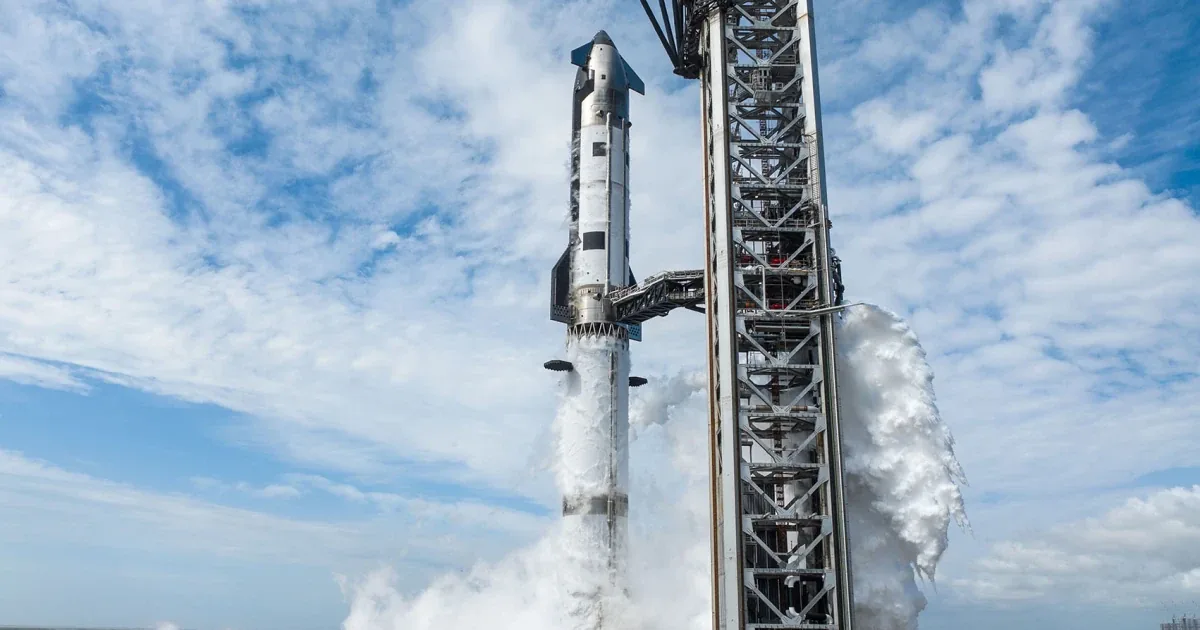
SpaceX is scheduled to conduct a pivotal test flight of its upgraded Starship megarocket on Tuesday, a crucial step in the development of a system eyed by NASA for lunar missions and a significant event amid the company's preparations for a potential initial public offering (IPO). The stakes for the Starship program and Elon Musk's aerospace company are exceptionally high, as the vehicle is central to NASA's Artemis program and faces competition from rival Blue Origin in the race to develop a lunar lander for a 2028 moon mission.
This latest flight marks the debut of SpaceX's third-generation Starship, designated V3. The new prototype is taller, measuring 408 feet when fully assembled, and boasts increased power compared to its predecessors. It is slated to lift off from SpaceX's Starbase facility in southern Texas within a launch window opening at 6:30 p.m. ET. The mission plan includes attempting to deploy 22 mock Starlink satellites and demonstrating an in-space engine relight capability for the upper stage, a technology vital for future deorbit maneuvers.
Significant Advancements and Setbacks
The development of Starship has encountered challenges, with previous test flights last year experiencing issues including mid-flight explosions and uncontrolled re-entries. The most recent test, the 11th overall, occurred seven months ago. Since then, SpaceX engineers have implemented substantial redesigns to both the Super Heavy booster and the Starship upper stage. The V3 iteration features new Raptor 3 engines on both components, projected to generate approximately 18 million pounds of thrust collectively. Additional upgrades include an enlarged propellant tank and a modified design for the booster's grid fins, which aid in atmospheric guidance.
"Together, these new elements are designed to enable a step-change in Starship capabilities and aim to unlock the vehicle’s core functions, including full and rapid reuse, in-space propellant transfer, deployment of Starlink satellites and orbital data centers, and the ability to send people and cargo to the Moon and Mars," a SpaceX statement detailed. The capability for in-space refueling is particularly critical for the Starship upper stage's lunar transit capability. While not yet demonstrated, Tuesday's flight could pave the way for this essential maneuver.
NASA's reliance on Starship for its ambitious Artemis missions underscores its importance. The space agency originally targeted a lunar landing for the Artemis III mission but has since adjusted timelines, pushing the date to late 2027. This shift allows more time for orbital testing and for SpaceX and Blue Origin to finalize their respective lunar lander designs. The Artemis III mission, scheduled for late 2027, will involve the Starship upper stage rendezvousing with NASA's Orion capsule in Earth orbit. Following this, Artemis IV in 2028 plans for Starship to dock with Orion in lunar orbit, ferry astronauts to the moon's surface, and return them to the orbiting capsule.
Adding another layer of anticipation, SpaceX is reportedly preparing for a highly anticipated IPO, potentially in mid-June. Reuters indicated that the company aimed to make its prospectus public as early as Wednesday, the day after the Starship test, setting the stage for what could be one of the largest public offerings in history. This financial milestone is intrinsically linked to the perceived success and future potential of programs like Starship.
Tuesday's test flight is expected to last around 65 minutes. The upper stage is planned to perform a splashdown in the Indian Ocean, contingent on successful execution of the flight plan. The Super Heavy booster is designated for a landing in the Gulf of Mexico, and unlike previous demonstrations with the booster, it will not attempt a return-to-launch-site catch maneuver. SpaceX has previously showcased successful catch procedures for the booster at its Starbase facility, a capability they eventually aim to replicate for the Starship upper stage.