
Blue Origin's 2026 Plans: New Glenn Rocket and Space Tourism
Blue Origin is advancing its New Glenn orbital rocket and expanding space tourism offerings in 2026, solidifying its position in the competitive private space sector.

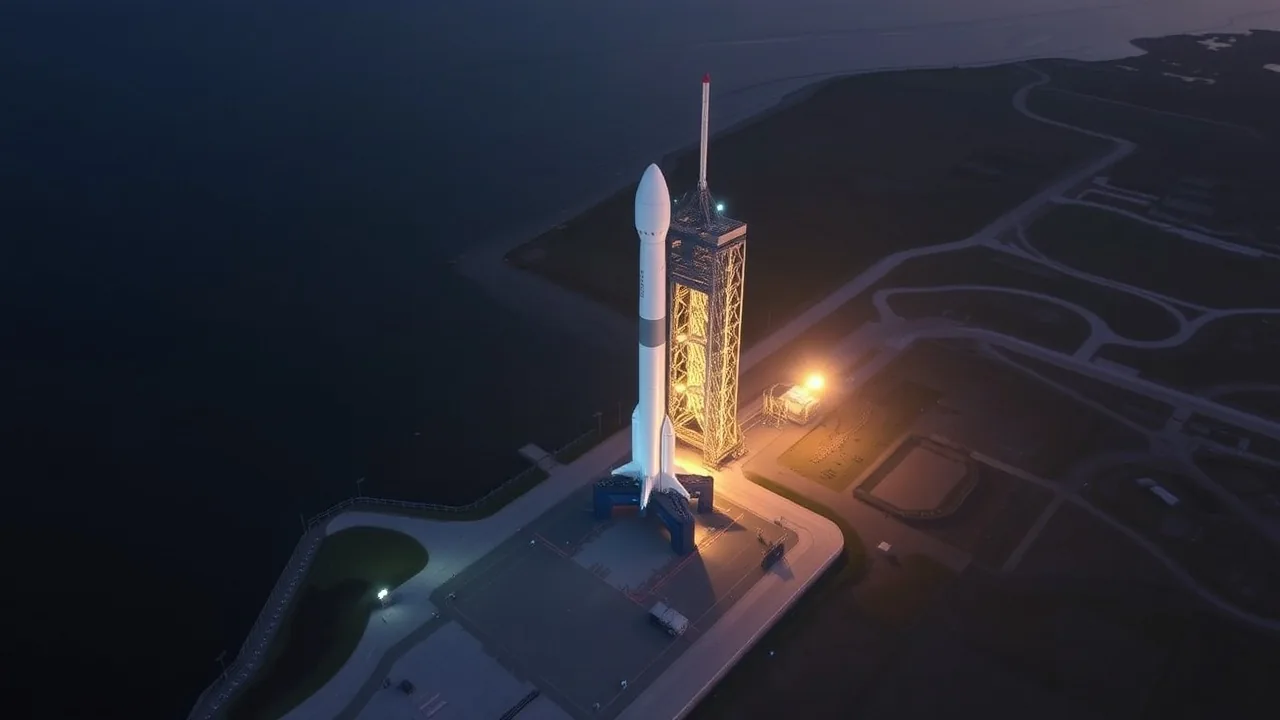
Blue Origin announced an aggressive 2026 roadmap focused on launching its New Glenn heavy-lift rocket and accelerating commercial spaceflights, marking a critical inflection point for the Jeff Bezos-backed company. The Seattle-based aerospace firm, founded in 2000, is pursuing multiple revenue streams simultaneously as it competes against SpaceX, Rocket Lab, and emerging launch providers for market share.
The New Glenn rocket represents Blue Origin's answer to SpaceX's Falcon Heavy and represents years of engineering effort. Standing 322 feet tall, New Glenn will be capable of lifting 13,200 pounds to geostationary orbit on its first scheduled flight window in 2026. The rocket's development has consumed significant capital and engineering resources since its announcement in 2012.
According to Phil Larson, principal analyst at SpaceIntel, "Blue Origin's New Glenn launch is the most anticipated heavy-lift debut since SpaceX's Falcon Heavy maiden flight in 2018. Success or setback will reshape investment flows in commercial space infrastructure." The first booster is currently undergoing final assembly in Blue Origin's massive Kent, Washington facility, where the company employs over 3,200 workers.
Expanding Commercial Spaceflights and Tourism
Beyond cargo and satellite deployment, Blue Origin is ramping up its space tourism cadence through its New Shepard suborbital vehicle. The company conducted five crewed flights in 2024 and 2025, and executives have signaled a pace of six to eight tourism flights annually beginning in 2026.
Each New Shepard flight carries six paying passengers to the Karman line at 62 miles altitude, offering four minutes of weightlessness and views of Earth's curvature. Ticket prices remain fixed at $450,000 per seat, unchanged since the program resumed commercial operations in 2023. Blue Origin has confirmed bookings from customers across the United States, Europe, and Asia.
The blue origin tourism business addresses a narrow but growing market segment. Space industry analyst Jennifer Chen of Orbit Capital estimates the global space tourism addressable market at $2.8 billion by 2030, with suborbital flights capturing roughly 30 percent of that revenue.
Infrastructure Investments and Industry Context
Blue Origin has invested heavily in ground infrastructure to support its 2026 ambitions. The company operates two primary launch facilities: Cape Canaveral Space Force Station in Florida and Blue Origin's West Texas site near Van Horn. Both locations have received facility upgrades and staffing increases over the past 18 months.
The broader context matters here. Private space exploration has matured dramatically since 2015, when SpaceX first landed an orbital booster. Today, commercial companies handle cargo resupply to the International Space Station, national security launches, and scientific missions. Blue Origin's trajectory reflects this normalization.
Key developments in Blue Origin's 2026 agenda include:
- New Glenn's maiden orbital flight, anticipated for mid-2026
- Expansion of New Shepard tourism flights to monthly cadence
- Blue Moon lunar lander advancement for NASA contracts
- Hiring of 1,200+ additional engineers and technicians
The new glenn rocket first stage uses seven BE-4 engines, the same powerplant that propels United Launch Alliance's Delta IV Heavy. BE-4 production at Blue Origin's engines facility in Huntsville, Alabama, has reached 12 engines per year. Achieving production rates of 24 engines annually by 2027 will be essential for supporting both New Glenn launches and continued military rocket orders.
Blue Origin remains laser-focused on execution. The company's leadership, including CEO Kelly Ortberg who joined in 2023, has emphasized discipline and realistic timelines after years of schedule delays that frustrated customers and investors. Ortberg told investors in March 2026 that "Blue Origin has moved past the prototype phase and into production-rate operations."
The financial stakes are substantial. Blue Origin has absorbed over $5 billion in capital from Bezos since 2000, making it one of the largest venture-backed aerospace companies globally. Demonstrating operational capability and revenue generation in 2026 will determine the company's valuation trajectory ahead of potential public markets activity.
Jeff Bezos company also announced expanded partnerships with commercial satellite operators and government agencies. Northrop Grumman, which supplies structural components for New Glenn, has guaranteed two launch contracts for 2026 and 2027. The U.S. Space Force added New Glenn to its Evolved Expendable Launch Vehicle manifest, allocating two national security missions for mid-2027 and late 2027.
Looking ahead, Blue Origin's 2026 success metrics are clear: land New Glenn safely, execute six-plus New Shepard flights without incident, deliver the first Blue Moon test articles to NASA, and maintain a path toward profitability. The company operates in an industry where execution is currency and timelines carry reputational weight.
The convergence of orbital and suborbital commerce, satellite internet proliferation, and renewed lunar exploration has created genuine opportunities for multiple launch providers. Blue Origin's diversified portfolio—tourism, national security, commercial satellite deployment, and deep space infrastructure—positions it well to capture meaningful market share if 2026 execution delivers.