
SpaceX Starship accelerates toward orbital missions in 2026
SpaceX's Starship program is delivering rapid test flights and orbital achievements in 2026, marking a turning point for reusable heavy-lift rockets and deep-space exploration.

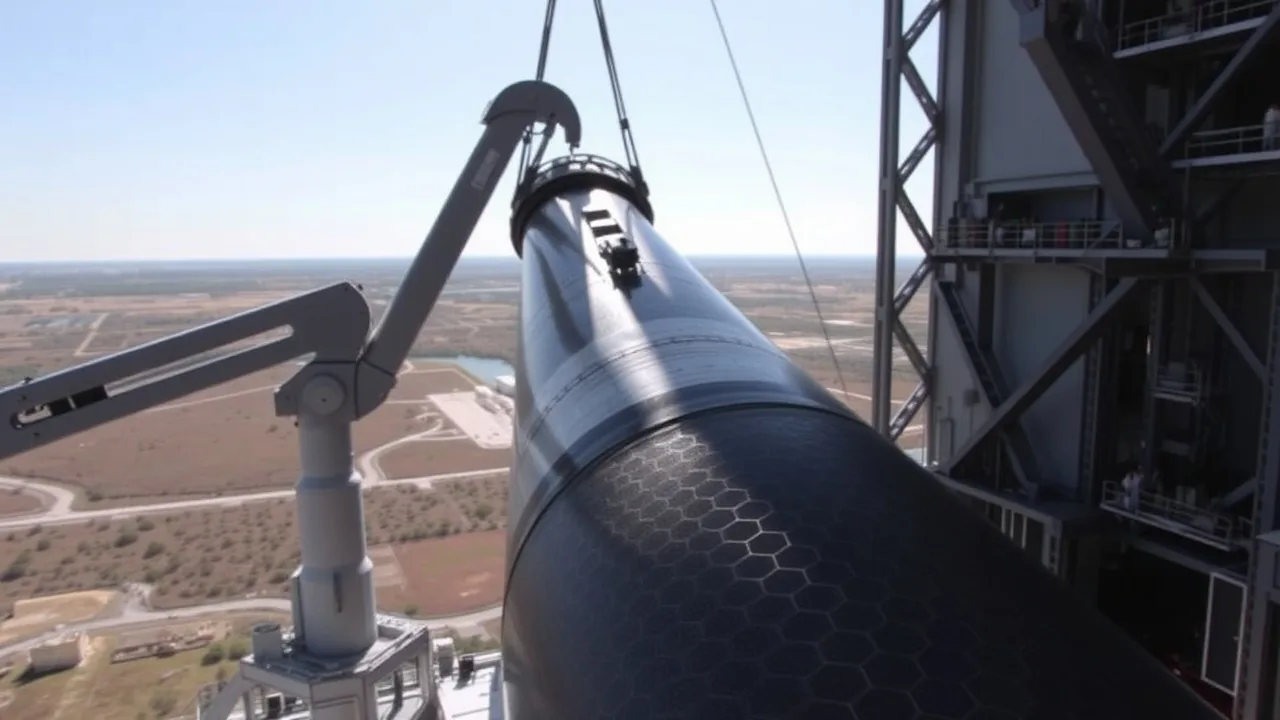
SpaceX conducted its fifth integrated flight test of Starship on June 24, 2026, marking a critical step toward the company's goal of routine orbital operations. The full-stack test, which launched from Starbase in South Texas, demonstrated improvements in booster recovery and heat-shield performance that underscore how quickly the Starship program is advancing from prototype phase to operational spacecraft.
The June 2026 test followed a five-week development cycle after the previous flight in May, showcasing SpaceX's rapid iteration methodology. Elon Musk, SpaceX founder and CEO, emphasized in a company memo that achieving consistent orbital success is the prerequisite for all downstream missions. "We're not chasing incremental gains anymore," Musk stated. "Each flight is a data-gathering exercise that moves us closer to lunar landing and Mars-class transport."
The Starship vehicle consists of two reusable components: the Super Heavy booster and the Starship upper stage. Together, they form the most powerful launch system in operation, with a total thrust output exceeding 17 million pounds at liftoff. No other active launch provider on Earth matches that capability, giving SpaceX a significant advantage in the emerging commercial space economy.
Building Block: From Test Flights to Operational Missions
SpaceX's roadmap for 2026 centers on de-risking orbital operations. The company plans seven to ten integrated flight tests before attempting refueling operations in orbit, a capability essential for Mars missions. Refueling in low Earth orbit would allow Starship to carry sufficient propellant for trans-Mars injection burns without requiring multiple launch sorties.
NASA selected Starship as the crew lander for the Artemis III and Artemis IV lunar missions, a contract worth up to 3.6 billion dollars. The agency's timeline calls for Artemis III crew to land on the lunar surface in 2027, placing extraordinary pressure on SpaceX to complete qualification testing. This milestone depends on successful orbital refueling demonstrations and docking with NASA-furnished hardware.
The commercial spaceflight sector is watching these milestones closely. Axiom Space, which operates privately funded modules attached to the International Space Station, has expressed interest in using Starship for orbital resupply missions. Blue Origin's New Glenn rocket and United Launch Alliance's Vulcan vehicle are competing for the same market, but neither has conducted orbital test flights as frequently as Starship.
The regulatory environment has also shifted in SpaceX's favor. The Federal Aviation Administration granted SpaceX a modified launch license in April 2026 that relaxed range safety constraints, allowing more flexible launch windows and reducing ground shutdown procedures. This change is expected to accelerate testing cadence through mid-2026 and beyond.
Reusability and Cost: The Competitive Edge
Reusable rockets have long promised to slash launch costs, but Starship is designed with unprecedented emphasis on rapid reusability. SpaceX's engineering target is to reflying a Starship vehicle within 24 hours of landing, though current operations involve weeks of inspections and refurbishment. The booster from the June 24 test was caught by the launch tower's mechanical arms, a technique SpaceX calls "chopstick" capture, avoiding hard ground impact and reducing refurbishment demands.
Industry analyst Morgan Stanley estimated in a 2026 report that mature Starship operations could reduce per-kilogram launch costs to under 100 dollars, compared to 1,500 dollars on current SpaceX Falcon Heavy flights. That 15-fold reduction would reshape demand for satellite deployment, space station resupply, and scientific missions.
Competitors are racing to match this capability. Blue Origin's New Glenn booster is designed for recovery and reuse, but the company has not yet achieved booster landing tests. United Launch Alliance is pursuing a smaller reusable vehicle called Next-Generation Launch System, though development timelines are measured in years rather than months.
The Path to Lunar and Planetary Exploration
Lunar exploration is Starship's near-term proving ground. NASA intends to use a Starship variant called the Human Landing System to ferry Artemis astronauts from lunar orbit to the surface. This variant incorporates an elevator or gantry to lower crew members the final 30 meters, since the standard Starship is designed for cargo loads rather than crewed descents.
The timeline is compressed. Artemis III is scheduled for 2027, meaning SpaceX must complete orbital refueling tests, rendezvous demonstrations with NASA modules, and full-system simulations within 18 months. A slip in any of these phases would push Artemis III into 2028 or later.
Beyond the Moon, space travel to Mars remains Starship's ultimate mission. SpaceX has not announced a specific date for a crewed Mars landing, but company statements suggest the 2030s are the target decade. An uncrewed cargo mission to Mars could launch as early as 2029, assuming orbital refueling works and the company resolves thermal protection challenges on the journey home.
The June 2026 test flight included observations of thermal tiles exposed to reentry heating at orbital velocities. SpaceX uses a proprietary silica-based tile system borrowed from Space Shuttle architecture but tailored to Starship's blunt cone shape and higher speeds. Data from this and future flights will inform design refinements before human flight-test missions.
The aerospace industry consensus is that SpaceX has genuinely altered the trajectory of space exploration. Whether through accident of early testing or genuine engineering mastery, the company is delivering progress faster than any government-led aerospace program in recent decades. The rapid cadence of Starship flights, coupled with visible hardware improvements between tests, suggests that by year-end 2026, orbital operations could transition from milestone achievements to routine quarterly events.