
NASA Advances $30 Billion Moon Base Plan with New Contracts
NASA announced $590 million in new contracts for lunar missions and revealed plans for a phased approach to building a permanent moon base, expected to cost $30 billion.

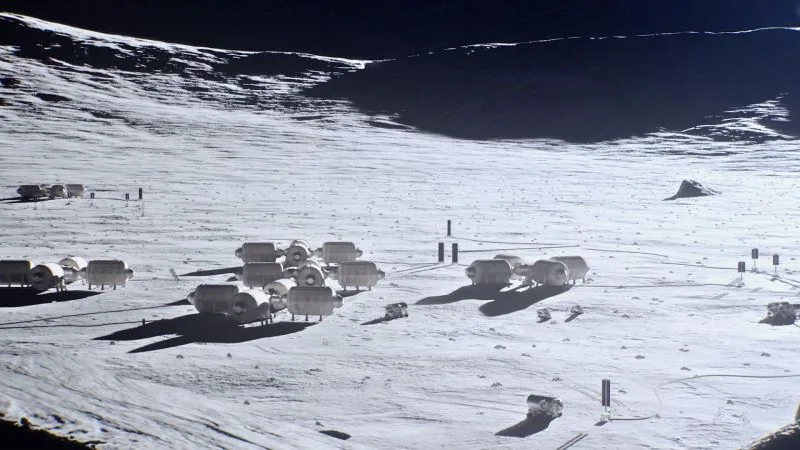
NASA is pushing forward with its ambitious plan to establish a permanent base on the Moon, announcing new contracts totaling approximately $590 million on Tuesday. The space agency awarded deals to three private companies—Astrobotic, Firefly, and Intuitive Machines—to deliver science instruments and other essential cargo to the lunar surface. These missions are a critical step in "Phase 1" of a strategy aimed at building infrastructure for future human explorers, according to Carlos García-Galán, NASA’s program executive for the moon base. The overall initiative is projected to cost around $30 billion and includes plans for habitats, power generation, and surface transportation.
The new contracts will fund four distinct lunar delivery missions, with Astrobotic securing two of these assignments. NASA also indicated the potential to repurpose a Mars rover, known as Promise, for lunar operations. These developments underscore NASA's commitment to a long-term vision of a semi-permanent lunar settlement where astronauts can live and work. Phase 1 of this endeavor is slated to run through 2028, with an estimated $10 billion allocated for its completion. Previous announcements under Phase 1 included renaming missions specifically for the moon base and awarding over $1 billion in contracts for lunar buggies and mapping drones, with potential deployment as early as 2028.
Building Lunar Infrastructure
Subsequent phases, Phase 2 and Phase 3, will focus on constructing the first pressurized habitats and installing power generators, extending NASA's lunar base development into the 2030s. This strategic push is also framed within the context of geopolitical competition, particularly with China, which has made significant advancements in its space program. Concerns have been raised by U.S. lawmakers about China's growing capabilities potentially challenging American technological dominance in space.
Despite the forward momentum, NASA faces significant challenges. Blue Origin, founded by Jeff Bezos, experienced a major setback when one of its New Glenn rockets exploded on the launchpad in May, destroying crucial infrastructure. This incident raises questions about the timeline for its Blue Moon robotic lander, which is intended to deliver payloads to the lunar south pole—a region of high interest due to its potential water ice deposits. Water ice could be vital for creating rocket fuel and providing drinking water for lunar inhabitants. García-Galán acknowledged the potential delays, stating that NASA is "looking at other options" and considering alternative launch vehicles if Blue Origin's timeline is impacted. NASA Administrator Jared Isaacman emphasized the agency's proactive stance, stating, "We are going to take an active role alongside our partners, just as we did in the 1960s, to overcome setbacks, remove obstacles, and deliver the intended outcomes."
While Blue Origin's lander is substantial, NASA is diversifying its partnerships. SpaceX is developing its Starship rocket for crewed lunar transportation, though it is not yet operational. The agency is also relying on other private companies for cargo delivery. Texas-based Firefly successfully landed its Blue Ghost vehicle near the lunar equator last year, marking a significant achievement. Intuitive Machines, also based in Texas, has attempted two landings near the lunar south pole, though both resulted in landers tipping over. NASA aims for these contracts and public announcements to stimulate further innovation within the private sector. "If you are in industry and wondering if you need to make that investment to increase your high bay, to increase the number of supply chain vendors that you have — this is the signal to say: We’re here to stay with this demand, and we’re building a moon base," García-Galán remarked during the Space Symposium conference in April. The journey to establish a permanent lunar settlement is complex, involving technological hurdles, political considerations, and unresolved ethical questions. Experts highlight the current lack of basic lunar infrastructure, and even fundamental issues like synchronizing time—seconds pass slightly faster on the Moon—remain to be addressed. Funding also presents a puzzle, with some allocated funds earmarked for specific projects like the Gateway space station, plans for which NASA recently shelved to reallocate resources to surface infrastructure.