
SpaceX Starship Reaches New Milestones in Mars Mission Development
SpaceX's Starship program has achieved critical test flight objectives this month, moving closer to enabling interplanetary travel and Mars colonization. The advances mark a major step forward for the company's long-term space exploration strategy.

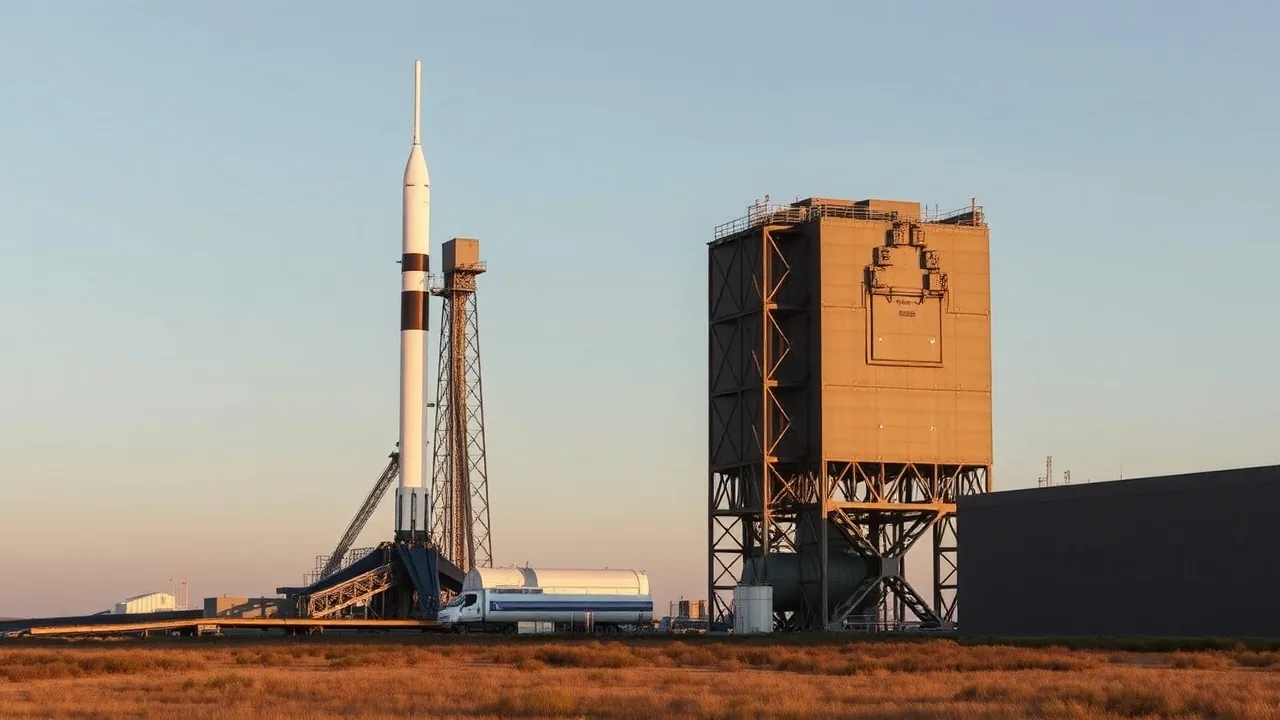
SpaceX conducted its fifth integrated flight test of the Starship vehicle in October 2024, demonstrating progress toward the company's goal of establishing a sustainable presence on Mars. The 165-foot-tall Super Heavy booster and Starship upper stage completed key experimental objectives during the test, including new propellant transfer techniques in space and a controlled ocean splashdown of the booster.
The flight represented a measurable step forward for SpaceX Starship capabilities. Unlike earlier tests that focused on basic flight dynamics, this mission emphasized the engineering systems needed for eventual long-duration missions to the Red Planet. The company continues iterating its design based on each test's results.
"We're treating each flight test as a learning opportunity," said a SpaceX engineer in a post-flight briefing, noting that the team prioritizes data collection over flashy achievements. The methodical approach contrasts with the rapid iteration SpaceX deployed during Falcon 9 development in the 2010s, though the cadence of tests remains aggressive by traditional aerospace standards.
Technical Goals and Recent Achievements
SpaceX's near-term objectives for Starship focus on mastering orbital refueling and heat shield durability. These capabilities are non-negotiable for any crewed Mars mission, as spacecraft must arrive with enough fuel and structural integrity to enter the Martian atmosphere safely.
Recent test flights have addressed specific technical milestones:
- In-space propellant transfer between the booster and upper stage tank
- Controlled reentry and landing procedures for the Super Heavy booster
- Thermal protection material performance during hypersonic flight
- Flight termination system reliability at high altitude
The propellant transfer work deserves particular attention. Rocket technology has never reliably transferred fuel between spacecraft in orbit at the scale Starship requires. Mastering this operation unlocks the ability to stage multiple tankers in low Earth orbit, fill a spacecraft bound for Mars, and continue beyond Earth's sphere of influence.
Tesla and SpaceX CEO Elon Musk has stated the company aims to conduct the sixth integrated flight test within months, with hardware already in production. This cadence would be unprecedented for a vehicle of Starship's complexity and size.
The Path Toward Mars and Interplanetary Capability
Interplanetary travel requires solving problems that no commercial vehicle has yet addressed at scale. Starship's design philosophy assumes that reusability, rapid iteration, and low per-launch costs will enable the economics of deep space exploration.
SpaceX's public timeline suggests crewed lunar missions using Starship could occur in the late 2020s, with Mars missions potentially following in the 2030s. These dates are aspirational and subject to technical and regulatory hurdles. Past aerospace programs have consistently underestimated the complexity of human spaceflight at the frontier.
The company has secured NASA contracts to develop a Starship variant for lunar lander missions under the Artemis program, providing external validation and funding for development. This partnership offers a intermediate proving ground for Starship systems before attempting a Mars mission.
Industry analysts point to Starship's fully reusable architecture as the key differentiator. Traditional expendable rockets like NASA's Space Launch System cost roughly 2 billion dollars per launch when accounting for development and production. If SpaceX achieves its targets for Starship, per-launch costs could drop to tens or hundreds of millions of dollars, fundamentally changing the economics of deep space missions.
"The challenge isn't just building a big rocket," said a former NASA engineer now in private industry. "It's building a big rocket that can fly repeatedly and affordably. Starship's reusable design is necessary but not sufficient. The testing will reveal whether it's actually practical."
Challenges and Regulatory Considerations
Federal aviation authorities and environmental regulators scrutinize each Starship launch. The vehicle's testing site in South Texas has prompted local environmental reviews. Future high-cadence flight schedules may hinge on obtaining expedited launch licenses and addressing community concerns about noise and launch debris.
Mars colonization remains decades away and faces technical, biological, and political unknowns. Sustaining human settlements on Mars requires solutions for radiation shielding, in-situ resource utilization, and long-term psychological resilience that current research has only begun to address.
SpaceX's role is narrower: providing reliable transportation. The company's stated goal is to establish a cargo pipeline to Mars, with early missions focusing on infrastructure and resource extraction technology. Human landings would follow once the supply chain functions reliably.
The broader space exploration community watches these tests closely. Success would validate the reusable-rocket model and potentially attract capital to other ambitious programs. Failure would offer cautionary lessons about the limits of rapid iteration in complex systems.
SpaceX's Starship program represents one of the most tangible efforts to enable future of space development beyond Earth orbit. Whether the company achieves its publicly stated goals depends on engineering excellence, adequate funding, and regulatory permission. The next few years of test flights will provide concrete answers.