
Blue Origin's Reusable Rockets Reshape Commercial Space Launch
Blue Origin has advanced its reusable rocket technology to lower costs and expand space tourism, challenging traditional aerospace industry economics.

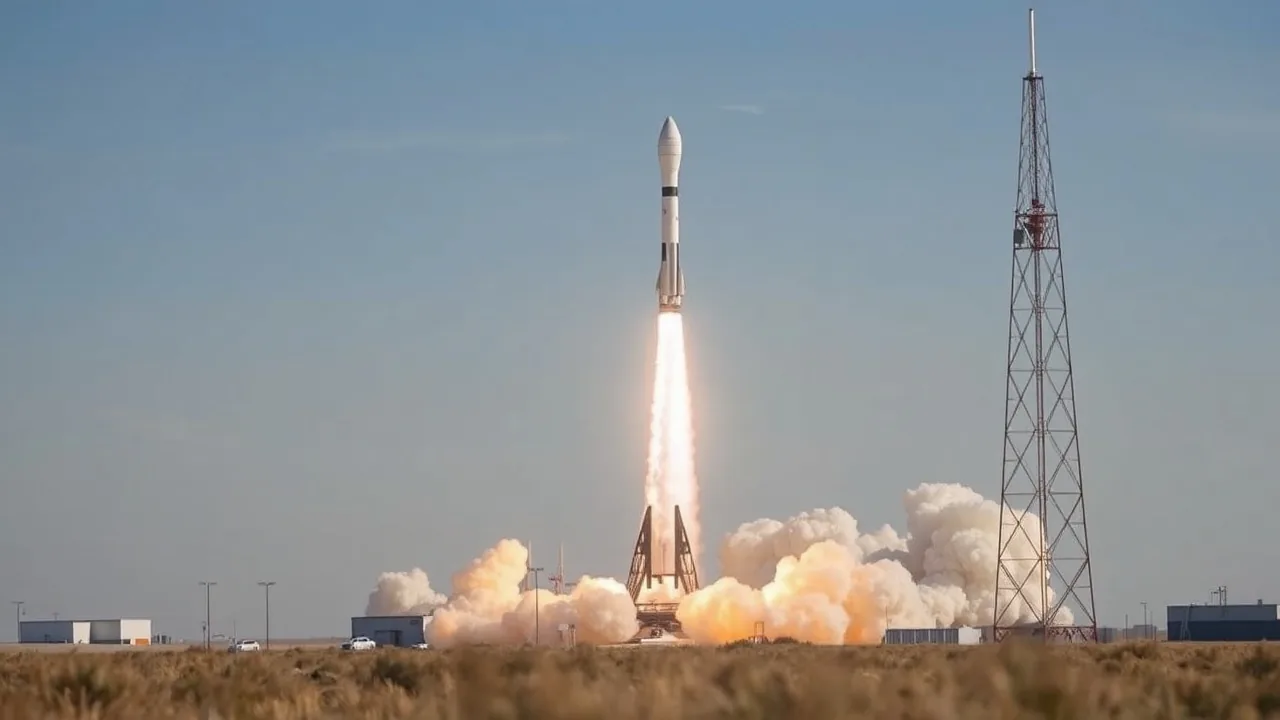
Blue Origin successfully conducted its latest uncrewed suborbital flight in January 2024, marking another milestone for the company's New Shepard vehicle and reinforcing its commitment to reusable rocket technology. The flight demonstrated the repeatability and reliability of a system designed to carry paying passengers and research payloads to the edge of space.
Founded in 2000 by Jeff Bezos, Blue Origin has spent over two decades developing and refining rockets that can be launched, landed, and relaunched without major refurbishment. This fundamentally different approach from traditional single-use rockets has begun reshaping how the aerospace industry thinks about cost, frequency, and accessibility in space.
The company's strategy centers on two distinct vehicles. New Shepard focuses on brief suborbital hops for tourism and microgravity research. New Glenn, a heavy-lift orbital launcher still in development, targets the high-demand market for satellite deployment and deep-space missions.
How Reusable Rockets Cut Costs and Enable Frequency
Reusable rockets eliminate the enormous expense of building and launching an entirely new vehicle for each mission. SpaceX demonstrated the viability of this approach with Falcon 9, but Blue Origin's parallel effort validates the concept across different vehicle classes and missions.
"The economics of space launch change fundamentally when you can land your booster, refuel it, and launch it again," said Tory Bruno, CEO of United Launch Alliance, in a November 2023 industry briefing. "Blue Origin and SpaceX are proving that model works at scale."
New Shepard has completed 30 powered flights as of early 2024, with each booster flying multiple times. This operational cadence demonstrates that the hardware can handle repeated thermal stress, propellant cycling, and structural loads across dozens of launches.
Lower per-flight costs directly translate to lower ticket prices for space tourism participants. Blue Origin has sold seats to civilians, researchers, and even veteran astronauts at price points below what competitors initially offered, though exact figures remain proprietary.
Competing for Orbital Market Share
Orbital launches remain the larger revenue opportunity. Blue Origin's New Glenn booster, standing 320 feet tall and capable of lifting 100 metric tons to low Earth orbit, targets commercial satellite operators, national security missions, and interplanetary exploration.
The company has secured major contracts, including a Department of Defense award for National Security Launch capability and commercial commitments from telecom satellite operators planning mega-constellations. First orbital flight is targeted for 2025.
New Glenn's design incorporates lessons from New Shepard's flight heritage. The engines, avionics, and structural materials have all been tested in suborbital operations. This reduces technical risk and accelerates New Glenn's path to operational status.
Aerospace innovation has historically moved slowly, with development timelines spanning 10 to 15 years. Blue Origin's approach of testing core technologies on a proven vehicle platform compresses that schedule.
Competition from SpaceX's Falcon Heavy and projected offerings from emerging providers like Axiom Space underscores the urgency. Blue Origin's timeline matters less in absolute terms than in relative terms to market demand for launch capacity.
The Broader Impact on Space Access
Reusability reduces launch costs by 50 percent or more compared to expendable rockets, according to internal company projections. Lower costs expand the addressable market for satellite operators and government agencies.
Small and medium-sized satellite makers, previously priced out of spaceflight by expensive dedicated launches, can now afford shared rides or dedicated flights on lower-cost reusable vehicles. This democratization of access fosters innovation in earth observation, communications, and scientific research.
New Shepard occupies a unique niche in the emerging space tourism market. Unlike orbital vehicles that remain in space for days or weeks, New Shepard offers a 10-minute flight including a few minutes of weightlessness and views of Earth's curvature from the edge of the atmosphere.
The suborbital market has attracted over 600 confirmed customers to Blue Origin's program, with additional commitments from international space agencies and private research institutions seeking microgravity experiments.
Blue Origin's investment in reusable technology extends beyond rockets. The company is developing reusable lunar lander components and studying sustainable propellant production methods that could further reduce operational costs and environmental impact.
The company's long-term vision, articulated publicly by founder Jeff Bezos, involves creating a future where millions of people live and work in space. Reusable rockets form the critical foundation for that vision; without dramatic cost reduction, the vision remains theoretical.
Industry observers expect Blue Origin's success with reusability to reinforce a permanent shift in aerospace manufacturing and operations. Within the next decade, single-use rockets may become economically obsolete for commercial and government missions where launch cadence permits reuse.