
SpaceX Starship Launch Plans Set New Timeline for 2024
SpaceX is advancing its Starship test schedule with increasingly ambitious orbital missions planned through 2024. The next flights will focus on booster recovery and in-space refueling capabilities.

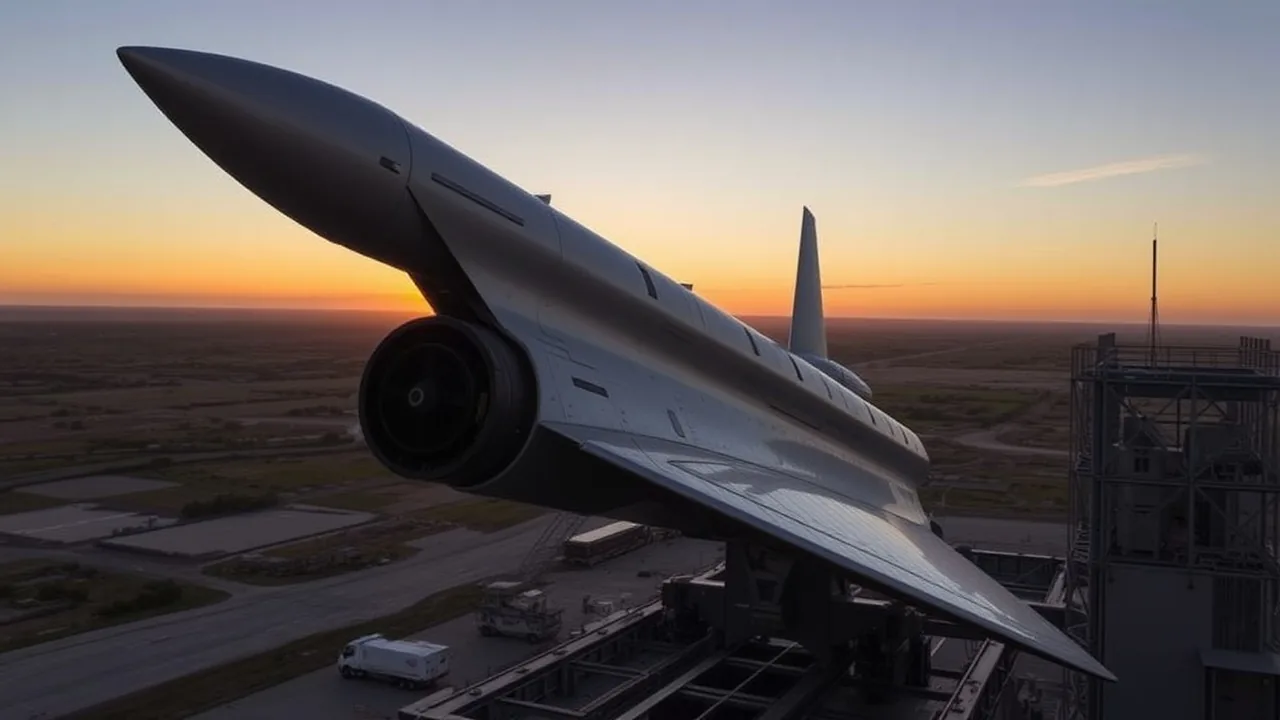
SpaceX conducted its latest Starship integrated flight test on November 18, 2023, pushing the vehicle's envelope with a higher-energy trajectory and longer booster burn than any previous attempt. The test validated critical systems while revealing engineering data that shaped the company's roadmap for the coming year. Engineers at the Starbase facility in Boca Chica, Texas, are now analyzing flight telemetry to refine the next generation of hardware.
The Starship program represents SpaceX's most aggressive bet yet on reusable rocket technology, designed to carry crew and cargo to orbit, the lunar surface, and eventually Mars. Unlike the Falcon 9, which lands only its first stage, Starship aims to recover both the Super Heavy booster and the upper stage spacecraft, dramatically reducing launch costs. "The fully reusable architecture is what makes Mars economically viable," said Elon Musk during a November 2023 earnings call, emphasizing that the company views Starship not merely as a vehicle but as a platform for transforming human spaceflight.
Next Test Flight Goals: Booster Recovery and Orbital Refueling
The fifth integrated flight test, scheduled for early 2024, will mark a strategic shift in mission objectives. Rather than focusing solely on vehicle survivability, SpaceX plans to attempt the first controlled booster catch at the launch tower using the mechanical arms nicknamed "Chopstick." This maneuver, never successfully demonstrated at orbital velocity, would eliminate the need for booster landing legs and recovery ships, further reducing turnaround time and operational costs.
Concurrent with booster recovery trials, SpaceX aims to demonstrate orbital launch capabilities with multiple Starships in flight simultaneously. The company intends to practice in-space fuel transfer between two Starship upper stages, a technique essential for long-duration missions. "In-orbit refueling is the holy grail of spaceflight," noted space policy analyst Victoria Samson of the Center for Strategic and International Studies in December 2023. "Without it, the payload mass to deep space remains fundamentally limited."
SpaceX has secured Air Force contracts to study Starship's potential as a rapid global logistics platform under the military's Space Mobility program, adding commercial pressure to achieve reliable turnaround and payload integration procedures by late 2024. The company has also begun assembling multiple Starship prototypes, suggesting a push toward routine operations rather than one-off test flights.
The space exploration community is watching these developments closely. NASA selected Starship as the lunar lander for its Artemis III mission, targeting a crewed Moon landing in 2025 or 2026. This contract, valued at up to $2.9 billion, depends on SpaceX achieving certain autonomous docking and fuel transfer milestones on schedule. Any significant delays in the test cadence could ripple into NASA's lunar timeline.
Ground infrastructure improvements are accelerating in parallel. SpaceX completed the first launch mount repair and upgraded the tank farm and propellant handling systems at Starbase in Q4 2023. The company broke ground on a second launch tower complex to enable parallel test flights, cutting the interval between missions from weeks to days. These infrastructure investments signal confidence in achieving a test flight rate that was previously discussed as aspirational but is now reflected in engineering budgets.
The regulatory environment has also shifted. The FAA granted SpaceX a Starship license allowing rocket technology demonstrations from Starbase without requiring environmental review for each flight after the first two of a given series, streamlining approval timelines. This administrative change removes a procedural bottleneck that hampered earlier test campaigns.
Industry observers debate whether SpaceX can sustain the test cadence required to mature Starship by 2025. The 2023 test campaign experienced a two-month gap due to repairs and regulatory processing. Recovery architecture—both mechanical and operational—remains unproven at scale. However, SpaceX's track record with Falcon 9 rapid reusability suggests the company has genuine expertise in vehicle turnaround, even if Starship's complexity exceeds anything flown to date.
Beyond near-term missions, SpaceX's long-term strategy hinges on mars colonization as the ultimate application. The company has sketched timelines suggesting human Mars missions in the 2030s, contingent on Starship achieving full operational capability across propellant transfer, autonomous landing, and life support integration. No timeline has formal backing from NASA or other partners, yet it drives technical roadmaps and funding decisions across the organization.
Competitors are taking note. Blue Origin and Relativity Space have accelerated development of their own heavy-lift vehicles, while international players like China's space agency are advancing Long March 9 planning. The 2024 test season will likely determine whether SpaceX's Starship gains the operational maturity to define the next decade of spaceflight architecture.