
Blue Origin advances commercial spaceflight ambitions in 2026
Jeff Bezos's Blue Origin is accelerating its push into commercial space travel with New Shepard flights and heavy-lift rocket development, challenging traditional aerospace competitors.

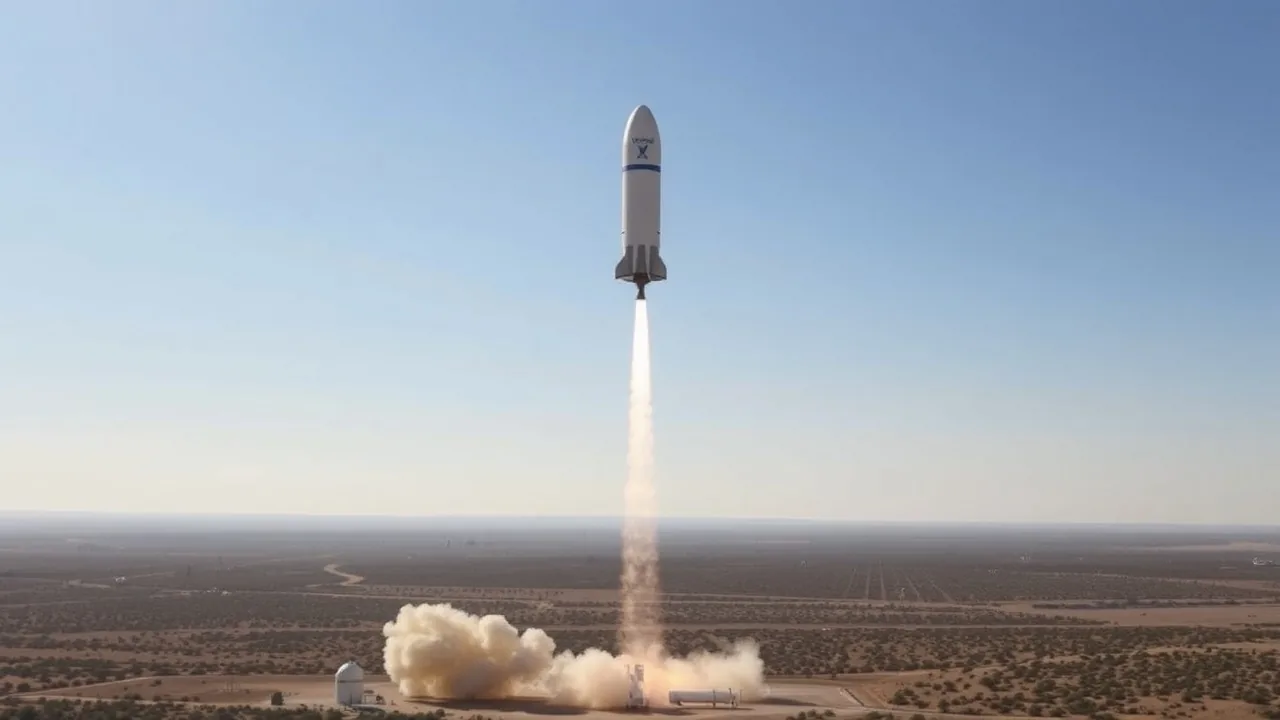
Blue Origin conducted its latest New Shepard suborbital flight in early May 2026, carrying six private astronauts and research payloads to the edge of space. The 11-minute trajectory reached the Karman line at 100 kilometers altitude, marking the company's continued momentum in the space tourism sector after years of development and regulatory approvals.
The Kent, Washington-based company, founded by Jeff Bezos in 2000, has transitioned from a research and development phase into operational commercial spaceflight mode. New Shepard's cadence has accelerated throughout 2026, with flights scheduled roughly every 4 to 6 weeks, each carrying between four and six private passengers alongside scientific instruments.
"We're seeing genuine demand from customers who want to experience weightlessness and see Earth from space," said a Blue Origin spokesperson in May 2026. "Our focus is on making these flights routine, safe, and ultimately more affordable."
New Shepard: Repeatable Suborbital Success
New Shepard has logged over 30 crewed flights since its inaugural human mission in July 2021. The vehicle consists of a reusable booster and a capsule designed for brief weightlessness exposure and suborbital views of Earth's curvature.
The vehicle's flight profile includes these key milestones:
- Launch from Blue Origin's West Texas facility near Van Horn
- Booster burnout at roughly 45 seconds
- Coast phase lasting approximately 3 minutes at peak altitude
- Capsule separation for passenger weightlessness window
- Parachute recovery in the West Texas desert
Ticket prices for New Shepard seats have remained in the $250,000 to $300,000 range through 2026, though the company has hinted at gradual price reductions as flight frequency increases and operational costs decline.
Safety remains the top design priority. The capsule features emergency escape thrusters capable of pulling the cabin away from the booster at any point during ascent, and redundant systems govern parachute deployment.
Blue Origin's Broader Rocket Development Strategy
While New Shepard captures public attention, Blue Origin is investing heavily in rocket development for orbital and heavy-lift missions. The New Glenn orbital launch vehicle entered fabrication phase in 2025 and is expected to conduct its first uncrewed test flight in 2027.
New Glenn represents a significant engineering leap. The two-stage liquid hydrogen and oxygen rocket stands 322 feet tall with a payload capacity of 50,000 pounds to low Earth orbit. It will compete directly with SpaceX's Falcon Heavy and future national security launch contracts.
Blue Origin has also invested in engine development. The BE-4 engine, manufactured at the company's facility outside Birmingham, Alabama, powers United Launch Alliance's Atlas V and Vulcan rockets. In 2026, Blue Origin began delivering upgraded BE-4 variants with increased thrust for Vulcan's heavy-lift missions.
The company's strategic partnerships extend beyond rockets. Blue Origin secured multi-launch contracts with Amazon for Project Kuiper, a satellite internet constellation aiming to compete with Starlink. These orbital launches will employ New Glenn beginning in 2027 or 2028.
Commercial Competition and Market Position
Blue Origin operates in an increasingly crowded landscape. SpaceX dominates orbital launches with proven Falcon 9 reusability and Starship development. Virgin Galactic pursues air-launch space tourism with its hypersonic aircraft. Axiom Space develops commercial space stations for orbital research.
Yet Blue Origin's vertical integration and financial backing differentiate its approach. Bezos has committed over $10 billion to Blue Origin since its founding, and the company controls most manufacturing in-house, from rocket engines to avionics.
"Blue Origin's advantage lies in patient capital and long-term vision," noted industry analyst Henry Rogers of Orbital Dynamics Group in May 2026. "They're not rushed to cut corners. The New Glenn timeline may seem slow compared to competitors, but it reflects their engineering culture."
The commercial space market shows no signs of slowing. U.S. government agencies, international partners, and private corporations all seek reliable launch services and orbital capabilities. Blue Origin's position in this ecosystem has strengthened as New Shepard proves the viability of New Shepard operations and New Glenn enters the build phase.
Blue Origin also operates Blue Moon, a lunar lander program aimed at supporting NASA's Artemis missions. The company won contracts to deliver cargo and eventually crew to the lunar surface, though those missions extend beyond 2026. The lunar program underscores Blue Origin's ambition to move beyond suborbital joyrides into deep space infrastructure.
As of May 2026, Blue Origin employs roughly 16,000 people across facilities in Texas, Alabama, Florida, Washington, and other states. The headcount reflects the company's scale and its intention to remain a major player in aerospace and defense for decades to come. Whether New Glenn succeeds in capturing orbital market share, and whether tourist demand for New Shepard remains robust, will shape Blue Origin's trajectory through the remainder of the decade.