
NASA SpaceX Dragon launches May 13 carrying science to ISS
NASA and SpaceX are targeting May 13 for the 34th resupply mission to the International Space Station. The Dragon spacecraft will deliver 6,500 pounds of cargo, including new experiments.

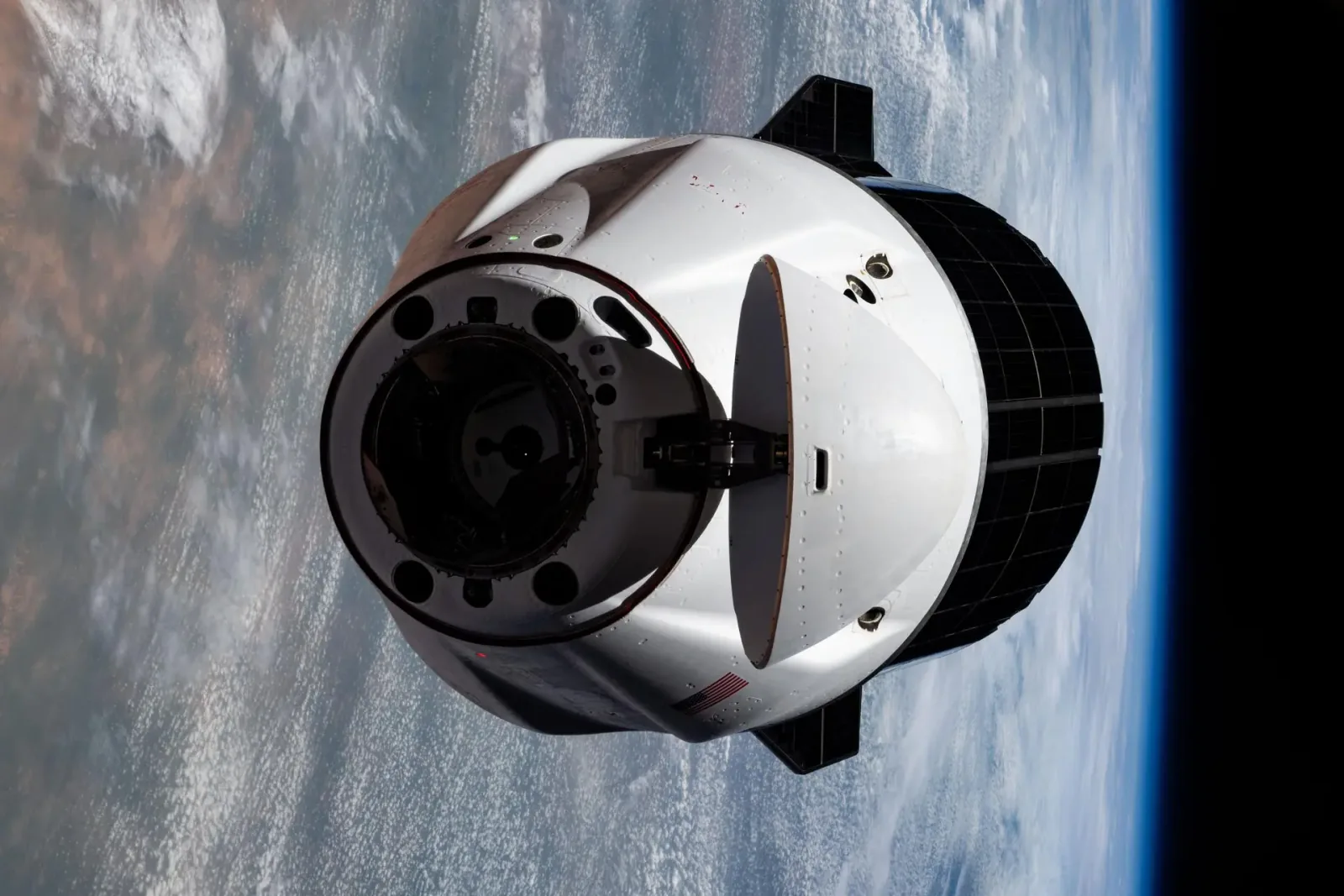
NASA and SpaceX are preparing for the launch of the 34th resupply mission to the International Space Station (ISS), scheduled for Wednesday, May 13, 2026, at 6:50 p.m. EDT. A SpaceX Dragon spacecraft, loaded with approximately 6,500 pounds of essential supplies, equipment, and scientific experiments, will ascend aboard a Falcon 9 rocket from Space Launch Complex 40 at Cape Canaveral Space Force Station in Florida. The Dragon is expected to autonomously dock with the orbiting laboratory at the forward port of the station’s Harmony module around 9:50 a.m. on Thursday, May 14.
This mission, designated SpaceX's 34th commercial resupply services flight for NASA, will bring a variety of critical items to the six-person crew currently aboard the ISS. Among the new scientific investigations are projects designed to better understand microgravity conditions by comparing them to Earth-based simulations, and the development of a bone scaffold derived from wood. This wood-based scaffold holds promise for generating new treatments for conditions such as osteoporosis, which causes bone fragility. Additionally, equipment will be delivered to study changes in red blood cells and the spleen in the unique space environment, crucial for safeguarding astronaut health on future long-duration missions.
New instruments to study Earth and space
Beyond the immediate needs of the crew and bone health research, the Dragon spacecraft will carry advanced instrumentation aimed at studying charged particles around Earth. These particles can significantly impact the functionality of power grids and satellites, making the investigation vital for understanding space weather. The findings could also contribute to a more fundamental comprehension of planetary formation processes. Another instrument onboard is designed for highly accurate measurements of sunlight reflected by both Earth and the Moon, offering insights into planetary atmospheres and albedo.
The delivery of these sophisticated experiments highlights the ongoing importance of the ISS as a platform for scientific discovery. It serves as a unique laboratory in microgravity, enabling research that is impossible to conduct on Earth. The findings from these investigations are not only critical for advancing our understanding of space but also have the potential to yield practical benefits on Earth, from improved medical treatments to better protection of vital infrastructure.
Following its stay at the space station, the Dragon spacecraft is slated to depart the orbiting laboratory in mid-June. It will carry valuable time-sensitive research and cargo back to Earth. The return journey will conclude with a splashdown off the coast of California. NASA will provide comprehensive coverage of both the launch and the subsequent docking, making the events accessible to the public through platforms like NASA+, Amazon Prime Video, and the agency’s official YouTube channel.
A prelaunch media teleconference is scheduled for Monday, May 11, featuring key personnel from NASA and SpaceX, including Bill Spetch, operations and integration manager for NASA’s ISS Program, and Dr. Liz Warren, deputy chief scientist for the program. SpaceX will be represented by Senior Mission Manager Lee Echerd. The 45th Weather Squadron’s launch weather officer, Brian Cizek, will also provide an update on expected conditions. Public viewing of the launch coverage is set to begin at 6:30 p.m. EDT on May 13, with the launch occurring at 6:50 p.m. Arrival coverage will commence on May 14 at 6:00 a.m. EDT, leading up to the docking at 7:35 a.m. EDT.