
SpaceX Targets May 19 for Starship V3 Debut
SpaceX is aiming for May 19 to launch the first Starship V3, a significantly redesigned rocket critical for lunar missions and satellite deployment. The suborbital test flight will gather crucial data on performance and reentry.

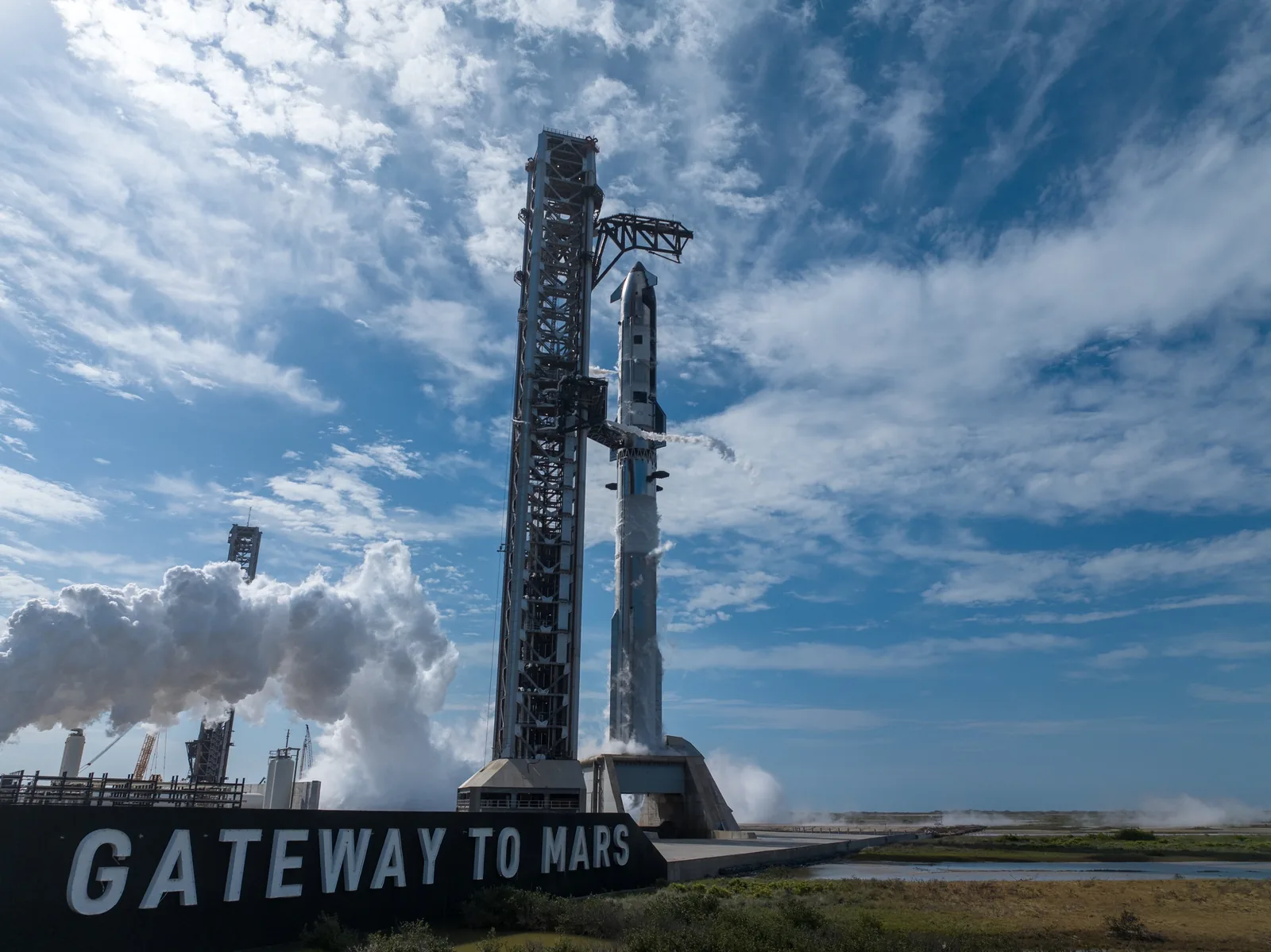
SpaceX announced May 12 that it is targeting May 19 for the first launch of its next-generation Starship version 3 vehicle, a critical step for both the company's ambitious spaceflight goals and NASA's lunar exploration program. The liftoff is scheduled for 6:30 p.m. Eastern from SpaceX's Starbase facility in South Texas. This comes just days after the company conducted a fueling test, successfully loading propellant into both the Starship upper stage and the Super Heavy booster. This launch marks the debut of Starship's third major iteration, featuring significant upgrades to both stages designed to enhance performance and enable rapid reuse. "The flight test’s primary goal will be to demonstrate each of these new pieces in the flight environment for the first time, with each element of the Starship architecture featuring significant redesigns to enable full and rapid reuse that incorporate learnings from years of development and test," the company stated in a release. The Starship V3 vehicle incorporates upgraded Raptor engines and will utilize a new launch pad at Starbase.
While the general profile of this suborbital test flight, designated Flight 12, will mirror some previous launches, several key changes are planned. The Super Heavy booster will not attempt a return landing; instead, it will perform a controlled splashdown in the Gulf of Mexico. Once in orbit, the Starship upper stage will deploy 22 mass simulators, designed to mimic the deployment of next-generation Starlink satellites. Two of these simulators will be equipped with imaging payloads to analyze the vehicle's heat shield, collecting data to assess its readiness for future reentry procedures. Starship will also relight a single Raptor engine during the flight, a maneuver tested on earlier flights. During its reentry phase, the upper stage will execute specific maneuvers intended to deliberately stress the vehicle, simulating conditions required for future returns to a landing site. In a unique test, a single heat shield tile has been intentionally omitted to study aerodynamic forces on adjacent tiles.
New Launch Pad and Engine Upgrades
The development timeline for Flight 12 experienced several delays. Following the October 2026 test flight of version 2, SpaceX had initially projected Flight 12 for January 2026. However, the Super Heavy booster intended for this mission sustained damage during testing in November. Further predictions by SpaceX Chief Executive Elon Musk in late January and early March of 2026 also proved optimistic. Musk's most recent social media updates in early April suggested a launch window of four to six weeks. Neither Musk nor the company has provided explicit reasons for these postponements, though a recent company documentary highlighted ongoing development challenges and work on the new launch pad.
The Starship V3 configuration is paramount for SpaceX's long-term objectives. It is the version slated for orbital missions, including the deployment of advanced Starlink satellites and serving as NASA's lunar lander for the Artemis program. "That’s really going to be our production rocket," Kiko Dontchev, vice president of launch at SpaceX, stated in November. Beyond its Texas facilities, SpaceX is actively expanding its launch capabilities. The company is constructing launch pads at Kennedy Space Center's Launch Complex 39A and two pads at Cape Canaveral Space Force Station's Space Launch Complex 37. Reports also surfaced May 12 indicating SpaceX's potential interest in acquiring a significant land parcel in Louisiana for future Starship activities, though the company offered a general statement on exploring numerous sites globally to support its goal of thousands of flights annually. This pursuit of diverse launch locations underscores the immense operational scale SpaceX envisions for its reusable super heavy-lift launch system.