
SpaceX Dragon Delivers 6,500 Pounds of Science to Space Station
A SpaceX Dragon capsule successfully docked with the International Space Station on May 17, carrying nearly 6,500 pounds of vital science experiments and supplies. The cargo will support numerous research projects for the Expedition 74 crew.

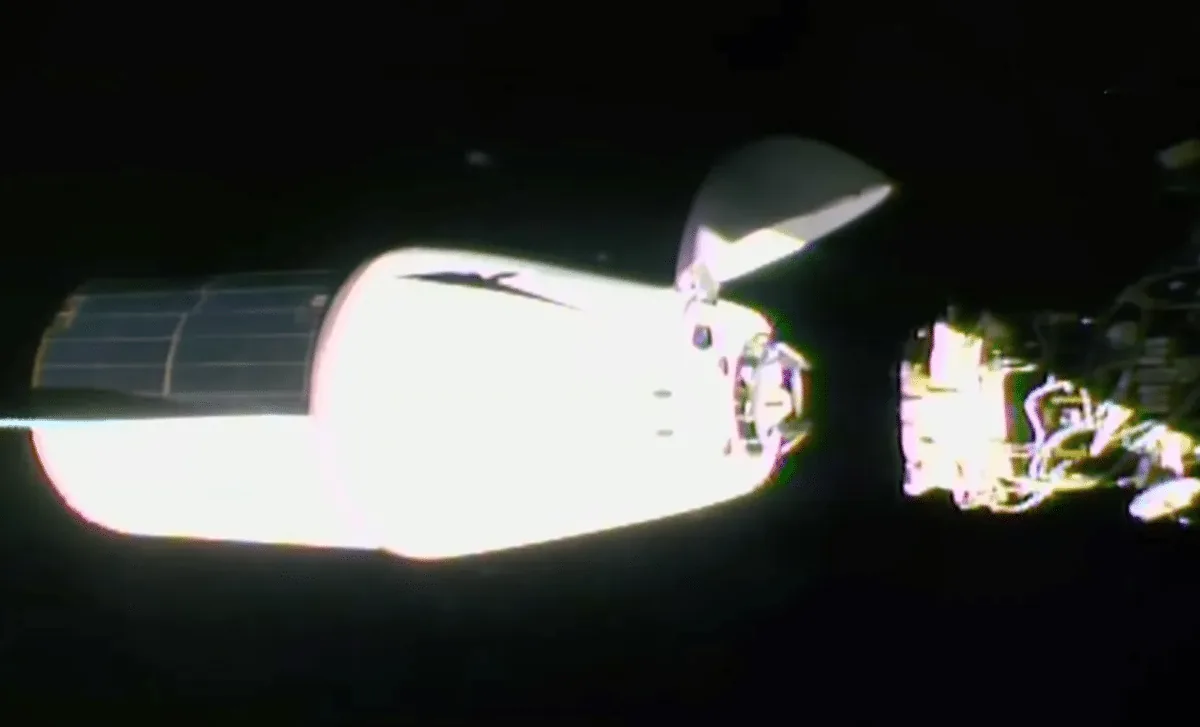
A SpaceX Dragon capsule arrived at the International Space Station on May 17, delivering approximately 6,500 pounds of vital science experiments and essential supplies. The successful docking marks the 34th resupply mission for SpaceX under NASA’s commercial resupply services contract, underscoring the company's critical role in supporting ongoing scientific research in orbit.
The SpaceX Dragon CRS-34 mission autonomously docked to the Harmony module's forward-facing port at 6:37 a.m. EDT. NASA astronaut Jack Hathaway confirmed the capture from the station's Cupola. This automated process allows astronauts to prioritize research objectives over complex manual docking procedures, showcasing the advanced capabilities of the Dragon spacecraft.
The capsule’s cargo hold is brimming with diverse research materials that the Expedition 74 crew will begin unpacking. Among the key experiments are investigations into how Earth-based simulators replicate microgravity conditions, the development of a bone scaffold derived from wood for potential osteoporosis treatments, and equipment to study changes in red blood cells and the spleen during prolonged spaceflight. These studies hold the potential to yield significant breakthroughs in human health and cellular biology, with applications for both astronauts and terrestrial medical treatments.
Advancing Earth and Space Science
Beyond human health, the Dragon capsule also brought instruments designed to enhance our understanding of Earth and its surrounding environment. One instrument will analyze charged particles around Earth, data that could bolster the resilience of global infrastructure like satellites and power grids. Another experiment aims to deepen scientific knowledge of planetary formation processes. Additionally, a precision instrument will measure sunlight reflected by Earth and the Moon, contributing to improved climate and illumination models.
The diverse nature of these investigations highlights the multifaceted contributions of SpaceX missions. They facilitate crucial research across human biology, planetary science, and space weather monitoring. This continuous flow of cargo is essential for maintaining the station as a premier laboratory for scientific discovery and technological advancement.
Since the inception of the commercial resupply program, SpaceX's Dragon spacecraft have become a cornerstone of NASA's strategy for maintaining a human presence in low Earth orbit. The reliability and increasing capacity of these missions ensure that vital equipment and the results of complex experiments can regularly reach the orbiting laboratory, enabling uninterrupted scientific inquiry.