
Rocky Exoplanet LHS 1140b Shows Signs of Atmosphere, Potential for Life
Scientists have detected helium escaping from exoplanet LHS 1140b, providing the first strong evidence of an atmosphere on a rocky world. Located in its star's habitable zone, the planet could potentially support life.

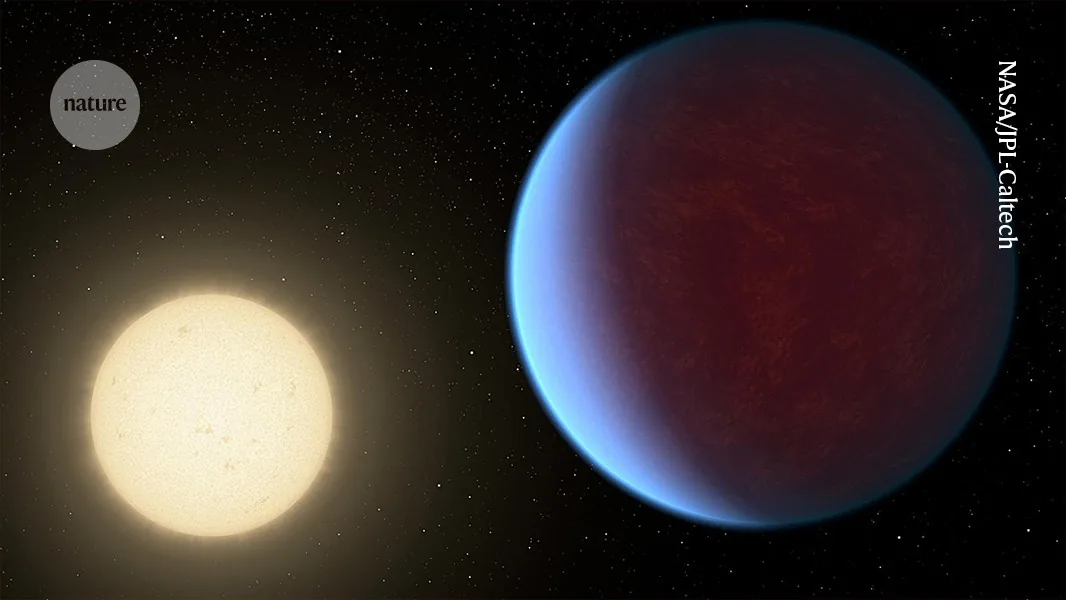
Astronomers have announced the discovery of a rocky exoplanet, designated LHS 1140b, that shows compelling signs of possessing an atmosphere, a crucial ingredient for habitability. The finding, detailed in a study published this week in the journal Science, comes from observations of helium escaping the planet's outer layers, suggesting a significant atmospheric presence. This discovery marks a significant step in the quest to find potentially life-supporting worlds beyond our solar system.
LHS 1140b orbits a red-dwarf star approximately 15 parsecs (about 49 light-years) from Earth. Its location within the star's 'habitable zone' means temperatures could allow for liquid water to exist on its surface, a prerequisite for life as we know it. "It’s been a major goal in the field of exoplanets to find atmospheres on rocky exoplanets," said Collin Cherubim, a planetary scientist at Harvard University in Cambridge, Massachusetts. He emphasized that for Earth-like life to emerge, an atmosphere, liquid water, and a rocky surface are essential, and LHS 1140b now appears to meet these criteria.
The research team utilized the Magellan Clay telescope at the Las Campanas Observatory in Chile, conducting observations over two separate 6.5-hour periods in 2024 and 2025. By analyzing near-infrared absorption spectra, they detected a substantial outflow of helium from the exoplanet's upper atmosphere. This detection is particularly significant because observing atmospheres on rocky exoplanets has been a formidable technical challenge, with previous efforts largely identifying airless bodies or those with too-faint atmospheres to characterize.
Atmospheric Clues and Future Research
While the presence of a helium-rich atmosphere has been strongly indicated, the exact composition of the planet's inner atmosphere remains uncertain. Cherubim theorizes that it may contain water and other small, oxidized molecules like carbon dioxide, but this hypothesis requires further experimental verification. The current study does not confirm the presence of water or detail the inner atmospheric makeup.
This finding is considered a vital contribution to understanding rocky exoplanets. "The results will need replicating in future observations of exoplanets," researchers noted. Nevertheless, astrophysicist Sara Seager of the Massachusetts Institute of Technology in Cambridge described the findings as an "amazing missing piece of the puzzle" regarding whether rocky worlds can retain atmospheres.
Astronomers have long theorized that rocky exoplanets could harbor atmospheres capable of regulating climate, shielding surfaces from harmful radiation, and facilitating the existence of liquid water. The observation of escaping helium from LHS 1140b provides concrete evidence supporting these theories. The planet was initially discovered in 2017, and computational models developed by Cherubim's team predicted that it would exhibit escaping helium, thus pointing to an atmosphere.
The successful detection of atmospheric escape from this exoplanet, situated in a potentially life-friendly zone, opens up new avenues for exoplanet research. Future studies will aim to refine measurements of LHS 1140b's atmosphere and search for similar signatures on other rocky planets. This work is part of a broader effort to identify and characterize potentially habitable exoplanets, bringing scientists closer to answering fundamental questions about life's prevalence in the universe. The investigation into habitability conditions on distant worlds like rocky exoplanet LHS 1140b continues to be a primary focus for astronomy.