
Asteroid Apophis Close Flyby: 1,000 Days Until Close Encounter
In 1,000 days, the asteroid Apophis will pass closer to Earth than many satellites. Scientists are preparing with the RAMSES mission to study the 'God of Chaos' up close.

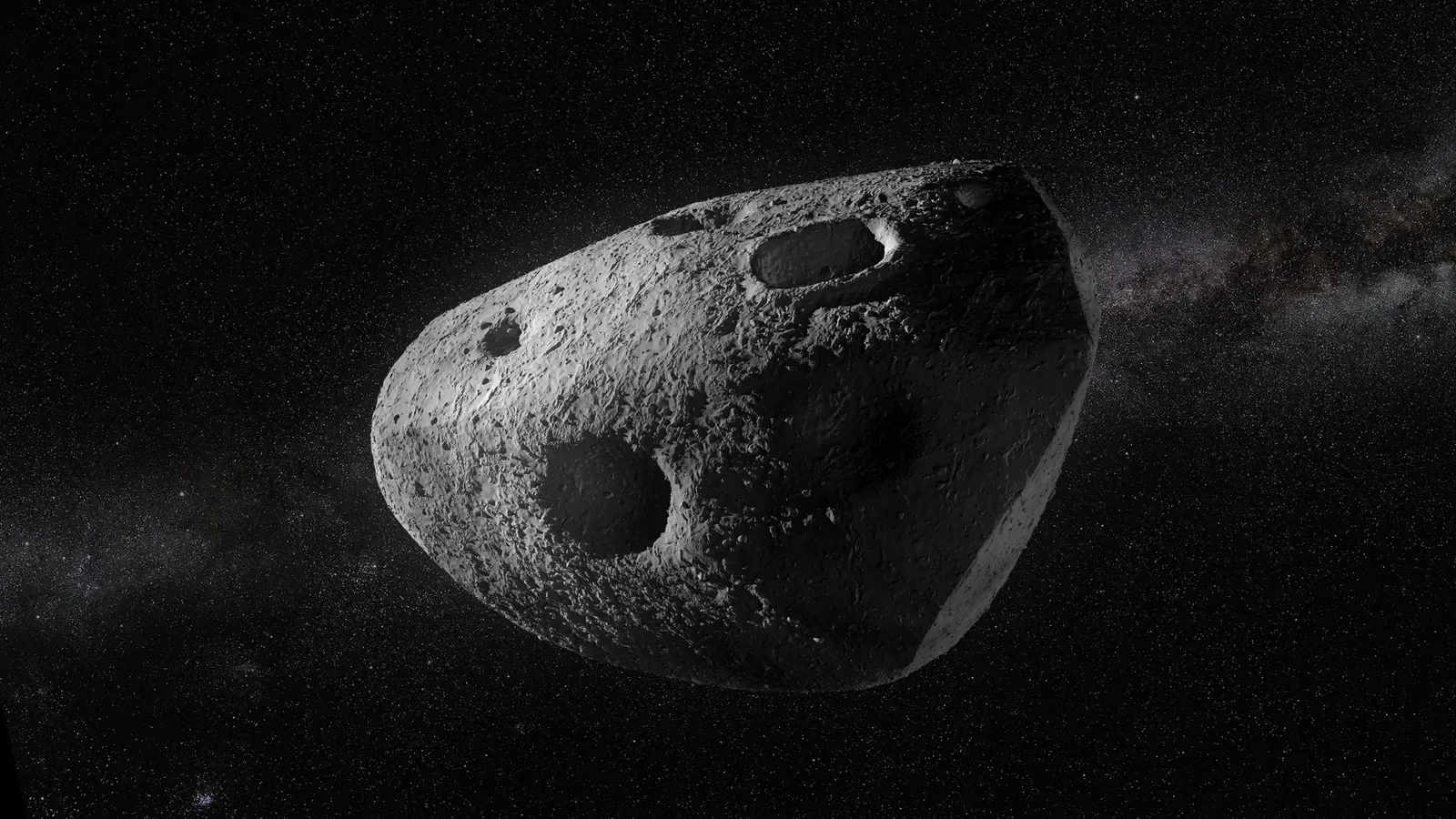
In precisely 1,000 days, on April 13, 2029, the asteroid Apophis, nicknamed the 'God of Chaos,' will undertake one of the most remarkable near-Earth flybys ever predicted. The celestial body is set to pass a mere 20,000 miles (32,000 km) above our planet's surface. This close approach, closer than many operational communication satellites and potentially visible from certain locations on Earth, occurs only once every 5,000 to 10,000 years.
Apophis first garnered significant attention in 2006 when initial calculations suggested a concerning 2.7% probability of impact in 2029, 2036, or 2068. However, by 2021, updated assessments definitively ruled out any impact for at least the next century. Recent simulations from 2024 introduced a minute, albeit not impossible, chance of Apophis colliding with a smaller asteroid, which could alter its trajectory. The odds of such an event are exceptionally slim, estimated at about one in a million. Unfortunately, due to Apophis remaining in the daylight sky, definitive reassessment won't be possible until 2027.
ESA's RAMSES Mission Prepares for Apophis Flyby
To maximize scientific understanding during this unique event, the European Space Agency (ESA) is deploying its Rapid Apophis Mission for Space Safety, known as RAMSES. This specialized spacecraft will intercept Apophis in advance of its historic close pass. The ESA officially contracted OHB Italia in February 2026 to commence the construction, assembly, and testing phases for the RAMSES probe. The mission is slated for launch in the spring of 2028, with arrival anticipated in early 2029. This timing will allow scientists to conduct comprehensive studies of the asteroid both before, during, and immediately after its proximity to Earth.
The RAMSES spacecraft is equipped to perform detailed measurements of Apophis's physical characteristics, including its shape, rotation rate, orbital path, surface composition, and internal structure. Critically, it will also observe and record how Earth's gravitational influence affects the asteroid during the flyby. Scientists anticipate that this close gravitational encounter will induce subtle but measurable changes in Apophis's spin and orientation. There is even a possibility that the interaction could trigger landslides on the asteroid's surface.
“With RAMSES, ESA is seizing a once-in-a-lifetime opportunity to study asteroid Apophis as it swings past Earth, deepening our understanding of near-Earth objects and advancing our capabilities to protect our planet,” stated Orson Sutherland, Mars & Beyond Projects Group Leader at ESA. The data gathered by RAMSES is expected to significantly enhance our knowledge of potentially hazardous asteroids and refine planetary defense strategies for future threats.