
Quebec Amateur Astronomer Discovers 390-Million-Year-Old Impact Crater
An amateur astronomer in Quebec stumbled upon evidence of a massive ancient impact crater while scouting a campsite. Geologists later confirmed the find, dating it back 390 million years.

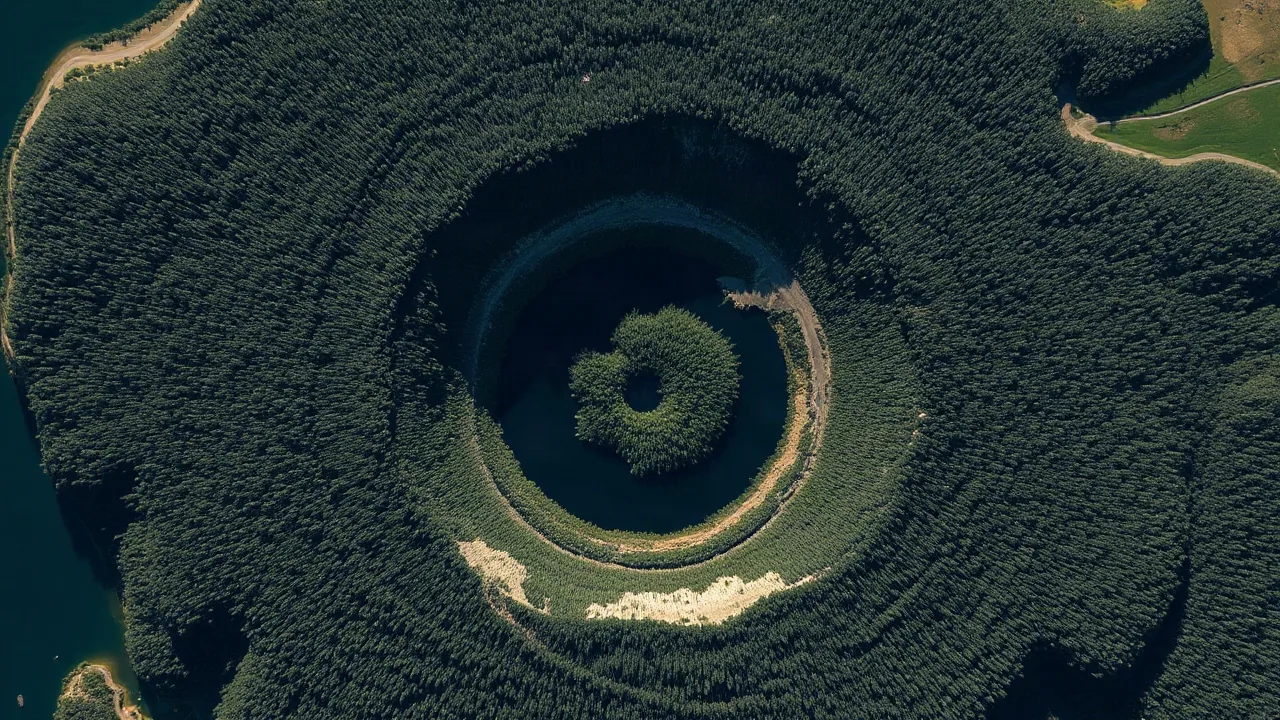
An amateur astronomer in Quebec, Canada, has inadvertently discovered what appears to be a massive ancient impact crater dating back approximately 390 million years. The discovery began in 2024 when the amateur astronomer, whose name has not been released, was using satellite imagery to scout a potential campsite near Lake Marsal. He noticed a distinct 25-kilometer ring structure in the imagery, prompting further investigation.
The following year, in 2025, a team of geologists was dispatched to the remote location, reaching the site by floatplane. Their on-site examination of the area revealed shatter cones, which are distinctive geological formations created by the immense shock pressure of a meteorite impact. The presence of these shatter cones served as definitive proof that the circular feature surrounding Lake Marsal was indeed an impact crater.
Confirming an Ancient Cosmic Collision
The confirmation of the crater marks a significant geological find for the region. Initial estimates suggest the impact occurred around 390 million years ago, placing it within the Devonian period. The diameter of the crater has been estimated at approximately 25 kilometers, making it a substantial scar on the Earth's ancient landscape. This discovery adds to the growing catalog of impact structures found worldwide, underscoring the continuous bombardment our planet has endured throughout its history.
The remote and densely forested terrain of Quebec has historically made such discoveries challenging. Many ancient craters are often eroded, buried under sediment, or their distinctive features obscured by vegetation, making them difficult to identify from the ground. However, the advent of high-resolution satellite imagery has proven to be an invaluable tool for geologists and amateur observers alike in spotting these geological anomalies from afar.
Dr. Evelyn Reed, a planetary geologist at McGill University who was not directly involved in the initial find but is familiar with impact crater research, commented on the significance. "Discoveries like this are crucial for understanding Earth's geological past and the frequency of extraterrestrial impacts," Dr. Reed stated. "Amateur astronomers and citizen scientists play an increasingly vital role in identifying potential sites that might otherwise go unnoticed by professional surveys for years, or even centuries."
Further research will be conducted to precisely determine the size and depth of the crater, as well as to analyze the ejecta blanket and any potential meteorite fragments. The geological data gathered from the Lake Marsal site will contribute to a broader scientific understanding of impact processes and their long-term effects on planetary crusts. The discovery highlights the importance of continued geological surveys and the power of combining traditional fieldwork with modern remote sensing technologies.