
Mars Rocks Show Evidence of Three Ancient Water Eras
NASA's Perseverance rover has uncovered compelling evidence in Martian rocks suggesting at least three distinct periods of water activity on the Red Planet billions of years ago. The findings reshape our understanding of Mars's ancient climate.

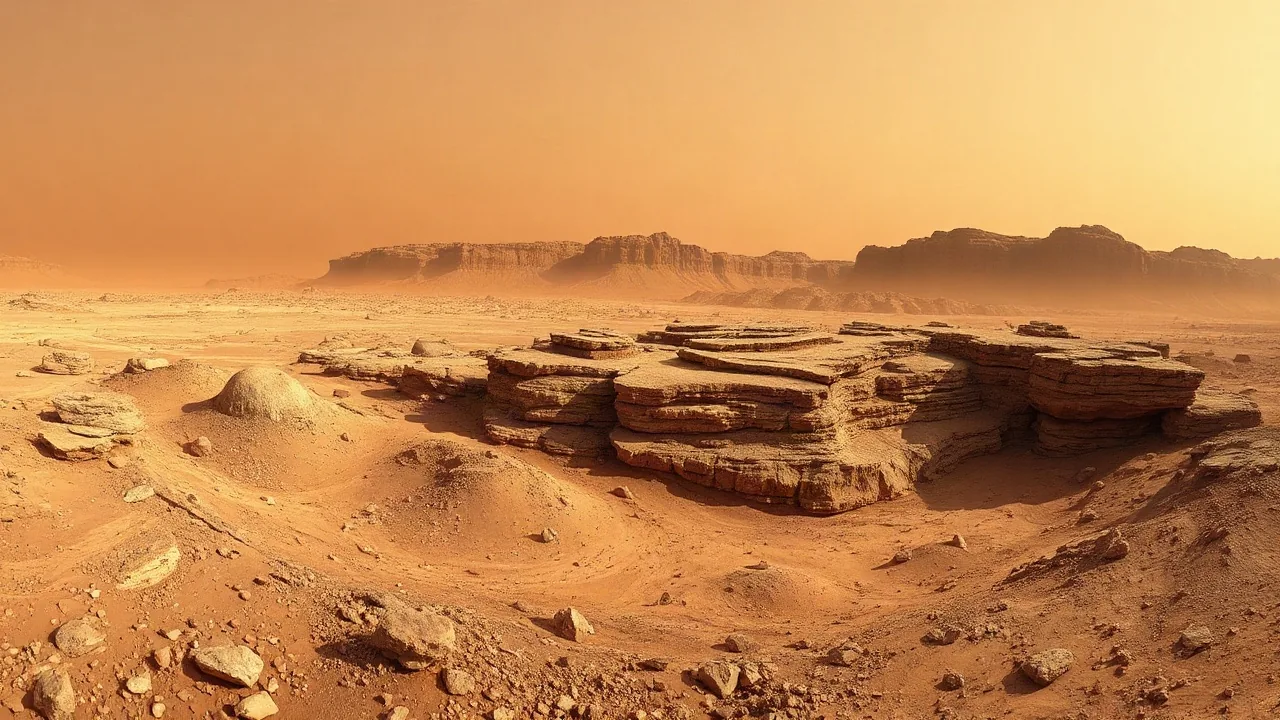
New analysis of ancient rocks collected by NASA's Perseverance rover on Mars has revealed compelling evidence of at least three separate episodes where liquid water flowed across the planet's surface. These findings, detailed in recent scientific publications, indicate that Mars once hosted complex hydrological systems, significantly altering previous understandings of its ancient climate and potential habitability. The rocks, gathered from the Jezero Crater, provide a detailed geological record of Mars's early history, stretching back billions of years.
Scientists at NASA's Jet Propulsion Laboratory (JPL) in Southern California are meticulously studying the mineral composition and structures within these rock samples. Initial findings point to periods of water interaction that were more dynamic and extended than previously thought. This suggests that Mars may have been capable of supporting microbial life for longer durations than current models predict. The rover's sophisticated suite of instruments, including cameras, spectrometers, and drills, has been instrumental in collecting high-resolution data from the Martian surface.
Ancient Water's Lasting Impact
The discovery of multiple water episodes challenges the long-held view of Mars as a planet that quickly transitioned from a potentially wet world to the arid desert seen today. Instead, the geological data implies a more complex and fluctuating environment. Researchers are particularly interested in the types of minerals present, as they can indicate the chemistry of the water and the conditions under which it existed. For instance, the presence of certain carbonates could point to significant exchanges between water and the Martian atmosphere, potentially locking away large amounts of carbon dioxide.
Dr. Emily Carter, a planetary geologist involved in the mission, stated, "What we're seeing are clear geological signatures that demand at least three distinct wet periods. This isn't just about finding water; it's about understanding the duration and intensity of those watery environments and what they could have meant for the planet's evolution." The team is now working to precisely date these water-related events to construct a more accurate timeline of Mars's hydrological past. Understanding these ancient water systems is crucial for future human exploration, as it helps identify potential resources and assess risks.
Further investigation into the collected samples may also shed light on whether Mars ever harbored conditions suitable for life. The presence of persistent liquid water is a fundamental requirement for life as we know it. The geological context of these water-rich periods, including the temperature and chemical composition of the water, will be key to assessing Mars's past habitability. This research contributes to the broader scientific effort to answer the profound question: is Earth the only planet in our solar system to have hosted life?