
NASA Bets $30 Million on Unique Rescue for Swift Space Telescope
NASA is undertaking a $30 million mission to extend the life of the 22-year-old Swift telescope, scheduled to launch June 27. The unprecedented operation aims to boost the observatory before it falls from orbit.

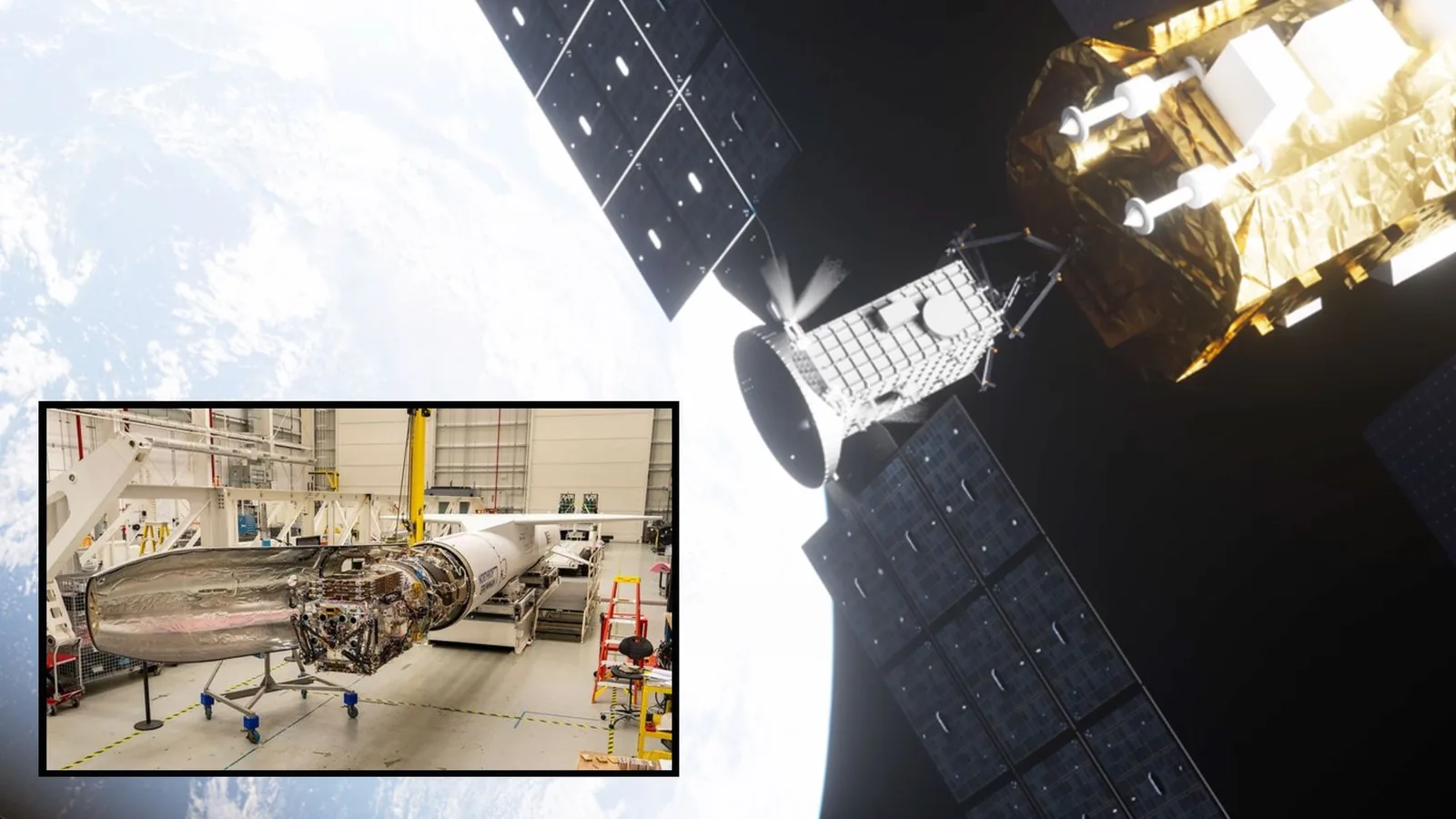
NASA is embarking on an unprecedented $30 million mission to save the aging Swift space telescope from an uncontrolled re-entry into Earth's atmosphere. The observatory, launched in 2004 for a planned two-year mission, is now falling out of orbit due to increased atmospheric drag caused by solar storms. The rescue operation, scheduled for June 27, will be conducted by the private company Katalyst Space using its new Link spacecraft, aiming to push Swift into a higher, more stable orbit for at least five more years of scientific observation.
The decision to spend millions on the nearly 22-year-old telescope, originally costing $250 million, has raised questions about its value. However, NASA officials emphasize Swift's unique capabilities and ongoing scientific importance. The observatory has spent over two decades serving as an orbital sentinel, specializing in detecting and rapidly responding to gamma-ray bursts—powerful, short-lived cosmic explosions. No other space observatory, not even the renowned Hubble or James Webb Space Telescopes, can perform this rapid-response function.
"We didn't want to set the precedent that anything that comes out of orbit has to be boosted, because it is part of our space ecosystem to have things deorbit frequently," explained Shawn Domagal-Goldman, NASA's Astrophysics Division director, during a briefing on June 17. "But this was not just any spacecraft; this is an observatory with unique capabilities for astrophysics … It is a swift observatory that can quickly pivot across the night sky to find things that go boom in the night."
A First Responder in the Cosmos
Swift, officially renamed the Neil Gehrels Swift Observatory in 2018, has been instrumental in astrophysics since its launch. Its primary mission was to quickly pinpoint gamma-ray bursts (GRBs), which release more energy than our sun does in its entire lifetime, often lasting only seconds. The telescope's namesake, Neil Gehrels, was the mission's first principal investigator. The observatory's ability to rapidly and autonomously repoint its narrow-field X-ray and UV telescopes earned it its name, Swift, as it can observe almost anywhere on the sky with minimal delay. This capability allows scientists to study the dynamic universe, where massive star explosions occur constantly.
"The universe is a very dynamic place. Somewhere in the cosmos, a massive star explodes every second," said Brad Cenko, Swift Principal Investigator, during the same briefing. "And over time, our exceptional operations team, led by Penn State, has found new and innovative ways for the satellite to rapidly respond to these discoveries." Cenko highlighted that while the Hubble Space Telescope can capture more detailed images, it requires up to two days to target a new celestial event, whereas Swift can do so in mere minutes. "It really is NASA's first responder, and by working together in this complementary manner, the NASA astrophysics portfolio can tackle questions that would be impossible for any single facility to answer," Cenko added. Swift's observations have even contributed to confirming the origin of heavy elements like gold and platinum, forged in the energetic environment of GRBs, and it famously discovered the brightest gamma-ray burst ever seen in 2022, nicknamed the "BOAT" (Brightest of All Time).
Despite its scientific successes, Swift is currently in an orbit approximately 375 miles (600 kilometers) above Earth, and without propulsion to maintain its altitude, it is expected to descend below 186 miles (300 km) by October. At that point, Link may be unable to reach it. The mission team has already placed Swift into a low-power mode since February to conserve energy and slow its descent.
The Swift Boost mission is set to launch on the final Pegasus XL rocket, carried by the last L-1011 Stargazer aircraft, from the U.S. military's Reagan Missile Test Site on Kwajalein Atoll. Katalyst Space, a relatively new company based in Arizona, was selected for this high-stakes operation just nine months ago. The rapid development of the Link spacecraft, designed to rendezvous with and push Swift, represents a significant engineering feat, given the tight deadline and the fact that Swift was not built for such an intervention. Kieran Wilson, Link's principal investigator at Katalyst, described the development timeline as "unprecedented," driven by the urgency of Swift's situation. "That is something that we were able to do, because every part of this mission has been driven by the exceptional urgency provided by the Swift requirements," Wilson stated.
The Link spacecraft, roughly the size of a refrigerator, is equipped with advanced ion engines and robotic arms designed to capture and nudge the Swift telescope. Both NASA and Katalyst have collaborated closely on the mission, with extensive testing and computer modeling employed to mitigate risks. "We've been relying on NASA expertise to ensure that we're not making silly mistakes along the way and maximize our probability of success," Wilson explained. "There's a lot of very simple things that can go wrong, and we've added a lot of additional complexities to the program, but we've been through an aggressive test campaign over the last few months." Following its launch, Link will undergo several weeks of in-orbit checks before attempting the rendezvous and push, a process that could take up to three months. Success would mark a historic achievement in space servicing, demonstrating the capability to reboost a scientific satellite with a spacecraft developed in less than a year. Katalyst is also developing a similar capability for larger spacecraft under a U.S. Space Force contract, with a launch planned for 2027. Should the mission fail, Swift will still deorbit as planned, making the stakes, while high, a calculated risk with a defined alternative outcome.