
Human & Ape Laughter Similarities Span 15 Million Years, Study Finds
New research reveals that human laughter and the vocalizations of great apes share striking rhythmic similarities, suggesting a common evolutionary origin dating back 15 million years.

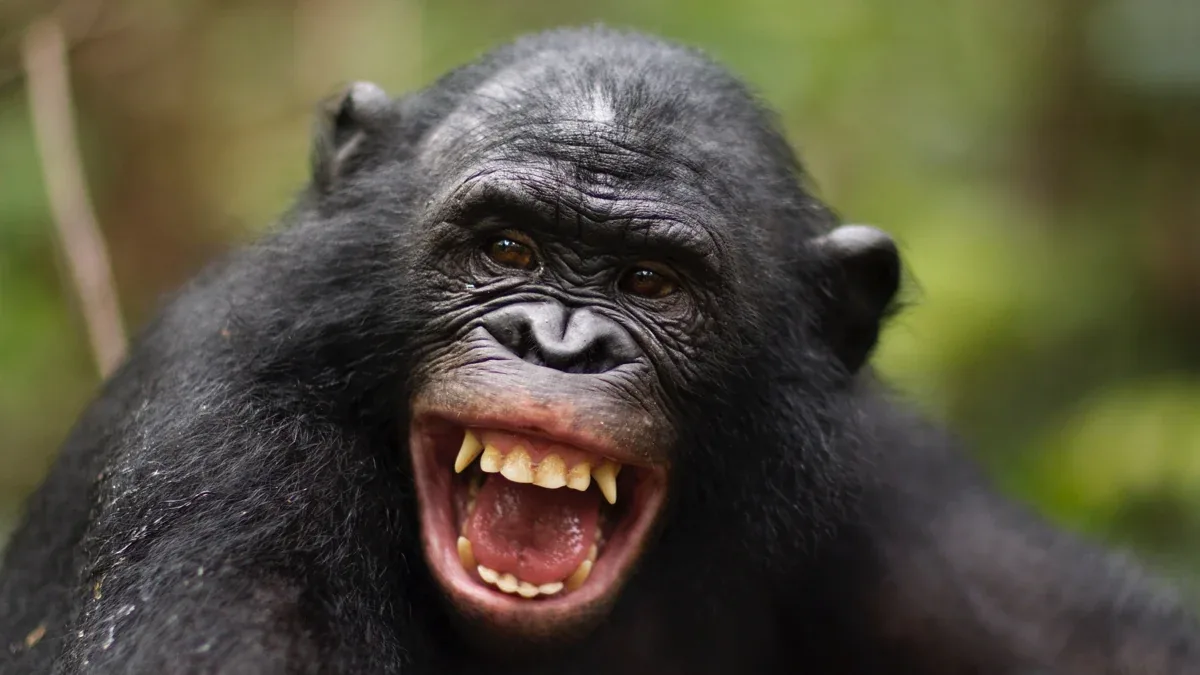
Humans and great apes have shared a similar form of laughter for millions of years, according to a new study published this week in the journal Communications Biology. Researchers analyzed decades-old recordings of gorillas, orangutans, chimpanzees, and bonobos being tickled, comparing them to recent recordings of young children experiencing similar playful interactions.
The findings indicate that the chuckles and giggles of both humans and these apes follow comparable rhythmic patterns, suggesting a shared evolutionary past. "In a way, we are very similar to other great apes because we've been laughing in a similar way for 15 million years," explained lead author Chiara De Gregorio, a primatologist at the University of Warwick in England. Laughter, a non-verbal expression of playfulness and happiness, serves as a crucial communication tool across species, though its specific forms can vary.
While many animals exhibit laughter-like vocalizations, their patterns often diverge from human laughter. For instance, rats respond to tickling with ultrasonic squeaks. Historically, scientists have examined animal facial expressions to understand the evolution of laughter, but sonic analysis has received less attention. Human laughter, while more complex and faster than that of apes, retains these ancient rhythmic foundations.
The Evolution of Vocal Play
The study highlights that human laughter has evolved to encompass a wider range of social contexts and nuances. From a discreet chuckle in a professional setting to a hearty guffaw among close friends, human laughter adapts to social cues and relationships. "We are like the masters of laughter, I would say," De Gregorio commented on the complexity of human vocalizations.
Brittany Florkiewicz, an animal communication expert at Lyon College who was not involved in the study, noted that the findings align with her understanding of how vocalizations evolve to suit different social structures. She suggested that further research, including recordings of other playful animals like dogs, horses, and cats, could provide deeper insights into the evolutionary journey of laughter. "Understanding what makes us uniquely human, but also what is similar between humans and other animals," is a key goal for such investigations, Florkiewicz stated.
Investigating the origins of laughter is not just an academic curiosity; it offers a window into the development of communication, potentially shedding light on the evolution of spoken language itself. Since sounds do not fossilize, researchers must rely on comparative analysis of living species, piecing together the history of vocal communication one chuckle at a time. This evolutionary perspective underscores the deep biological connections between humans and other primates.