
NASA SpaceX Crew 13 Mission: Latest Launch and ISS Updates
NASA and SpaceX launched Crew 13 to the International Space Station with four astronauts aboard a Falcon 9 rocket. The mission continues routine resupply and research operations on the orbiting laboratory.

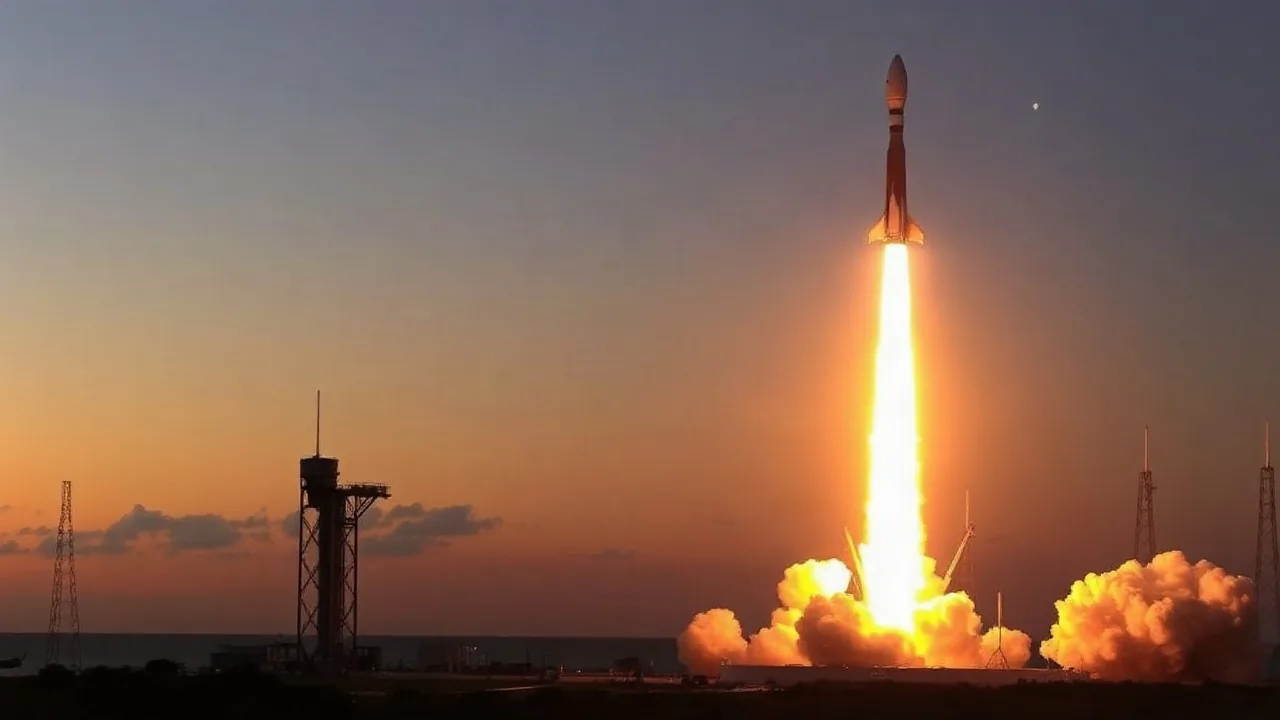
Four astronauts lifted off from Kennedy Space Center aboard a SpaceX Falcon 9 rocket on the NASA SpaceX Crew 13 mission in October 2026, marking the latest crewed rotation to the International Space Station. The Dragon capsule docked with the ISS two days after launch, delivering the rotation crew to replace the outgoing expedition members who had spent six months in orbit.
The crew includes commander Sarah Chen, pilot Marcus Rodriguez, and mission specialists Dr. James Okoro and Anna Volkov. All four underwent extensive training at NASA's Johnson Space Center and SpaceX facilities in Hawthorne, California before their departure. The astronauts will conduct scientific experiments, maintain station systems, and oversee cargo operations during their six-month tenure aboard the orbiting laboratory.
"This mission demonstrates the proven reliability of our crew rotation cadence," said NASA Associate Administrator Phil McAlister during a pre-launch briefing. "SpaceX has now successfully completed twelve crewed missions to the ISS, and Crew 13 represents the continuation of a critical partnership that keeps American astronauts working in low Earth orbit."
Mission Timeline and Docking Procedures
The Falcon 9 booster ignited at 5:14 a.m. EDT on October 3, 2026, carrying the Dragon capsule away from Pad 39A. The first stage successfully landed on the droneship Just Read the Instructions in the Atlantic Ocean, marking the fifteenth flight for that particular booster. The capsule completed its orbital insertion and began a deliberate two-day coast to the station.
Dragon docked with the ISS on October 5 at the Harmony module's forward port. Ground controllers in Houston and SpaceX's mission control in Hawthorne monitored the approach and berthing procedures, which concluded automatically at 7:42 a.m. EDT. The crew performed standard post-docking checks and hatch opening procedures, allowing transition to the orbiting laboratory by mid-morning.
This launch continues NASA's cadence of regular crew rotations established since the restart of commercial crewed spaceflight in 2020. The agency maintains two crewed missions per year to ensure continuous human presence aboard the station.
Research Priorities and Station Operations
Crew 13's primary focus will center on ISS mission objectives in microgravity research, manufacturing, and materials science. The team plans to conduct experiments on protein crystal growth, combustion dynamics, and pharmaceutical development in the Destiny and Columbus modules.
The incoming crew will also oversee several critical maintenance tasks:
- Replacement of degraded thermal control system components on the station's exterior truss
- Upgrade of communication relay hardware in the Japanese Kibo module
- Installation of new bacterial contamination monitors in the water recycling system
- Inspection and repair of micrometeoroid shielding on the port solar array
Dr. James Okoro, a materials scientist on his first spaceflight, will lead investigations into how alloys behave in weightlessness. "Understanding material behavior in microgravity helps us design better components for spacecraft and industrial applications on Earth," Okoro stated during a training simulation in August 2026.
The crew will also welcome three cargo resupply vehicles during their tenure: a SpaceX Dragon freighter in November, a Northrop Grumman Cygnus module in December, and a European Space Agency ATV in January 2027.
Future of Crewed Spaceflight
The Crew 13 mission underscores SpaceX's central role in NASA's long-term space exploration strategy. The company has now flown thirteen crewed missions with zero abort conditions, establishing a safety record that rivals traditional aerospace contractors. NASA remains committed to commercial partnerships while simultaneously developing the Space Launch System and Orion for deep space missions beyond low Earth orbit.
Blue Origin's New Shepard suborbital flights and Sierra Space's Dream Chaser cargo vehicle represent parallel efforts to diversify the U.S. spaceflight ecosystem. However, SpaceX's Crew Dragon remains the sole operational vehicle for regular ISS rotations as of October 2026. Boeing's Starliner, grounded since certification issues emerged in 2023, has not carried astronauts and remains under NASA review.
Looking ahead, NASA plans to transition low Earth orbit operations to commercial space stations by 2028. Companies including Axiom Space and Starlab are developing modules that will supplement or eventually replace the International Space Station. Crew 13 astronauts will contribute to data collection and hardware testing that informs these transitions.
The rocket launch cadence is expected to accelerate over the next twelve months. SpaceX has scheduled three additional crew missions and four cargo flights before the end of 2027, reflecting growing demand for orbital access and the maturation of commercial launch services.
Crew 13 will conclude with a splashdown in the Gulf of Mexico in early April 2027. The Dragon capsule will return with experimental samples, scientific data, and hardware requiring Earth-based analysis. The outgoing crew will spend their final days aboard the ISS conducting knowledge transfer sessions and preparing the station for Crew 14's arrival in April.