
SpaceX Completes 3 Rocket Launches in 13 Hours
SpaceX achieved a rapid launch cadence, successfully deploying three rockets within a 13-hour window. This milestone highlights the company's increasing operational efficiency and its significant role in space missions.

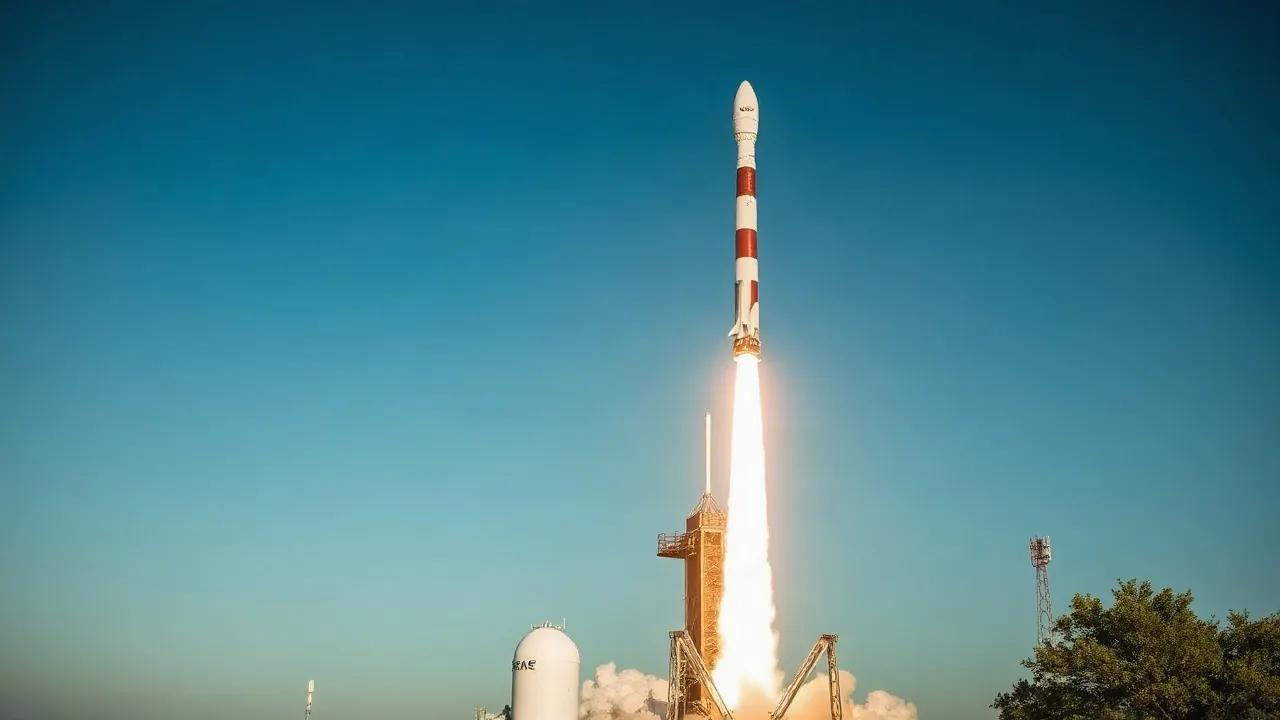
SpaceX demonstrated remarkable operational tempo this past weekend, executing three distinct rocket launches within a condensed 13-hour period. The rapid succession of missions underscores the company's growing capability and its critical role in both commercial and governmental space endeavors. The launches included critical resupply and crew missions, showcasing the versatility and reliability of the Falcon 9 and Falcon Heavy launch vehicles.
The intense launch schedule began late Friday, October 2, 2026, with the Falcon 9 launching the Starlink 55 mission from Cape Canaveral Space Force Station in Florida. This mission added another 23 satellites to SpaceX's burgeoning internet constellation. Just hours later, a second Falcon 9 lifted off from Kennedy Space Center, carrying the 13th crewed mission, designated Crew-13, to the International Space Station (ISS). This crewed flight was notably swift, with the Dragon capsule docking at the ISS in under eight hours, setting a new record for the fastest American crewed flight to the orbiting laboratory.
The rapid turnaround between launches highlights significant advancements in launch site operations and booster refurbishment. SpaceX has invested heavily in rapid reuse capabilities, allowing its first-stage boosters to be quickly inspected, refueled, and relaunched. This efficiency is crucial for meeting the high demand for launch services and for scaling up operations to support ambitious projects like Starlink and future lunar and Martian missions.
Operational Efficiency Drives Space Access
The third launch in the series occurred early Saturday, October 3, 2026, with a Falcon Heavy rocket departing from Launch Complex 39A at Kennedy Space Center. This powerful rocket was tasked with deploying the ambitious Psyche asteroid mission for NASA. The Psyche spacecraft is designed to study a unique metal-rich asteroid, believed to be the core of an early planet, in hopes of understanding planetary formation. The successful deployment of this complex scientific payload further cements SpaceX's position as a key partner for NASA's scientific exploration goals.
This flurry of activity not only demonstrates SpaceX's technical prowess but also has significant implications for investors and the broader aerospace industry. The ability to launch multiple missions in such a short timeframe reduces costs per launch and increases the overall volume of payloads that can be delivered to orbit. This makes space access more predictable and affordable, encouraging further innovation and investment in the burgeoning space economy.
“Our ability to execute these complex missions in rapid succession is a testament to the dedication and ingenuity of our entire team,” said a SpaceX spokesperson. “We are continuously working to improve our launch cadence and reliability, supporting our customers’ critical missions and pushing the boundaries of what’s possible in space.” The company’s focus on reusability and streamlined operations is a key differentiator in the highly competitive global launch market.
The recent launches come at a time when demand for launch services continues to surge. Governments and private companies worldwide are increasingly reliant on space-based technologies for communication, navigation, Earth observation, and scientific research. SpaceX's sustained success in delivering payloads reliably and affordably positions it to capture a significant share of this growing market.