
Moon Bases to Get Nuclear Power: US and China Lead Race
The United States and China are competing to develop small nuclear reactors for potential lunar bases. These compact power sources are seen as crucial for future deep-space exploration.

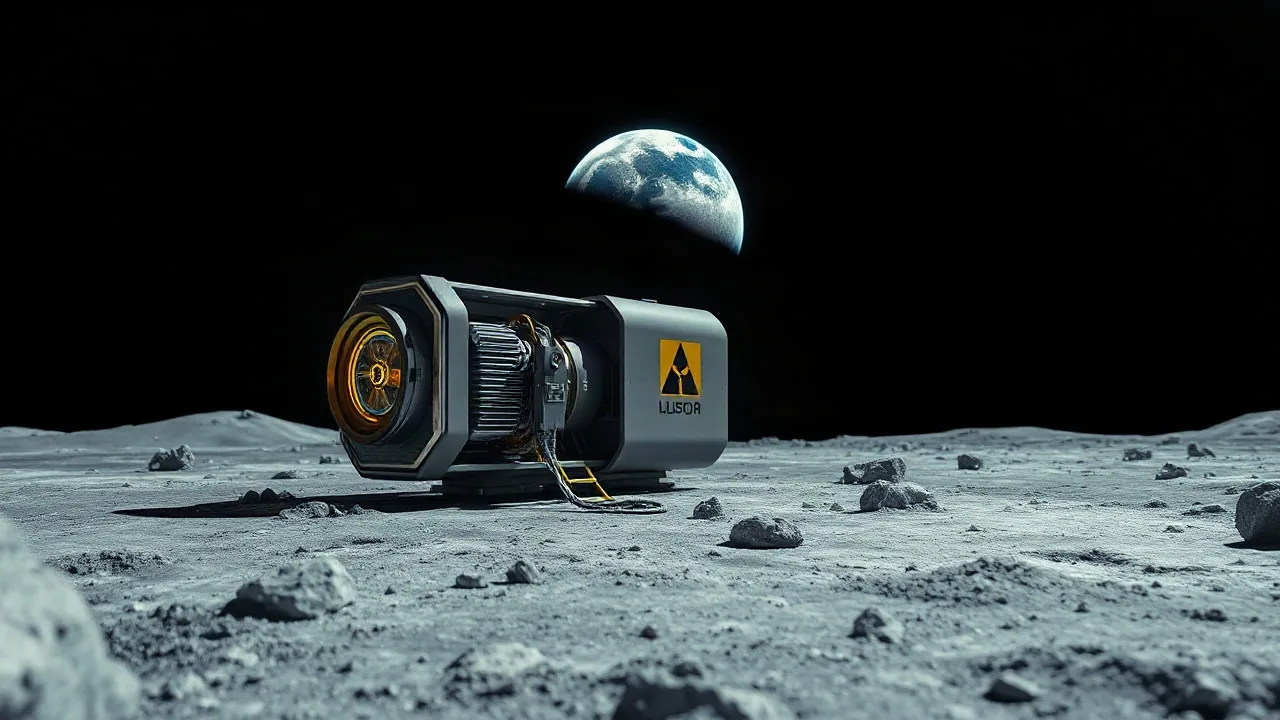
The quest to establish permanent human outposts on the Moon has entered a new phase, with major global powers like the United States and China accelerating efforts to deploy nuclear reactors on the lunar surface. These compact, next-generation fission power systems are viewed as essential for providing reliable and abundant energy to support lunar bases, scientific research, and potentially even resource extraction operations.
The U.S. space agency NASA has been actively pursuing the development of a Kilopower-class fission surface power system, designed to be robust enough to operate in the harsh lunar environment. Similarly, China's National Space Administration (CNSA) has announced ambitious plans for lunar exploration, which prominently feature the need for advanced power generation capabilities. While details remain scarce, both nations appear to recognize nuclear fission as the most viable path to powering a sustained presence beyond Earth.
Powering Lunar Ambitions
The challenges of powering a lunar base are immense. Solar power, while useful, is hampered by the long lunar nights and the need for extensive energy storage. Conventional batteries and fuel cells would require frequent resupply missions, proving prohibitively expensive and logistically complex for long-term operations. Nuclear reactors, however, offer a continuous and high-density power output, capable of meeting the demands of life support, scientific instruments, and future expansion.
Zeno Power, a company developing compact fission reactors for space applications, highlights the growing demand. "The energy requirements for future space missions, especially those involving surface operations and extended duration, are significantly higher than what has been previously accommodated," said a company spokesperson. "Nuclear power provides a unique solution to meet these escalating needs, enabling capabilities previously only dreamed of."
The primary focus for these initial lunar reactors is on smaller, safer designs. Concepts often discussed involve units producing tens to hundreds of kilowatts of electrical power, capable of being transported and deployed relatively easily. Such systems would be crucial for tasks like generating breathable air, heating habitats, operating rovers, and powering communication systems. This technological race is not just about energy; it's about establishing a foothold for future human endeavors in space.
The development of these lunar reactors also brings significant safety and regulatory considerations. Ensuring that these systems can operate autonomously and safely, with minimal risk of contamination or accidents, is paramount. International cooperation and the establishment of clear guidelines for the use of nuclear materials in space will likely become increasingly important as more nations pursue lunar ambitions.
This drive towards lunar nuclear power underscores a broader trend of increasing energy demands in space exploration. As humanity sets its sights on the Moon and Mars, the need for robust, on-site power generation will only intensify, making nuclear technology a critical component of future off-world infrastructure.