
NASA Begins Artemis III Rocket Stacking for 2027 Moon Mission
NASA is assembling its Space Launch System rocket for the Artemis III mission, targeting a mid-to-late 2027 launch. This crucial step brings the agency closer to returning astronauts to the lunar surface.

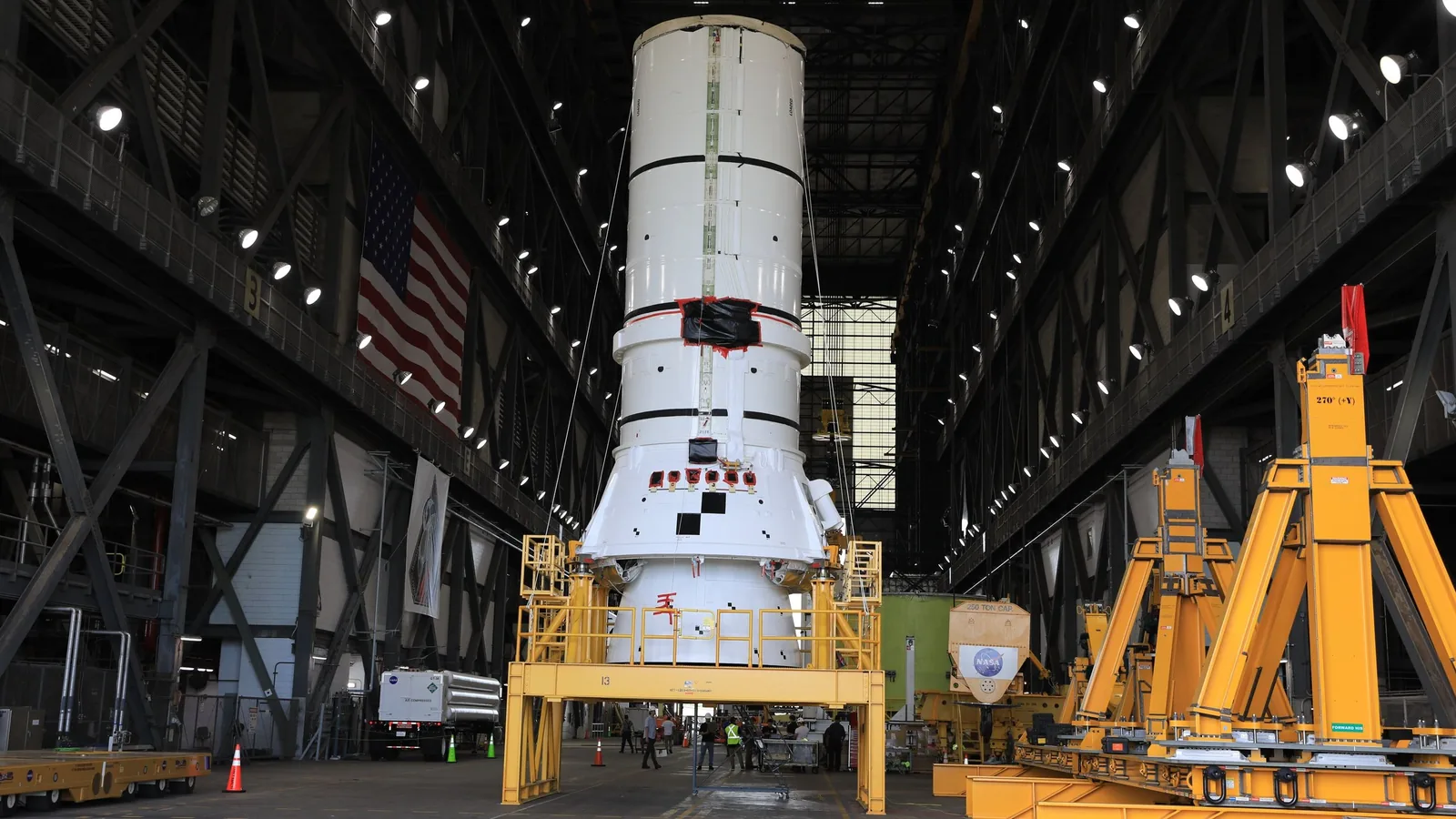
NASA has commenced the intricate process of stacking the Space Launch System (SLS) rocket, a pivotal step for the upcoming Artemis III mission slated for a mid-to-late 2027 launch. The initial segment of a solid rocket booster (SRB) recently arrived at the Kennedy Space Center's Vehicle Assembly Building (VAB) in Florida, marking the beginning of the vehicle's assembly.
These massive SRBs, one of which is now on-site, will flank the SLS core stage, together generating over 7.2 million pounds of thrust—more than 75% of the rocket's power at liftoff. According to NASA, the assembly process will soon enable the agency to prepare for sending a crew aboard the Orion spacecraft to test critical rendezvous and docking capabilities essential for future lunar landings.
The timeline for assembling the Artemis III rocket mirrors that of Artemis II, which took approximately one year from component delivery to stacking completion. This timeframe allows for potential adjustments, as the Artemis III SLS core stage arrived in May without its engine section, which must be attached before other components can be integrated.
Preparing for Lunar Operations
Artemis III represents NASA's next crewed endeavor to return humans to the Moon, though the mission itself will primarily focus on testing essential hardware and spacecraft technologies rather than a full lunar landing. The four-person crew will launch on the SLS rocket aboard the Orion spacecraft, but their journey will be confined to low Earth orbit for approximately two weeks.
During this period, astronauts will conduct crucial tests involving rendezvous and docking procedures with prototype lunar landers developed by private contractors, SpaceX and Blue Origin. This phase is vital for validating the technologies needed for successful future lunar surface missions. Initially, the crew will rendezvous with Blue Origin's lunar lander, named 'Blue Moon.' Following the docking maneuver, astronauts will have the opportunity to enter the Blue Moon's cabin and test components of the Artemis extravehicular activity (EVA) suit, designed for lunar surface operations.
Following the collaboration with Blue Origin, the Orion spacecraft will then perform a rendezvous with SpaceX's Starship. SpaceX plans to utilize a boilerplate version, Starship V3, equipped with a docking adapter but without a crew cabin. This advanced version of Starship has been optimized for launch efficiency and capacity. While the Artemis III crew will not inhabit the Starship during this phase, it serves as a critical testbed for future deep space exploration capabilities. The development of these landers and the testing of EVA suits are key components of NASA's broader strategy to establish a sustainable presence on the Moon and prepare for eventual missions to Mars.