
Musk Clashes With NASA Over Starship Lunar Mission Flight Count
Elon Musk and a NASA safety panel are at odds over the number of SpaceX Starship launches needed for lunar missions. Musk estimates 6-8, while the panel suggests 22.

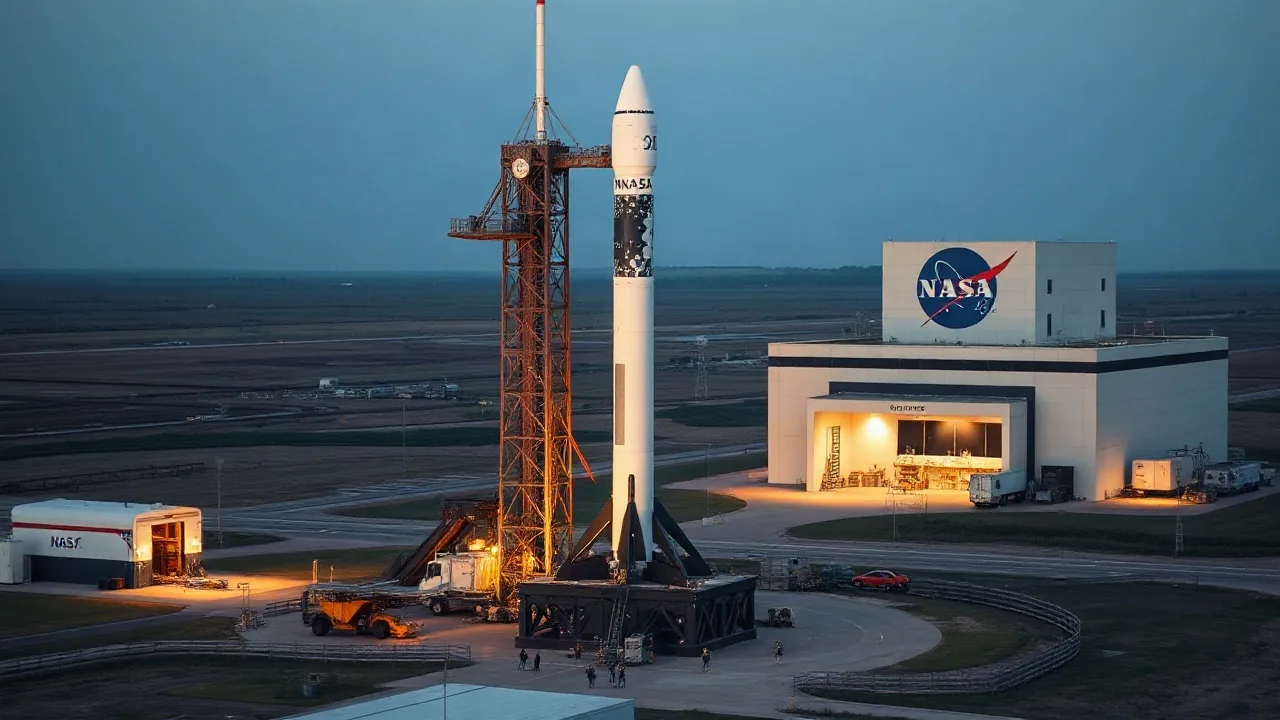
SpaceX founder Elon Musk has publicly disputed estimates from a NASA safety advisory panel regarding the number of Starship launches required for lunar missions. The panel recently suggested that 22 Starship flights are necessary to support NASA's Artemis program, a figure significantly higher than Musk's own projections.
Musk, speaking through his social media platform X, stated that only 6 to 8 Starship missions would be sufficient to ferry the necessary hardware and supplies to the Moon. This disagreement highlights ongoing challenges in refining the logistical requirements for returning humans to the lunar surface and establishing a sustainable presence there.
The discrepancy appears to stem from differing assumptions about the reliability and operational tempo of the Starship system, which is still under active development and testing. SpaceX is working on its massive Starship rocket, designed for full reusability and ambitious deep-space missions, including landing astronauts on the Moon and eventually Mars. NASA is relying on Starship as a key component of its Artemis program, which aims to land the first woman and first person of color on the Moon by 2026 and establish a long-term lunar base.
Assessing Starship's Lunar Capability
The NASA Safety and Mission Assurance Advisory Council (SMAAC) presented its findings, indicating that the projected 22 flights are needed to ensure adequate redundancy and payload delivery capacity. This number accounts for potential mission failures, the need to pre-position assets, and the continuous resupply chain required for a sustained lunar outpost. The panel's assessment likely incorporates factors such as orbital refueling, payload mass limitations per launch, and the inherent risks associated with new rocket technology.
SpaceX has been conducting rapid flight tests of its Starship and Super Heavy booster system at its Starbase facility in Boca Chica, Texas. While these tests have shown significant progress, including successful orbital test flights, the system has yet to demonstrate the reliability and flight rate envisioned for lunar operations. The company's rapid iteration approach, while accelerating development, also introduces uncertainties that external safety panels often scrutinize.
The Starship program is central to NASA's plans for lunar exploration. The vehicle is being developed by SpaceX under a significant contract with NASA, including the development of a Human Landing System (HLS) variant. Achieving the ambitious goals of the Artemis program hinges on the successful maturation and deployment of this new heavy-lift launch capability. Disagreements over operational requirements, even concerning flight counts, underscore the complex interplay between commercial innovation and government oversight in space exploration.
Musk's counter-estimate of 6-8 flights suggests a belief in Starship's potential for higher reliability and faster turnaround times than assumed by the advisory council. This optimistic outlook is characteristic of SpaceX's development philosophy. However, for a crewed mission with critical safety requirements, NASA typically adopts a more conservative approach, emphasizing redundancy and contingency planning. The exact number of flights will ultimately depend on the demonstrated performance, reliability, and cost-effectiveness of the Starship system as it progresses through its testing and operational phases.