
NASA Details Ambitious Artemis Lunar Lander Tests Ahead of 2026 Launch
NASA is accelerating its Artemis program with a complex series of lunar lander tests, aiming for a crewed moon landing by 2026. The agency faces significant engineering challenges in preparing for these crucial missions.

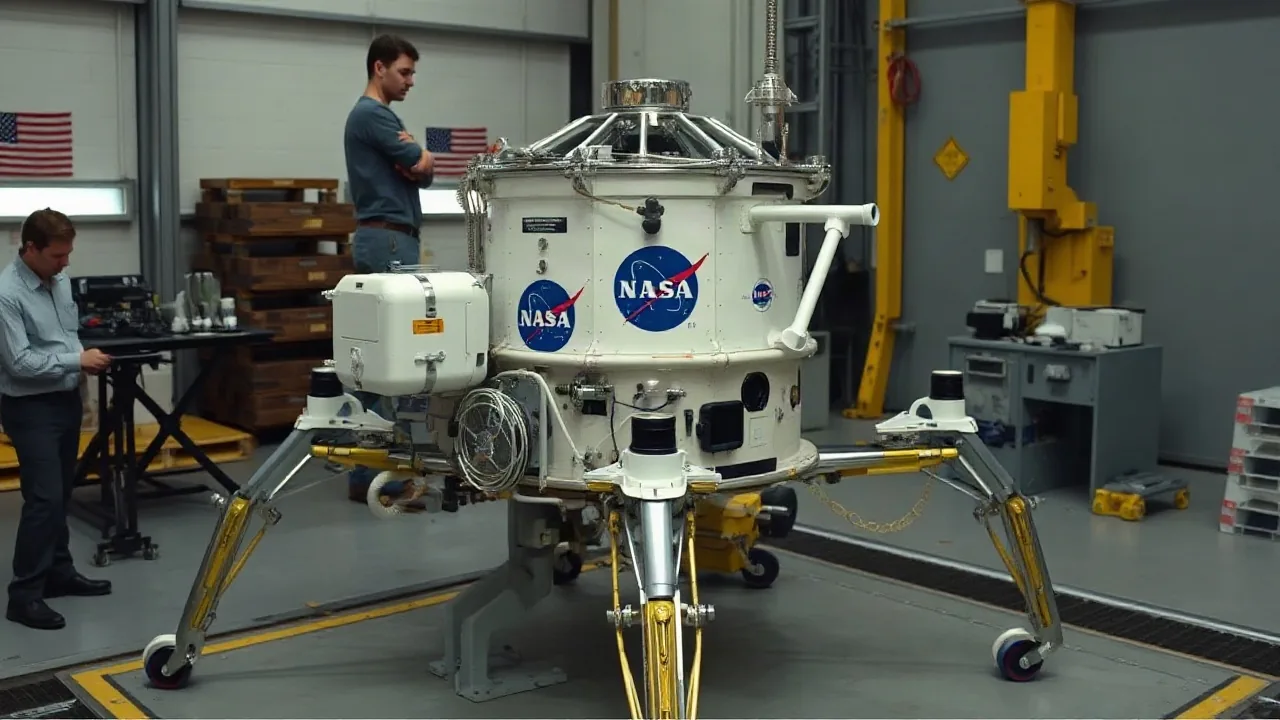
NASA is undertaking what it calls "the most complicated launch campaign ever" as it accelerates its Artemis program with a series of critical tests for its lunar lander systems. The ambitious schedule aims to pave the way for American astronauts to land on the Moon by 2026, a goal that requires overcoming significant engineering hurdles and tight deadlines. The agency has detailed its plan for these complex test flights, signaling a renewed sense of urgency reminiscent of the Apollo era.
The current focus is on ensuring the readiness of the landers that will ferry astronauts from lunar orbit to the surface and back. This involves rigorous testing of components and systems under simulated lunar conditions. NASA officials have emphasized the need for an "Apollo-like urgency" to meet the ambitious timelines for establishing a sustained presence on the Moon. The success of these tests is paramount, as they directly precede the crewed missions that will mark humanity's return to the lunar surface.
Testing Maneuvers and Critical Systems
The upcoming test flights are designed to validate the intricate maneuvers required for lunar landings and ascents. This includes practicing descent trajectories, hazard avoidance systems, and the precise engine firings needed for a soft touchdown. Engineers are meticulously analyzing data from each test to identify and resolve any potential issues. The Orion spacecraft, crucial for transporting astronauts to lunar orbit, is also undergoing final checks following the resolution of long-standing technical challenges.
While the agency has not provided an exact date for the final lander test flight, the overall strategy points towards a concentrated period of activity in the coming months. NASA's updated Artemis program roadmap reflects a determination to push forward despite the inherent complexities of deep-space missions. The development of these advanced lunar landers, contracted to companies like SpaceX and Blue Origin, represents a significant technological leap.
The Artemis program, initiated in 2017, aims not only to land humans on the Moon but also to establish a long-term presence, laying the groundwork for future missions to Mars. This endeavor requires the development of new technologies, including sustainable habitats and advanced propulsion systems. The current push for lunar lander testing underscores the program's critical phase, where theoretical designs must translate into operational hardware capable of supporting human life in a hostile environment.
The urgency stems from international competition and the scientific imperative to explore lunar resources, such as water ice, which could be vital for future space exploration. By demonstrating proficiency with the lunar landers, NASA hopes to solidify its leadership in space and unlock new avenues of scientific discovery. The agency's commitment to these tests highlights the intricate planning and execution required for such groundbreaking missions, pushing the boundaries of what is possible in space exploration.