
Moon's Recession Means Total Solar Eclipses Are Finite Phenomena
Earth's moon is slowly drifting away, meaning the unique alignment that causes total solar eclipses will eventually vanish, making today's sightings a fleeting cosmic spectacle.

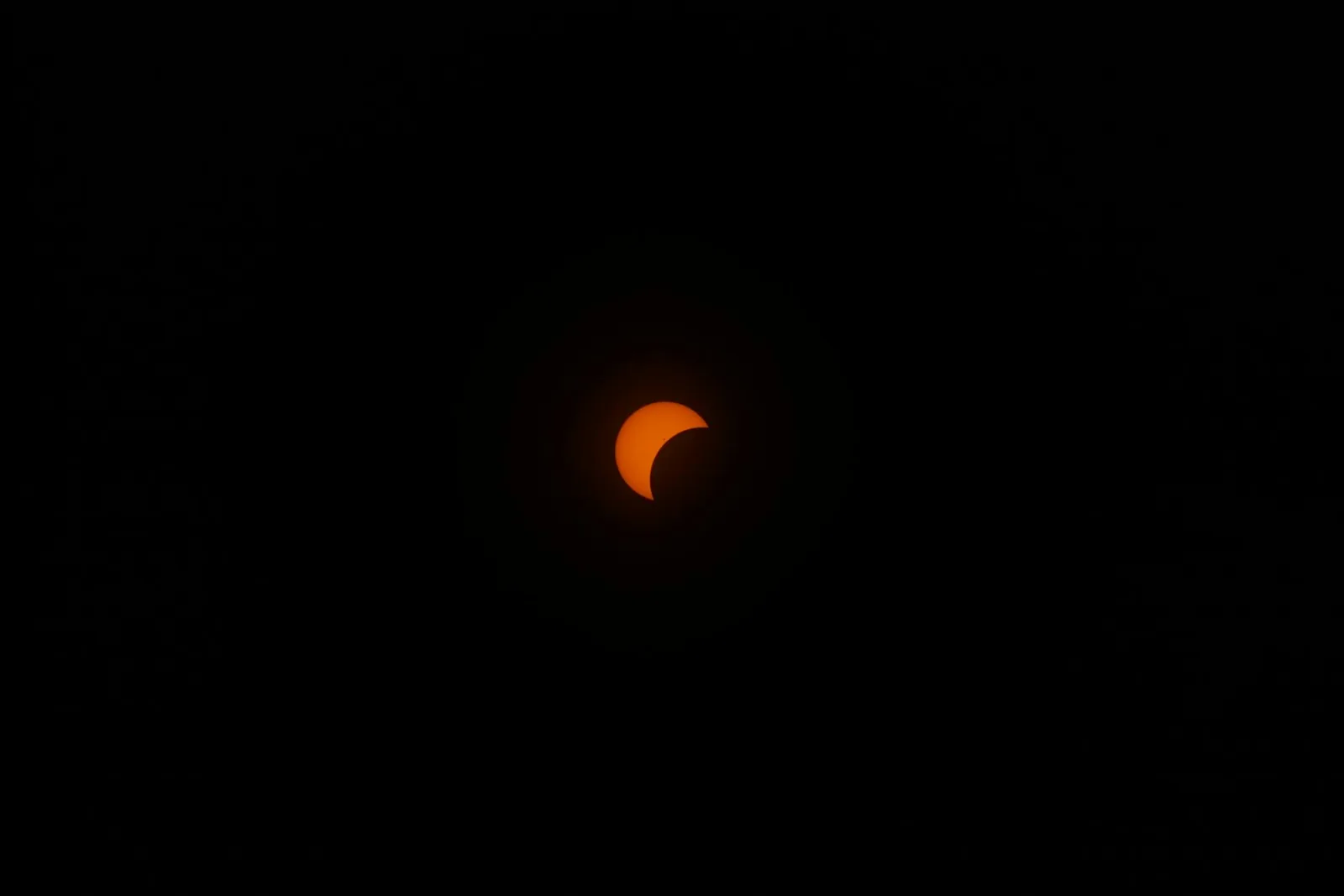
The Earth's moon is gradually receding at a rate of 3.8 centimeters per year, a subtle celestial drift that has profound implications for the future of total solar eclipses. This gradual separation means that the specific geometric alignment required for the moon to perfectly obscure the sun, revealing its spectacular corona, is a phenomenon with a finite lifespan. Humans alive today are experiencing a unique cosmic window where this awe-inspiring event is possible, a spectacle that future civilizations will never witness.
The astonishing precision of this measurement comes from the Lunar Laser Ranging Experiment. Since the Apollo 11 mission in 1969, observatories have been firing lasers at retroreflectors left on the lunar surface by Apollo and Soviet Lunokhod missions. By measuring the round-trip travel time of these laser photons with picosecond accuracy, scientists have determined the moon's precise distance and its outward drift. This data, gathered over decades, provides one of the most accurate measurements in lunar science, revealing a recession rate that is not a theoretical model but a directly observed reality.
A Cosmic Coincidence Facing Extinction
The magic of a total solar eclipse lies in a remarkable cosmic coincidence. The sun is approximately 400 times wider than the moon, yet it is also about 400 times farther away from Earth. This near-perfect ratio means that both celestial bodies appear to subtend almost the same angle in our sky – roughly half a degree. This allows the moon, at specific points in its elliptical orbit, to completely cover the sun's bright photosphere, exposing the ethereal solar corona to our naked eyes. This precise alignment is unique to the Earth-moon system and is not observed elsewhere in our solar system. Mars's moons are too small, and Jupiter's moons are too large relative to the sun from its orbital perspective.
This celestial dance has not always been this way. When the moon formed approximately 4.5 billion years ago, it was much closer to Earth, potentially only 20,000 to 30,000 kilometers away. At that distance, the moon would have dominated the sky, and any eclipses would have featured a lunar disc many times larger than the sun. Total eclipses, as we understand them, only became possible as the moon gradually moved away, reaching its current average distance of about 384,400 kilometers. This process is driven by tidal friction; the gravitational pull of the moon creates ocean bulges on Earth, and Earth's rotation drags these bulges slightly ahead of the moon's direct alignment. This gravitational interaction transfers angular momentum from Earth's spin to the moon's orbit, causing Earth's day to lengthen slightly and the moon to spiral outward.
The consequence of the moon's outward journey is a shrinking apparent size in the sky. Scientists estimate that at the current rate of recession, the moon's average angular diameter will become smaller than the sun's average angular diameter in approximately 600 million years. Beyond this point, even at its closest orbital approach, the moon will no longer be able to completely cover the sun's disc. Instead, observers will witness annular eclipses, where a ring of the sun remains visible around the lunar silhouette, or partial eclipses. The spectacular phenomena associated with totality – the corona, the chromosphere, the diamond ring effect, and the brief dimming of daylight – will cease to exist.
This 600-million-year timeline is an approximation, subject to changes in Earth's continental configuration, ocean depths, and tidal resonances over geological timescales. However, it suggests that total solar eclipses, as a feature of the Earth-moon system, have an estimated remaining lifespan of roughly 500 million to 800 million years. This places our current civilization within a narrow, indeed fleeting, period in cosmic history where this particular celestial spectacle is observable. Every total solar eclipse witnessed by humans, from ancient Babylonian astronomers to modern-day enthusiasts who travel to remote locations, has occurred within this extraordinary window of opportunity.
The significance of this temporal limitation extends beyond mere physics. Unlike most celestial phenomena, which have existed for eons and will continue for eons, total solar eclipses possess a discernible beginning, middle, and end. Our current epoch is nestled in the latter half of this cosmic display. The emotional impact of total eclipses, often attributed to the sense of cosmic vastness and our place within it, is amplified by the awareness of its finitude. The knowledge that this awe-inspiring event is not permanent, but rather a transient feature of our solar system, lends a unique intensity to the experience, making each sighting a precious moment in deep time.