
Astronomers Discover Largest "Super-Puff" Exoplanets, Lighter Than Cotton Candy
Scientists have identified two exceptionally large exoplanets with densities lower than cotton candy, making them the lightest known planets of their size. These 'super-puffs' orbit a star 1,110 light-years away.

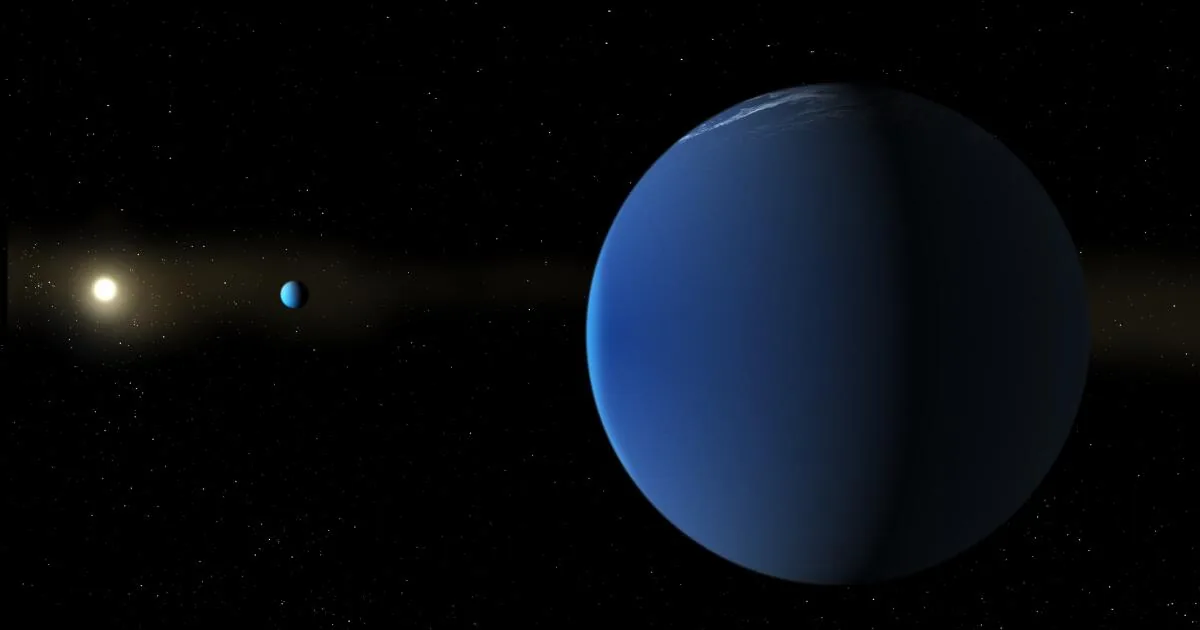
Astronomers have identified a pair of giant exoplanets, each about the size of Jupiter, that possess densities lighter than cotton candy. Orbiting a star located 1,110 light-years away in the constellation Volans, these celestial bodies represent the largest "super-puff" planets discovered to date with such remarkably low densities. The University of Oxford's George Dransfield, lead author of the study published in Monthly Notices of the Royal Astronomical Society, described the planets' consistency as akin to "a nice blob of shaving foam, fresh from the can." These featherweight worlds are believed to be primarily composed of hydrogen and helium, though further analysis by NASA's Webb Space Telescope is needed to confirm their exact chemical makeup.
These two exceptionally voluminous yet light planets were initially detected by NASA's Transiting Exoplanet Survey Satellite (TESS) over the past decade. The research team utilized ground-based telescopes to meticulously study the planets' orbital paths, enabling them to calculate their densities. A light-year, a unit of astronomical distance, spans nearly six trillion miles. For scale, Jupiter is approximately 35 times denser than these newly identified exoplanets. The discovery adds to the growing catalog of known worlds beyond our solar system, which now stands at nearly 6,300 confirmed exoplanets.
Understanding "Super-Puff" Planet Formation
Super-puff planets, a category considered rare in the known cosmos, are thought to form in the gas and dust disks surrounding young stars. It is theorized that these planets accumulate a significant amount of gas during their formation, especially in environments richer in gas than dust. Over time, they tend to shed a substantial portion of this accreted material, further reducing their density. Dransfield noted that fewer than 40 of the thousands of confirmed exoplanets fall into the super-puff classification. Studying such unusual celestial bodies is crucial for advancing our understanding of planet formation processes. "Ultimately, by studying exotic systems containing rare planet types, we add further pieces to the puzzle of planet formation and learn more about our place in the cosmos," Dransfield stated, emphasizing the scientific value of these extreme examples in the broader study of exoplanets.
The researchers speculate that the appearance of these fluffy planets might be white or blue, contingent on atmospheric conditions, rather than any resemblance to the pink hue of cotton candy. The discovery highlights the astonishing diversity of planetary systems that exist throughout the galaxy and underscores the ongoing quest to find and characterize worlds beyond our own. Future observations with advanced instruments like the Webb Space Telescope will undoubtedly provide deeper insights into the composition and evolution of these unique and extremely low-density celestial objects.