
Kilauea Volcano Scientists Access Crater Tephra Samples
USGS scientists used a helicopter to reach previously inaccessible tephra deposits on the wall of Kilauea's summit crater, Halemaʻumaʻu. The samples aim to improve understanding of the volcano's eruption patterns and hazards.

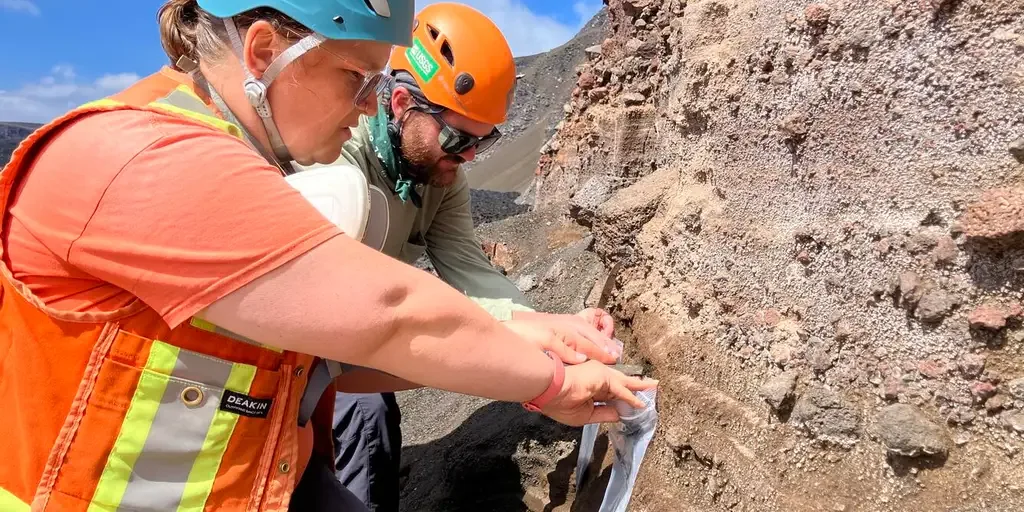
Three scientists from the U.S. Geological Survey (USGS) recently executed a unique mission to gather volcanic samples from a previously inaccessible location within Hawaii's active Kilauea volcano. On July 2, the team utilized a helicopter to reach the northwest rim of Halemaʻumaʻu, a prominent crater at Kilauea's summit, to collect tephra deposits from its crater wall. Tephra, a term encompassing all fragmented material ejected during a volcanic eruption—ranging from fine ash to larger volcanic bombs—had been out of reach until recent changes in the crater's landscape.
The rising floor of Halemaʻumaʻu, a consequence of ongoing lava flows filling the crater during Kilauea's frequent eruptions, has now made parts of it walkable. However, USGS noted that these tephra deposits are susceptible to being covered by future lava flows, making the recent sampling effort particularly timely. The collected samples are expected to provide crucial data for the USGS to enhance its understanding of Kilauea's eruption behavior, magma storage systems, and associated volcanic hazards.
Volcanic Activity and Future Forecasts
Visuals from the operation depicted the scientists disembarking from the helicopter, traversing the tephra field, and carefully scraping samples into collection bags from the crater's side wall. Kilauea has experienced a significant number of eruptive episodes, with 50 recorded since December 23, 2024. The USGS's current forecast predicts the volcano's 51st eruption could occur between July 11 and July 15, 2026. Historically, these eruptive episodes are relatively brief, typically lasting no more than 12 hours, with intermittent breaks of approximately three weeks between them.
This accessibility to previously unreachable volcanic materials is vital for advancing geological research. Understanding the composition and layering of tephra can reveal detailed histories of past eruptions, including their intensity, duration, and the specific mechanisms involved. For a volcano as dynamic and frequently erupting as Kilauea, such detailed historical data is indispensable for developing accurate predictive models and effective hazard mitigation strategies. The insights gained from these samples will contribute to the broader scientific effort to monitor and manage volcanic risks, not only in Hawaii but globally.